Legend or history?
Spirits trail behind them inventor monks, round-number dates and anecdotes too good to be true. For each statement, decide: attested, legend or in between. The verdict comes with its evidence.
Read the statement, choose a verdict, then read the explanation: that is what counts. A round has ten statements, drawn from twenty-four.
-
Statement 1
“Bénédictine reproduces an elixir devised in 1510 by a monk of Fécamp Abbey, Dom Bernardo Vincelli.”
See the verdict
Legend
The liqueur was developed in 1863 and launched under that name in 1864 by a Fécamp merchant, Alexandre Le Grand, who claimed to have found the recipe in a manuscript from the former abbey. That manuscript has never been shown, and no independent source attests the existence of the monk Vincelli or of his elixir. The monk is there for the label: he gives a Second Empire liqueur three and a half centuries of antiquity.
Key point: 1863-1864, Alexandre Le Grand: that is what the sources establish. The monk of 1510 is a brand story.
How we know
OCSC, entry “Bénédictine”; the house's account on benedictinedom.com (what the brand says about itself).
-
Statement 2
“Absinthe drove people mad: the thujone in the plant caused hallucinations and fits.”
See the verdict
Legend
“Absinthism” was described in the 19th century by the psychiatrist Valentin Magnan, on the basis of animal experiments with the pure essential oil, at doses bearing no relation to a glass. In 2008, a team analysed thirteen bottles from before 1915: their thujone content (0.5 to 48.3 mg per litre) is of the same order as that of today's absinthes. The disorders observed are explained by alcohol, highly concentrated and drunk in quantity, not by a substance peculiar to the plant.
Key point: The danger of absinthe was the danger of alcohol, highly concentrated and drunk in quantity.
How we know
D. W. Lachenmeier et al., “Chemical composition of vintage preban absinthe…”, Journal of Agricultural and Food Chemistry, 56 (9), 2008, pp. 3073-3081; M. J. Eadie, “Absinthe, epileptic seizures and Valentin Magnan”, J. R. Coll. Physicians Edinb., 39, 2009.
-
Statement 3
“Arab scholars invented distillation.”
See the verdict
Legend
The apparatus was described several centuries earlier, in Graeco-Roman Egypt: around AD 300, Zosimos of Panopolis attributed the three-spouted still to Mary the Jewess. Scholars of the Arab-Muslim world refined it and passed it on between the 8th and 10th centuries, which is considerable — but it is not an invention.
The idea that alcohol was « invented » in the Arab world is inaccurate: it is the apparatus and the method that were perfected there, with alcoholic use developing later in the West.
Key point: An Alexandrian invention, an Arab refinement, a Western use for alcohol.
How we know
R. J. Forbes, A Short History of the Art of Distillation, Leiden, Brill, 1948; OCSC, entry “distillation”.
-
Statement 4
“Napoleon I drank Courvoisier cognac and took casks of it to St Helena.”
See the verdict
Legend
Emmanuel Courvoisier was a wine and eau-de-vie merchant in Bercy around 1809; the house did not settle in Jarnac, in the Charente, until the 1820s-1830s. The Emperor's visit in 1811 and the casks of St Helena rest on no published document: they come from the house itself. The slogan “The Brandy of Napoleon” and the imperial silhouette were launched in the 20th century by the Simon family, owners from 1909.
Key point: Napoleon on the label dates from the 20th century, not from the Empire.
How we know
OCSC, entry “Courvoisier”; Courvoisier page on cognac-ton.nl, which notes the conflicting dates and casts doubt on the imperial supply.
-
Statement 5
“Gin was invented in the 17th century by a Leiden physician, Franciscus Sylvius, as a remedy.”
See the verdict
Legend
Sylvius was born in 1614. Yet distilled genever was already being taxed in the Netherlands in 1606, a recipe for a juniper eau-de-vie appears in an Antwerp distilling book from the mid-16th century, and around 1266-1270 the poet Jacob van Maerlant was recommending juniper berries boiled in wine. Leiden University itself dismantled the attribution in 2016.
The attribution of the invention of gin to the physician Franciscus Sylvius is false: he was born in 1614, when distilled genever had already been attested for several decades.
Key point: Genever predates Sylvius by several generations.
How we know
Universiteit Leiden, “The dubious Leiden roots of genever and gin”, 2016; OCSC, entry “Sylvius”.
-
Statement 6
“Angostura's oversized label comes from a printing error that the makers decided to keep.”
See the verdict
In between
The substance is attested: Johann Siegert developed his bitters in Angostura, Venezuela (a town renamed Ciudad Bolívar in 1846) — in 1824 according to tradition, in 1820 or 1830 according to other authors — and his sons moved the business to Port of Spain, Trinidad, in the mid-1870s. The story of the label, on the other hand — two brothers each ordering part of the packaging, a competition, a mistake kept — has neither date nor document: it is a house anecdote, charming and unverifiable.
Key point: The place and the family are certain, the dates approximate; the label is a brand anecdote.
How we know
C. Martin, “The History and Production of Angostura Bitters”, alcademics.com; the house's account: 200 Years — The Angostura Story (what the brand says about itself).
-
Statement 7
“Green Chartreuse follows a recipe given to the monks in 1605.”
See the verdict
In between
According to the order's tradition, François-Annibal d'Estrées, later a marshal of France, gave the Carthusians of Vauvert, in Paris, a manuscript for an “elixir of long life” in 1605; according to the order's archives, the formula of the Élixir végétal was fixed at the Grande Chartreuse in 1764. But the green liqueur did not appear until around 1840. The 1605 manuscript is a claimed lineage, not the recipe for the liqueur we know.
Key point: 1605: a manuscript, according to tradition; around 1840: Green Chartreuse.
How we know
OCSC, entry “Chartreuse”; the order's account on chartreuse.fr (what the house says about itself).
-
Statement 8
“Driven out of France, the Carthusians distilled their liqueur in Spain.”
See the verdict
Attested
In 1903, the order was refused the authorisation required by the 1901 law on associations and left France; the monks set up a distillery in Tarragona. In 1929, local notables bought back the company that had been running the brand in France and returned it to the Carthusians. After a landslide destroyed the Fourvoirie distillery in 1935, production moved to Voiron.
Key point: 1903, exile in Tarragona; 1936, Voiron.
How we know
OCSC, entry “Chartreuse”; history of the order on chartreuse.fr.
-
Statement 9
“The Cointreau house was born in Angers, in the mid-19th century.”
See the verdict
Attested
Adolphe and Édouard-Jean Cointreau opened a liqueur distillery in Angers in 1849. The house now dates the “triple sec” developed by Édouard Cointreau the younger to 1885; the date of 1875, long put forward, rests on no document. The square bottle was presented at the Exposition Universelle of 1889.
Key point: Angers, 1849: the place and the date are documented.
How we know
OCSC, entry “Cointreau”.
-
Statement 10
“Suze owes its name to a Swiss river.”
See the verdict
In between
Two accounts clash, and neither is documented. On the French side, the name is said to come from Suzanne Jaspart, sister-in-law of Fernand Moureaux, who perfected the formula around 1885. On the Swiss side, from the Suze, a river in the Bernese Jura, and from a herbalist's recipe. The historian Raymond Bruckert concludes that the question remains open.
Key point: Two possible origins, neither proven.
How we know
swissinfo.ch, “La Suze hésite sur son ascendance” (with the view of the historian Raymond Bruckert).
-
Statement 11
“Amer Picon was created in Algeria by a French soldier.”
See the verdict
Attested
Gaétan Picon (1809-1882), a soldier in the Armée d'Afrique, sold in Algeria, around 1840 according to the Oxford Companion (the house says 1837), an “amer africain” (African bitters) made from orange peel, gentian and cinchona. The product was born in the context of colonial conquest, in which cinchona was first and foremost a febrifuge. The sources disagree on the town: it is better not to name it.
Key point: Algeria, around 1840: a bitters born of the colonial army.
How we know
OCSC, entry “Picon”; L'Illustration, 24 May 1930 (cited in the Wikipédia article “Jean-Baptiste Nouvion”).
-
Statement 12
“Pernod founded the world's first absinthe distillery, in Pontarlier.”
See the verdict
In between
The first absinthe distillery opened in 1797 in Couvet, Switzerland, founded by Daniel-Henri Dubied, his son and his son-in-law, Henri-Louis Pernod. Pernod then set up his own house, Pernod Fils, in Pontarlier, in 1805. The name is right; the country and the town are not.
Key point: Couvet (Switzerland), 1797; Pontarlier comes in 1805.
How we know
R. Trechsel, “Absinthe”, Dictionnaire historique de la Suisse (hls-dhs-dss.ch).
-
Statement 13
“France banned absinthe during the First World War.”
See the verdict
Attested
Its sale was suspended as early as August 1914, at the start of mobilisation. A decree of 7 January 1915 extended the ban on sale and circulation to the whole of France, but a decree issued during hostilities is valid only for their duration and must be ratified by the Chambers. It was the law of 16 March 1915, published in the Journal officiel the following day, that made the ban permanent and added manufacture to it. The ban targets “l'absinthe et les liqueurs similaires” (absinthe and similar liqueurs), not the plant itself.
Key point: Law of 16 March 1915: manufacture, sale and circulation banned.
How we know
Journal officiel de la République française, 8 January 1915 (decree) and 17 March 1915 (law), available on Gallica; Conseil d'État, 29 April 1921, Société Premier et Henry.
-
Statement 14
“Absinthe is legal again in France.”
See the verdict
Attested
A decree of 1988 (no. 88-1024 of 2 November) once again authorised drinks made with absinthe plants, provided they keep within thujone limits; Law no. 2011-525 of 17 May 2011 finally repealed the law of 1915. The thujone ceiling is now set by EU law at 35 mg per kilo for spirit drinks made from Artemisia species. “Absinthe de Pontarlier” has been a geographical indication since 2019.
Key point: Return in 1988, repeal of the 1915 law in 2011.
How we know
Décret n° 88-1024 du 2 novembre 1988; loi n° 2011-525 du 17 mai 2011; Regulation (EC) No 1334/2008; Implementing Regulation (EU) 2019/1350.
-
Statement 15
“The word “alembic” comes from Arabic.”
See the verdict
Attested
“Alembic” comes from the Arabic al-anbīq, by way of medieval Latin alembicum. But the Arabic word itself comes from the Greek ámbix, “vessel”: the etymology sums up the history of the apparatus, Greek first, then Arabic, and Latin last of all.
Key point: Arabic, yes — but from a Greek word.
How we know
Trésor de la langue française informatisé (CNRTL), entry “alambic”.
-
Statement 16
“Scotch whisky was born in 1494.”
See the verdict
In between
The Scottish Exchequer accounts for 1494 record eight “bolls” of malt given to Friar John Cor “to make aqua vitae”. It is the oldest surviving mention, not a birth: the quantity implies a practice already well established, and the word “whisky” does not appear.
This is the oldest surviving written mention, not the date of invention: the quantity of malt points to a production already established.
Key point: 1494 is a first written trace, not a date of invention.
How we know
The Exchequer Rolls of Scotland, vol. X, ed. G. Burnett, Edinburgh, 1887; OCSC, entry “Scotch whisky”.
-
Statement 17
“Armagnac is the oldest eau-de-vie in France: it has been distilled since 1310.”
See the verdict
Legend
The treatise attributed to Vital du Four, dated 1310, praises the “forty virtues” of a medicinal burning water (eau ardente); it does not name armagnac, and both its dating and its attribution are disputed. The first commercial mention of a Gascon eau-de-vie comes later, at the Saint-Sever market, in 1461.
The text attests to a practice of medicinal distillation in the South-West, not to the birth of an identified regional spirit. Making it the birth date of armagnac is a commercial shortcut.
Key point: 1310: a remedy; commercial armagnac appears in the 15th century.
How we know
OCSC, entry “Armagnac”.
-
Statement 18
“The Hennessy house was founded by an Irishman.”
See the verdict
Attested
Richard Hennessy, born around 1724 in County Cork, served in the Irish Brigade of Louis XV's army; according to family tradition, which nothing documents, he fought at Fontenoy in 1745. He settled in Cognac and founded his eau-de-vie trading business there in 1765. The year of his birth and his exact regiment vary from source to source.
Key point: An Irish officer in the service of France, a merchant in Cognac in 1765.
How we know
OCSC, entry “Hennessy”.
-
Statement 19
“The name “Jägermeister” is a tribute to Hermann Göring.”
See the verdict
In between
Curt Mast launched his liqueur in Wolfenbüttel in 1935. The Reich hunting law of 1934 had just created the title of “Reichsjägermeister”, held by Göring, and the drink is said to have been nicknamed “Göring-Schnaps” — a nickname probably coined after the war. The link with the law and its vocabulary is attested, including by the founder's nephew; a personal tribute to Göring is not. The house cites the loss of its archives.
Key point: The name comes from the 1934 law; the tribute to Göring is not proven.
How we know
K. Loof, article on the name “Jägermeister”, business-on.de; Deutsches Historisches Museum, LeMO, entry “Hermann Göring”.
-
Statement 20
“Marie Brizard had the recipe for her anisette from a West Indian sailor she had nursed.”
See the verdict
Legend
Marie Brizard (1714-1801) founded her house in Bordeaux in 1755, with Jean-Baptiste Roger, the husband of one of her nieces. The sick sailor who gives her his recipe out of gratitude appears in no document: it is a house tradition, on the same model as the monk and his grimoire.
Key point: Bordeaux, 1755: documented. The sailor: a tradition.
How we know
International Directory of Company Histories, entry “Marie Brizard & Roger International S.A.”, St. James Press.
-
Statement 21
“Around the cognac cellars, the walls turn black because of alcohol vapours.”
See the verdict
Attested
It is a microscopic fungus that feeds on the ethanol evaporating from the casks. It was reported in 1878 by a Cognac pharmacist, Antonin Baudoin (the date of 1872, sometimes put forward, is not confirmed), described in 1881 under the name Torula compniacensis, and in 2007 was given a genus named after him: Baudoinia.
Key point: The “angels' share” feeds a fungus named after a Cognac pharmacist.
How we know
J. A. Scott et al., “Baudoinia, a new genus to accommodate Torula compniacensis”, Mycologia, 99 (4), 2007, pp. 592-601.
-
Statement 22
“Cognac's double distillation was invented by a knight, after a dream.”
See the verdict
Legend
The “Chevalier de la Croix-Maron”, lord of Segonzac, who is said to have dreamt that the Devil wanted to boil his soul twice, is all but absent from the archives. His legend was popularised above all by a play by Eugène Guillebaud, in 1943. Charentais double distillation is a collective technique, attested in the 17th century.
Key point: A 20th-century tale for a 17th-century technique.
How we know
Bureau national interprofessionnel du cognac (BNIC), culture.cognac.fr, “Who invented cognac?”.
-
Statement 23
“The British Parliament passed several laws to curb gin consumption in the 18th century.”
See the verdict
Attested
Five “Gin Acts” followed one another, in 1729, 1736, 1743, 1747 and 1751. The first ones failed or drove the trade into smuggling; the Act of 1751, which restricted sales to licensed premises, began the end of the “Gin Craze”, which rising grain prices brought to a close around 1757. In 1751, the year of that Act, Hogarth published Gin Lane and Beer Street.
Key point: Five laws in twenty-two years: the 1751 Act is the first to take effect.
How we know
J. Warner, Craze: Gin and Debauchery in an Age of Reason, New York, Four Walls Eight Windows, 2002; Gin Act 1751 (24 Geo. II c. 40).
-
Statement 24
“Dubonnet was born of a competition launched by the State to get Foreign Legion soldiers to take quinine.”
See the verdict
Legend
What is documented: Joseph Dubonnet marketed an aromatised wine with cinchona in Paris in 1846. The context makes the story plausible — quinine, isolated in 1820, protected colonial troops from malaria. But no archive of the “competition” has been found; it circulates in the press without any reference.
Key point: A cinchona wine of 1846, yes; a State competition, no trace.
How we know
OCSC, entry “Dubonnet”; T. Geoghegan, “Who still drinks Dubonnet?”, BBC News, 20 July 2009 (the common version of the story, with no archival source).
How these verdicts are reached
Attested: a document independent of the story establishes it — a law, an archive, a scholarly publication. Legend: nothing establishes it, or a document contradicts it. In between: the substance is true but the detail invented, or the sources disagree.
Many legends come from the houses themselves: we flag them as such. An error, a better source? Write to us, and the verdict will be reviewed.
The other games
-
Inquiry · archives
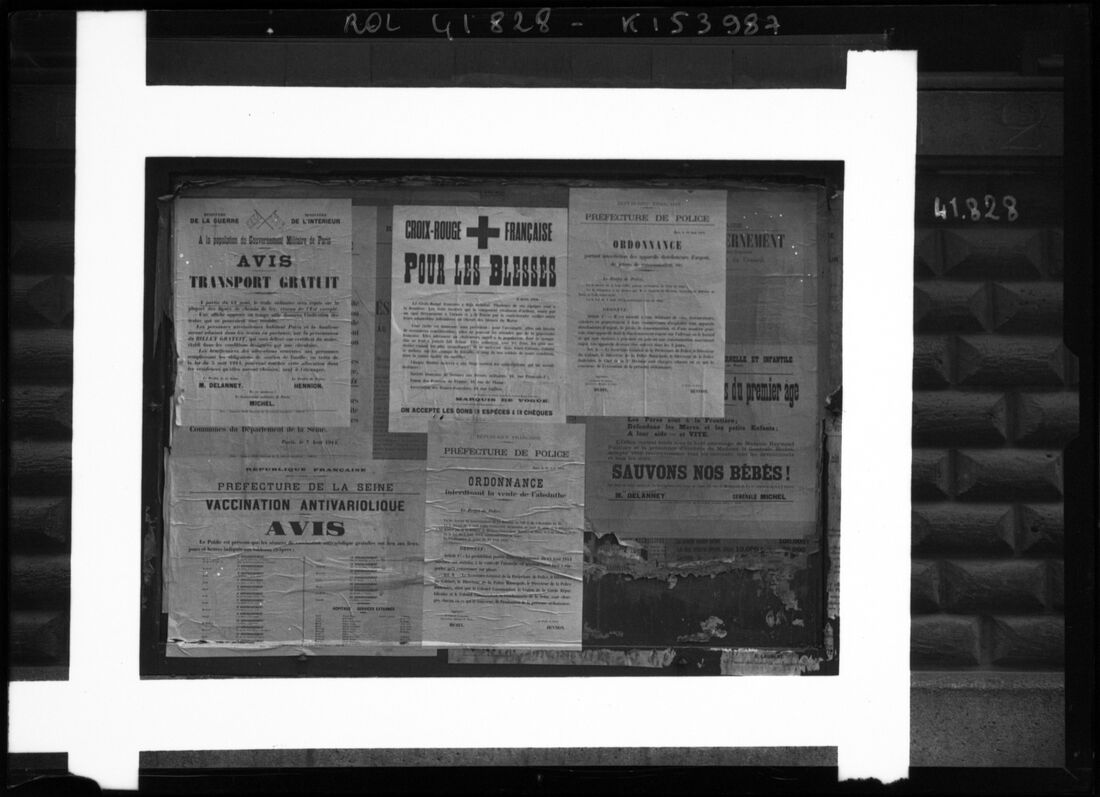
The absinthe affair
Six archive documents from 1911 to 1915. Who banned absinthe, when, and what exactly was banned?
9 boxes to confirm · 15 minutes
-
Observation · posters
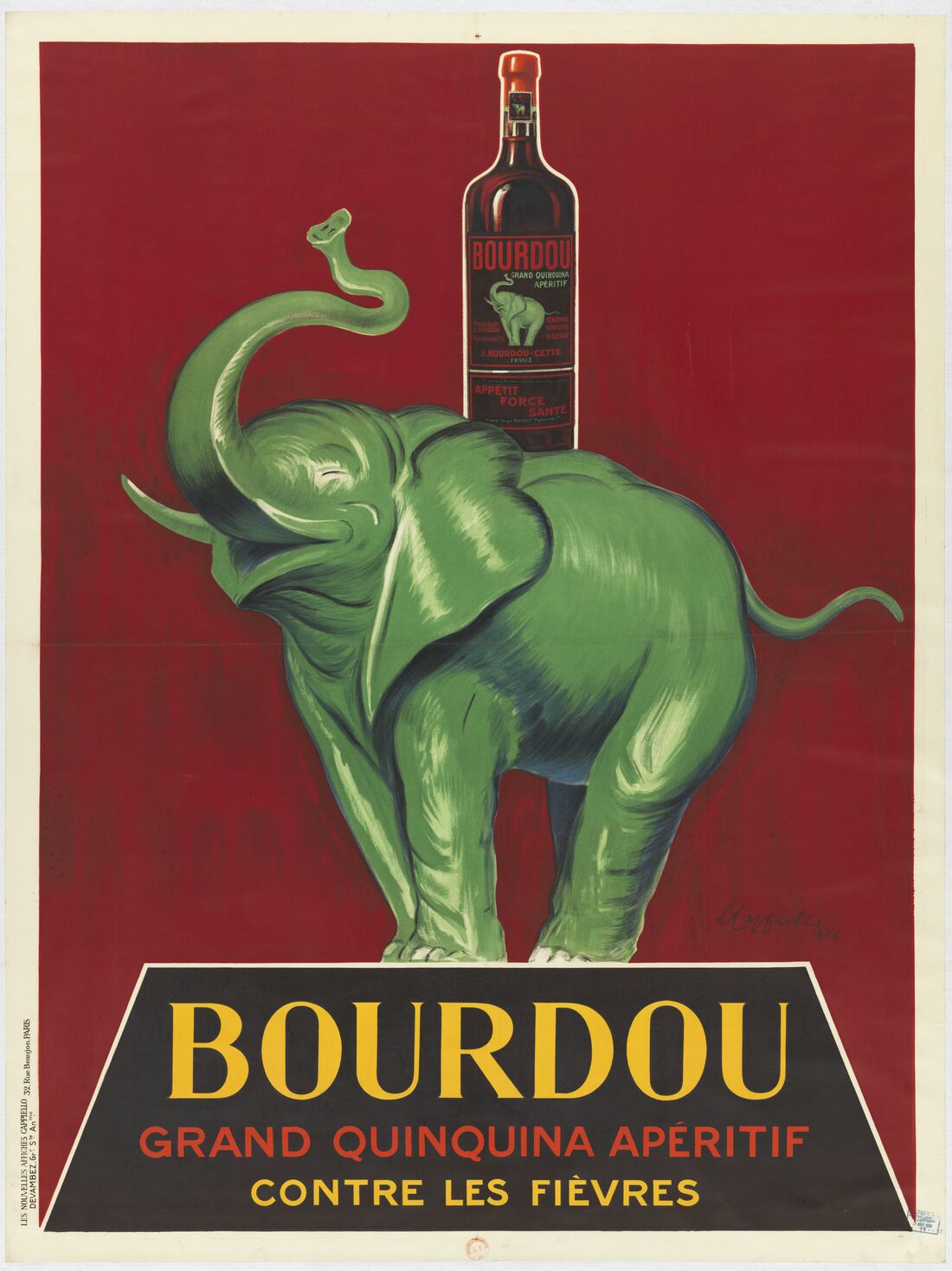
Reading a label
Medals, monks, health promises: five old posters and labels to decipher, area by area.
5 documents · 15 minutes
-
Riddles · botany
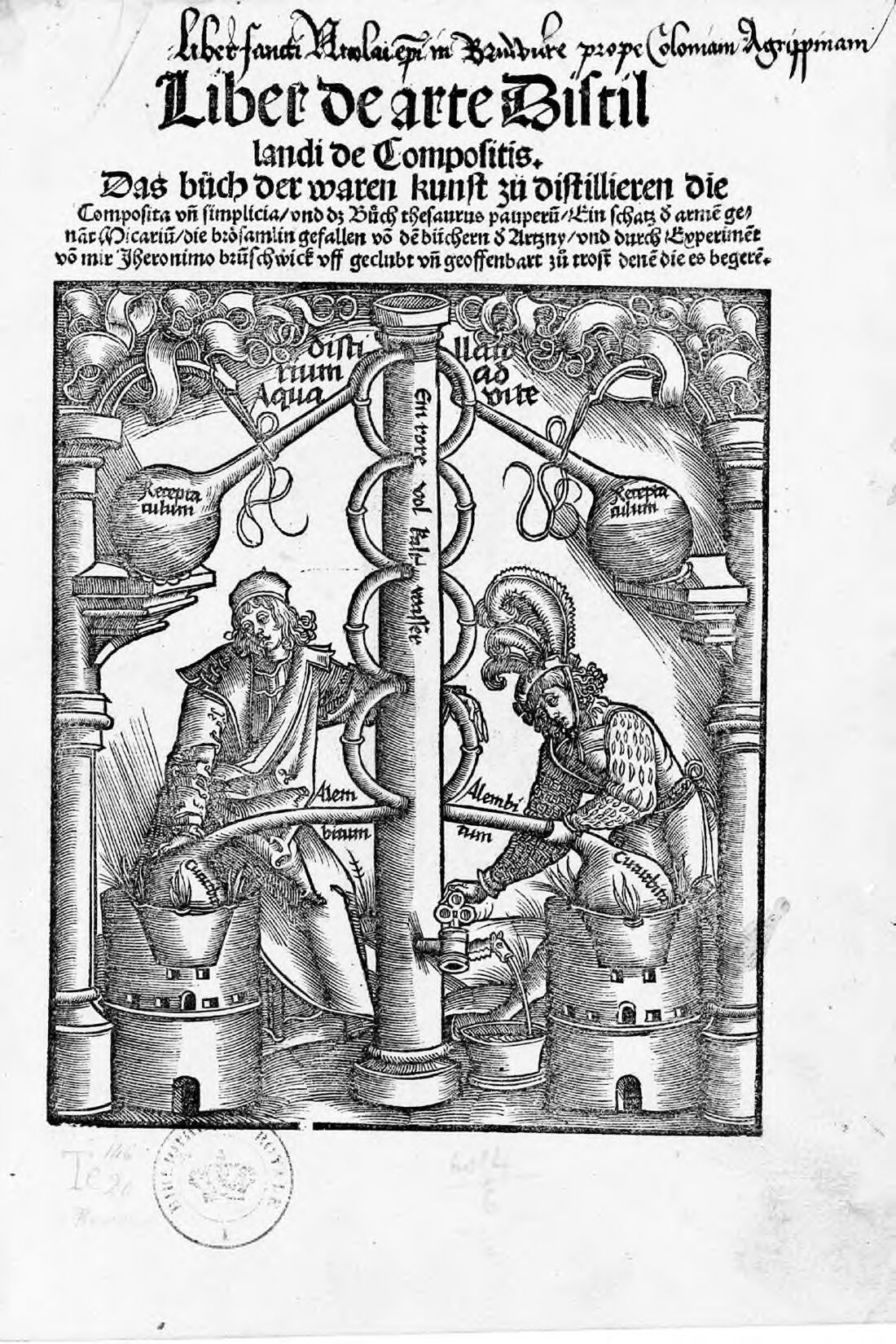
Guess the plant
Ten plants from liqueurs and bitters, three clues each: history, botany, use.
10 riddles · 10 minutes
-
Quiz · three levels
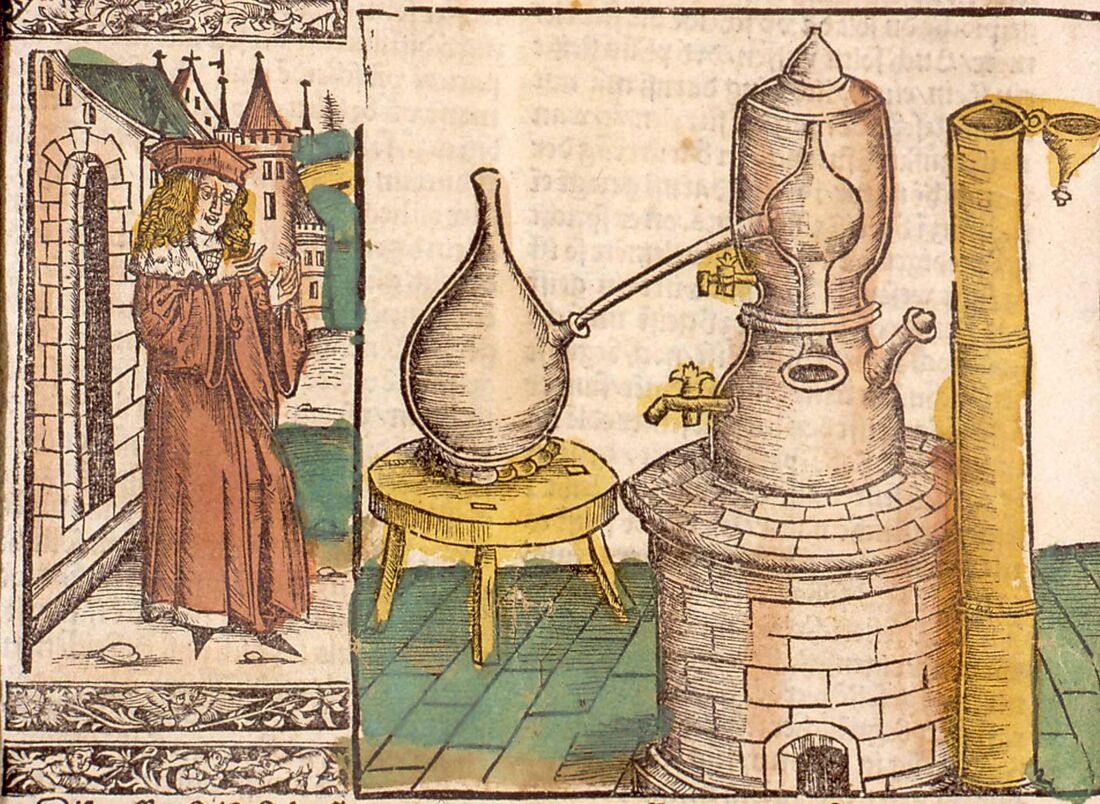
Learn about spirits
From cane to rum, from grain to whisky: three levels of questions on the raw materials, the gestures and the history of spirits.
10 questions per level