House stories · Picon
Was Amer Picon born in 1837 in a town that did not yet exist?
The Picon brand dates its recipe to 1837 and tells of a young man who left with the army for North Africa. It never utters the word Algeria, nor the word colonisation. The catalogues of the 19th-century exhibitions, for their part, say it all: the “Amer africain” was born in conquered Algeria, for soldiers and settlers.
The story
Amer Picon is a product of the colonisation of Algeria, and the 1837 date the brand puts forward falls before the founding of the town where it was made.
In 1830, the French army landed near Algiers. It was the start of a conquest that would last for decades. Among the soldiers was a young man born in Liguria in 1809, Gaétan Picon. In the camps, fever killed as many men as the fighting did. It was treated with cinchona bark, often macerated in wine. Picon, according to the house's tradition, was himself treated in this way.
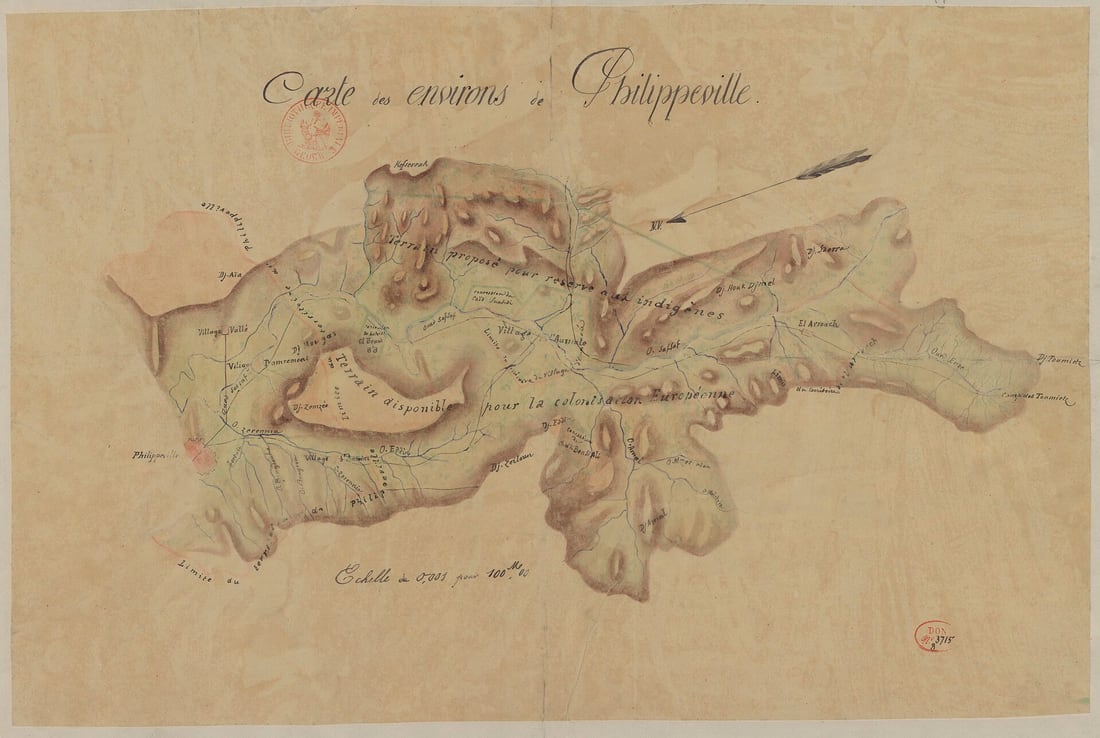
Once discharged, he settled in the conquered country and became a distiller. He developed a bitter based on orange peel and cinchona, which he named “Amer africain”. His distillery was in Philippeville, a town the army had founded on the ancient site of Rusicade: today it is Skikda. He then opened establishments in Constantine and in Bône, present-day Annaba.
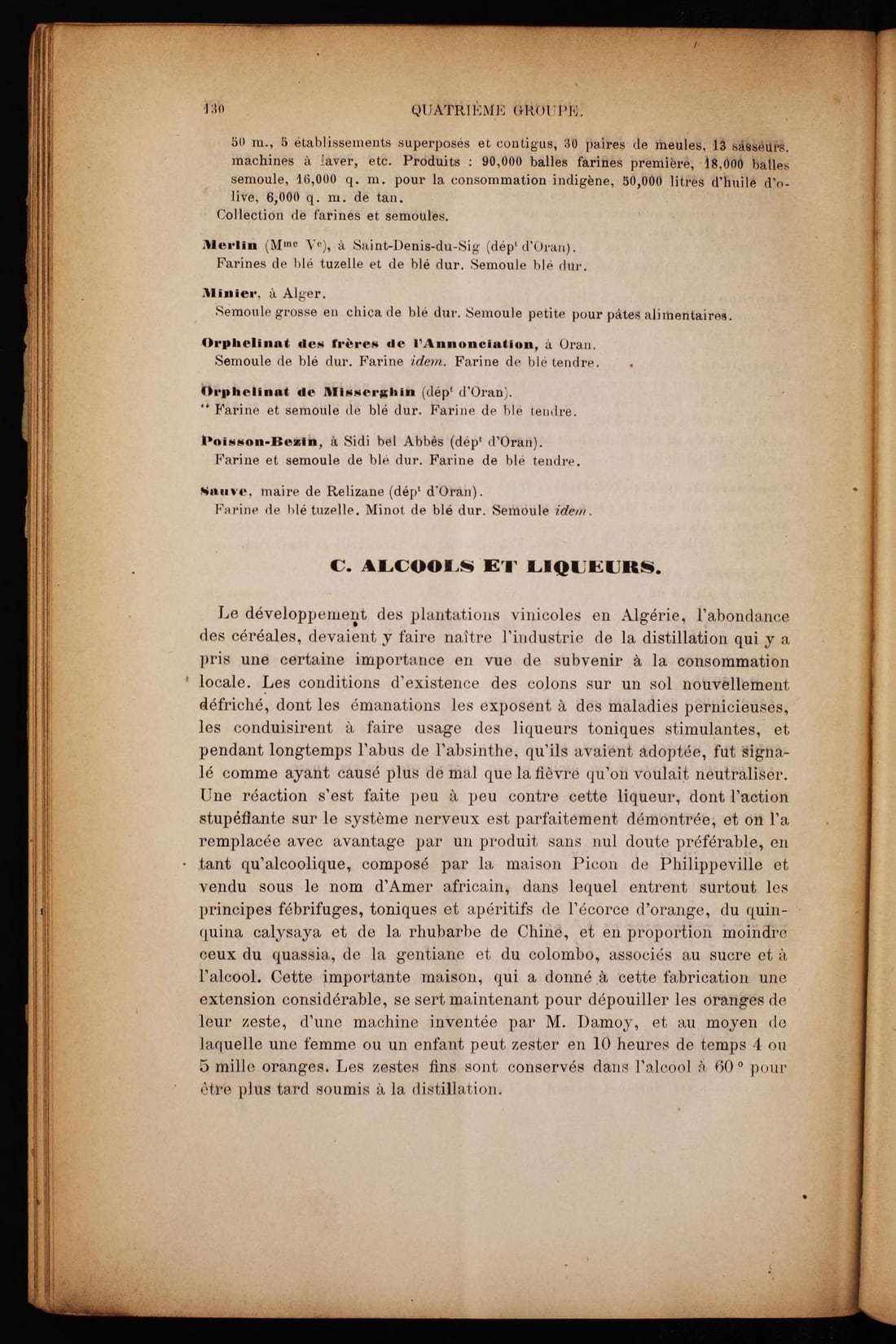
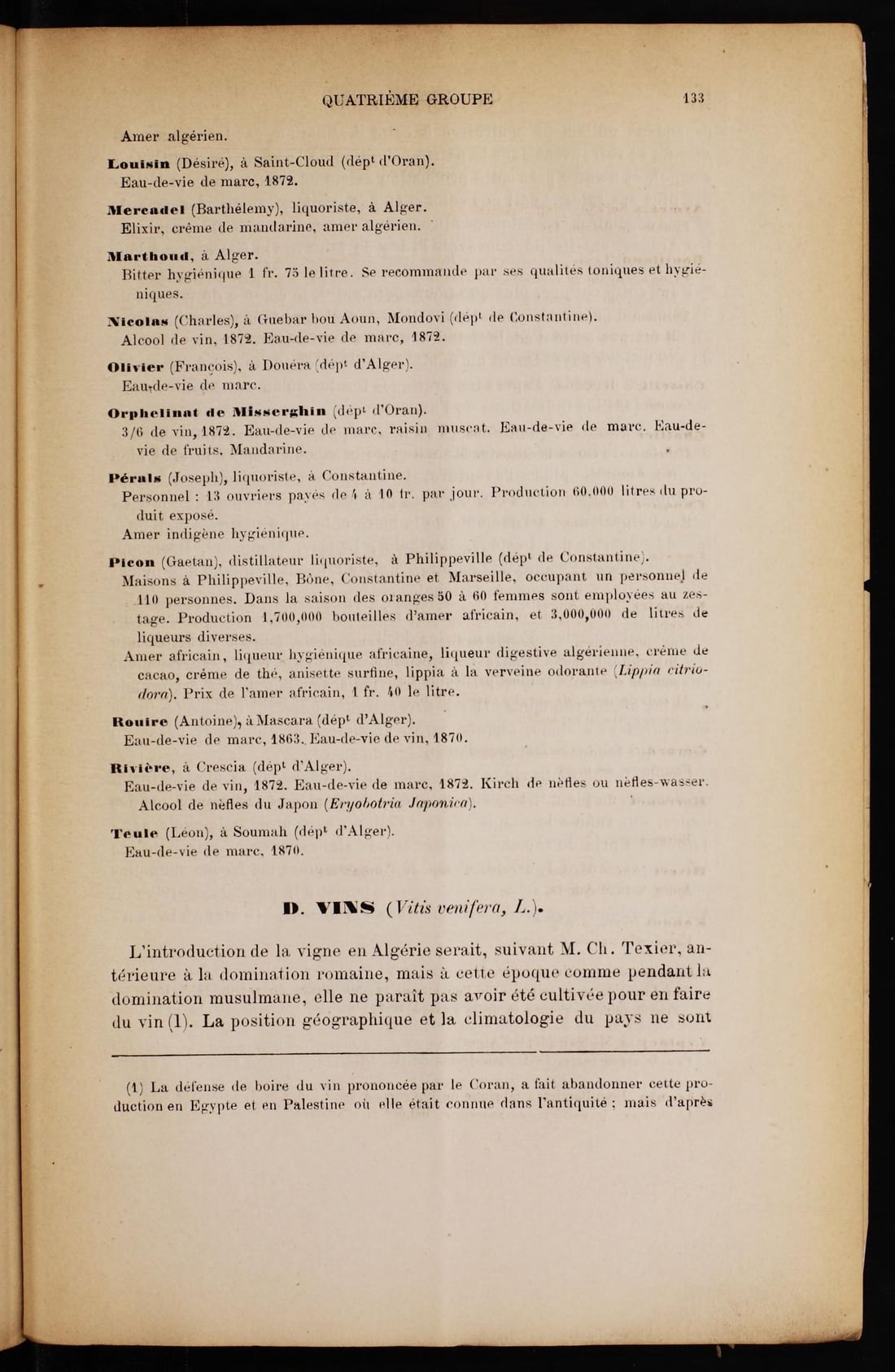
The documents of the time are blunt. The Algerian catalogue of the Vienna World's Fair, in 1873, explains that the settlers, exposed to “pernicious diseases”, abused absinthe, and that the Amer africain of the Picon house had replaced it. It gives the composition, orange, calisaya cinchona and Chinese rhubarb, and the workforce: four establishments, a hundred and ten people, and in season fifty to sixty women employed to zest the oranges.
The product crossed the Mediterranean. On 1 April 1872, a general warehouse opened in Marseille, on rue de l'Olivier, run by Picon's son-in-law, M. Damoy. The bitter took its creator's name and reached Paris. In 1889, a poster showed it on a Morris column, next to an absinthe and a chocolate: the remedy of the camps had become a product of the street. In 1909, according to the Oxford Companion, the house used the peel of some three million oranges a year, all of them from Algeria.
What followed is a story of strengths and owners. The bitter was 40% at the outset, and has been 18% since 1989. Picon was owned by Diageo, then by the Campari group, which bought it in 2022. Gaétan Picon died in Marseille in 1882.
The principle has hardly changed. Orange peel, fresh and dried, is macerated in alcohol and distilled; gentian and cinchona are added, with sugar, and caramel, which gives the bitter its orange-brown colour. In the glass, the orange peel mingles with the bitterness of the roots and the cinchona, rounded off by the sugar. In the north and east of France, the custom took hold of mixing it with beer.
The legend set against the sources
The legend
As told by the brand
Called up in 1830 “to join the army in North Africa”, the young Gaétan Picon looked for a remedy against fever. He distilled gentian and cinchona and added orange peel. The recipe was born in 1837, and the young man opened his factory in Marseille that same year. The brand's website names neither Algeria nor the conquest.
What the sources say
The 1837 date appears in none of the 19th-century documents consulted, and it runs up against a simple fact: Philippeville did not exist. According to the Archives nationales d'outre-mer, the military post that would become the town was founded in the spring of 1838. The Oxford Companion places the formula and the distillery around 1840. As for the Marseille factory “in 1837”, the brand's own timeline dates it to 1872, as does the official catalogue of that year.
That 1872 catalogue presents “Picon, Gaëtan, distillateur, Philippeville (Algérie)” as the inventor of the Amer africain. The recipe has changed: rhubarb in 1873, gentian today according to the brand. The story of an order from Governor Valée to supply the army with Picon circulates without a source. And what the catalogues showed without embarrassment, the brand passes over in silence: neither Algeria, nor the settlers, nor the women who zested the oranges appear in its story.
So, legend or history?
Before you read the answer, what do you think?
Choose a degree: it is the question a historian asks of every story.
Degree of certainty : Legend
Legend as to the date and the place: in 1837, Philippeville did not exist.
That Gaétan Picon, a soldier of the conquest, invented his bitter in Algeria is probable and consistent with the documents. But “1837”, with a factory in Marseille the same year, does not hold up: the town of the first distillery was founded in 1838, and the Marseille warehouse opened in 1872. Above all, the brand's story erases what the sources say first: Amer Picon is a product of colonial Algeria.
How we know
Each date in this story refers to one of the sources below. The degree of certainty can be read from the pattern of the rule: solid for attested, dashed for probable, dotted for tradition, double for legend.
Key dates
-
1830 The conquest of Algeria begins; Gaétan Picon in the Army of Africa -
1837 The “recipe”, according to the brand -
1838 Founding of the post that would become Philippeville -
1840 The Philippeville distillery -
1872 The Marseille warehouse opens, on rue de l'Olivier -
1873 The “Amer africain” shown in Vienna: four establishments, a hundred and ten people -
1989 The strength drops to 18%
Attested- established by documents contemporary with the events.
Probable- plausible and consistent with the sources, without direct proof.
Tradition- handed down by the house or by local memory, with no document to confirm or refute it.
Legend- contradicted by the sources, or invented after the fact.
What remains uncertain
- Gaétan Picon's birthplace: Camporosso or Genoa.
- The original name: “Amer africain” in the catalogues, “Amer algérien” in some authors.
- The order from General Valée, which has no source.
- The London medal of 1862, cited by the brand, still to be checked in the catalogues.
Sources
- Fernando Castellon, « Picon », in The Oxford Companion to Spirits and Cocktails , Oxford University Press , 2021.
- Catalogue officiel. Groupe 6 , A.-E. Rochette, p. 38 , 1872.
- Ministère de l'Intérieur, Algérie. Catalogue spécial (Exposition universelle de Vienne) , Challamel, p. 140 et 143 , 1873.
- Archives nationales d'outre-mer, Philippeville (Algérie), notice géographique .
- Picon, Notre histoire , 2025.