House stories · Chartreuse
Does Chartreuse come from a secret manuscript of 1605?
A green or yellow liqueur, made from plants whose blend only two monks know. The Carthusians trace it back to a manuscript given to them in 1605 by a great nobleman, which no one outside the monastery has ever seen. What the archives show is a community expelled from France in 1903, which took its know-how to Spain and in the end won back its name.
The story
The 1605 manuscript remains an unverifiable tradition, but Chartreuse is one of the few “monks' liqueurs” that really is made by monks, who kept their recipe through exile.
In the spring of 1903, the Carthusian order received its notice of expulsion. Under the 1901 law on associations it had been refused authorisation; the monks had to leave the monastery of the Grande Chartreuse, deep in its limestone wilderness above Grenoble. They left for Spain. What they took with them could not be seen: a way of doing things, known to only a handful of brothers.
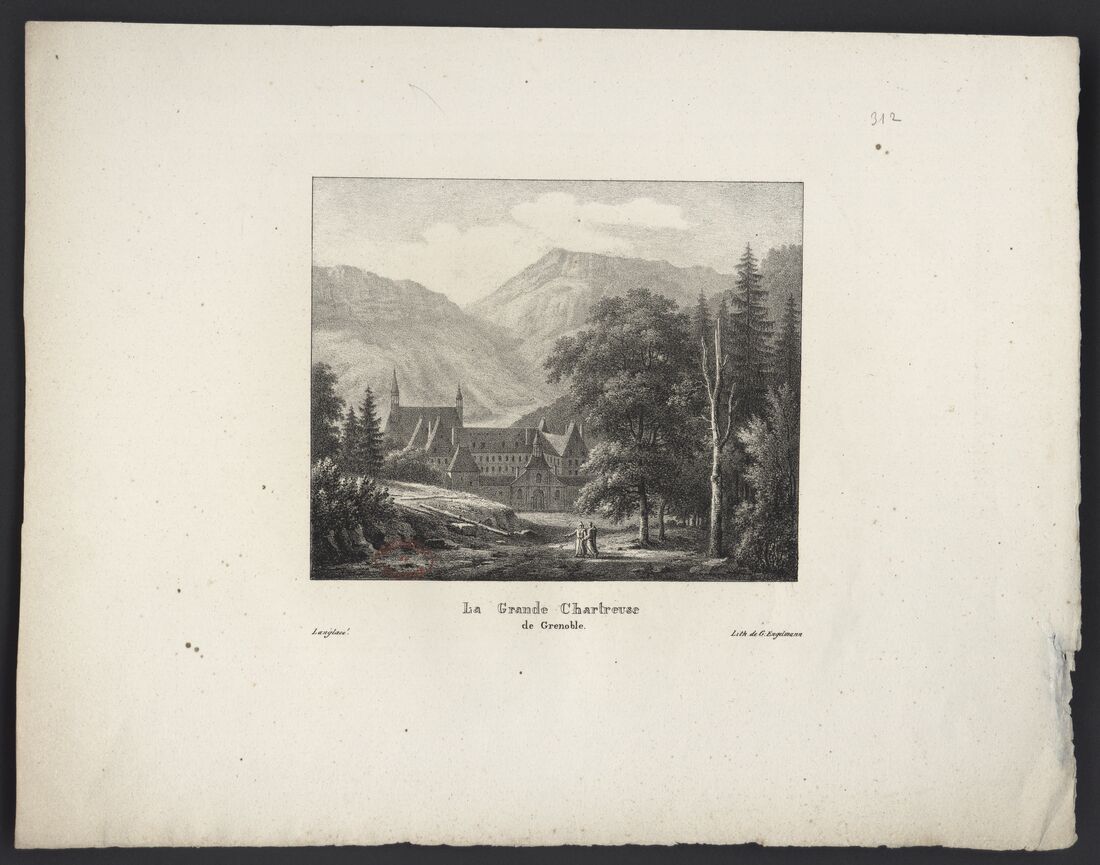
That knowledge lies in a blend of plants. The house counts a hundred and thirty of them and does not publish the list. Dried and ground, the plants are macerated in alcohol and then pass through the still; the liqueur is then aged for a long time in large oak vats. It comes in two colours. The green, at 55% vol., owes its colour to the plants themselves, with no added colouring; the yellow, at 43% vol., is milder and sweeter. In the glass, the sugar mingles with the bitterness of the herbs.
In Tarragona, in Catalonia, a distillery was at work from 1904; the bottles bore the words Liqueur fabriquée à Tarragone par les Pères Chartreux (liqueur made in Tarragona by the Carthusian Fathers). In France, the state had put the order's property into liquidation. The liquidator, Henri Lecouturier, took over the buildings at Fourvoirie, the stills and the brand, had the recipe worked out by trial and error, and sold a liqueur under the old name.
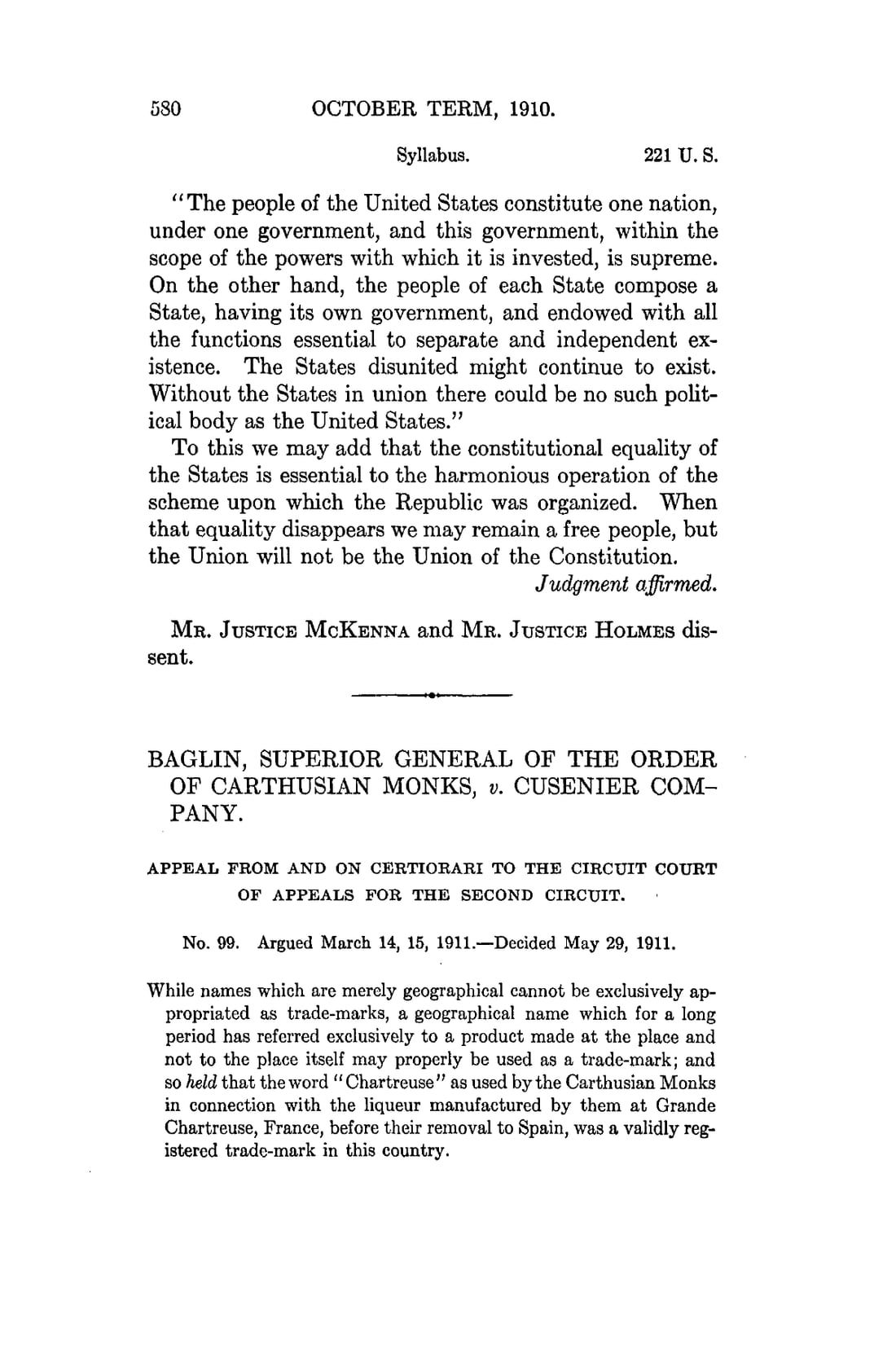
For a quarter of a century, then, there were two Chartreuses: the monks', made in exile with their plants, and the liquidator's, made within their walls without the secret. Courts in several countries became involved. On 29 May 1911, the Supreme Court of the United States, in Baglin v. Cusenier, ruled that the name designated the monks' liqueur, not a place or a building: it follows those who know how to make it.
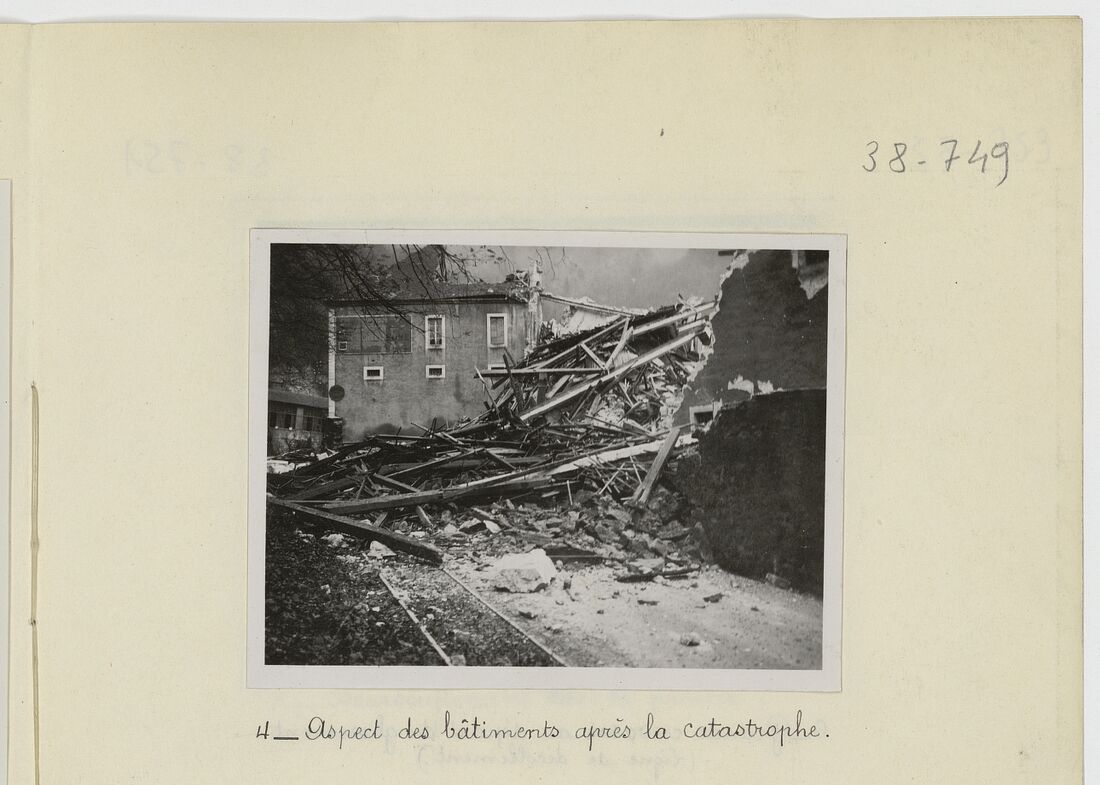
In 1929, the company that had been running the imitation went bankrupt and the brand returned to the Carthusians. Production resumed at Fourvoirie, until a landslide destroyed the distillery in 1935; it then moved to Voiron. The monks themselves did not return to the Grande Chartreuse until 1940. Tarragona, bombed during the Spanish Civil War, went on producing until 1989.
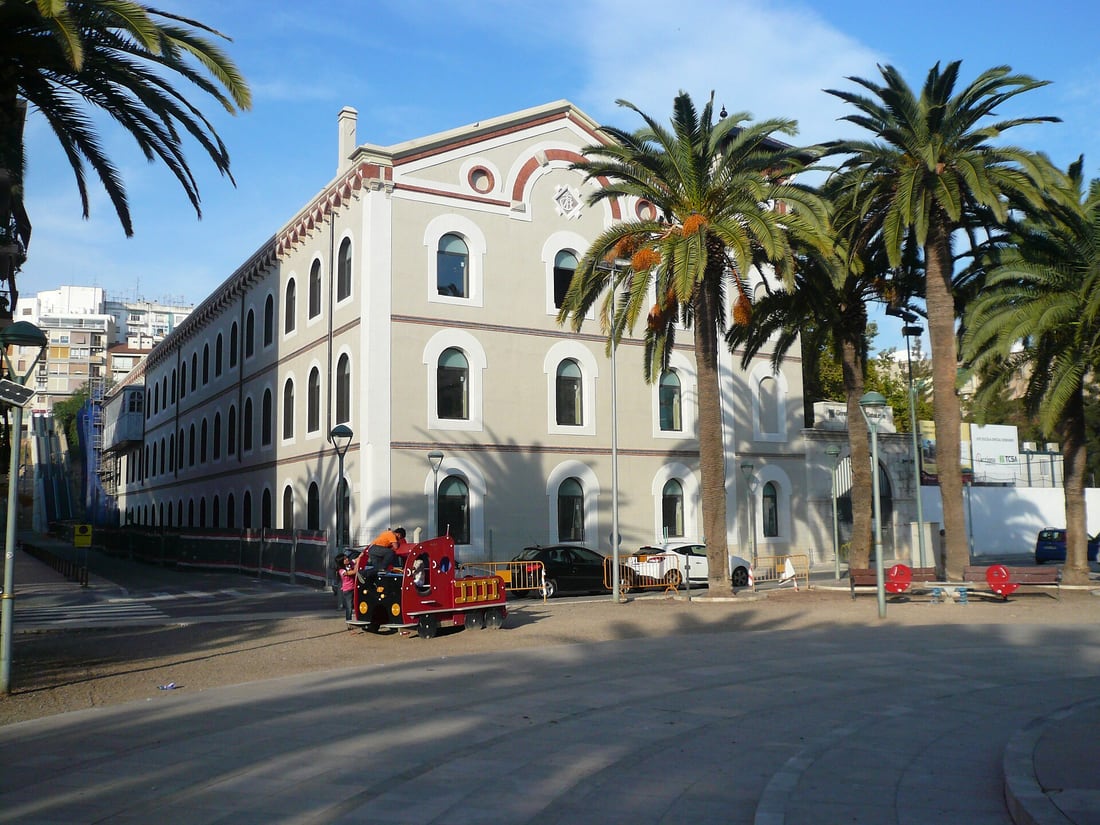
Since 2018, the liqueur has been distilled at Aiguenoire, in Entre-deux-Guiers. It is still two Carthusian brothers who prepare the blend of plants. And in 2023 the prior made an announcement that is rare for a brand: production would grow no further. “Infinite growth is no longer possible,” he wrote, citing the rhythm of life in the monastery. The house added more earthly reasons: droughts, and the supply of plants.
The legend set against the sources
The legend
As told by the house
In 1605, the Marshal d'Estrées gave the Carthusians of Vauvert, in Paris, a manuscript containing the formula for an “elixir of long life”. The text, too learned, long went unused. In 1737 it was entrusted to the Grande Chartreuse, where the apothecary Brother Jérôme Maubec devoted his life to deciphering it; Brother Antoine Dupuy set the recipe down in writing in 1764. From this elixir, around 1840, came green and yellow Chartreuse.
What the sources say
The 1605 manuscript has never been shown to a historian from outside the order; its story belongs to the house, which publishes it. It also betrays a later telling: in 1605, François-Annibal d'Estrées was only Marquis de Cœuvres. He did not become a Marshal of France until 1626, and a duke after that.
Maubec, Dupuy and the elixir of 1764 likewise rest on the order's archives, which are not public. It is plausible: monastic pharmacies of the time did prepare herbal elixirs, and the Élixir Végétal is still made today. From the 19th century onwards, the traces become external and solid: a trademark registered around the middle of the century, the expulsion, the lawsuits, the successive distilleries.
The clearest document is the 1911 judgment: it describes the expulsion, Tarragona and the liquidator's attempts, and takes it as given that only the monks know the process.
So, legend or history?
Before you read the answer, what do you think?
Choose a degree: it is the question a historian asks of every story.
Degree of certainty : Tradition
Tradition. The manuscript has never been seen outside the monastery.
Nothing proves the 1605 manuscript, and nothing allows us to say it did not exist: it is a tradition, upheld by the house alone, with an anachronistic title that betrays a later retelling. The rest of the story, by contrast, is solidly documented — and it is more astonishing than the legend: monks driven from their home won the right to keep their name.
How we know
Each date in this story refers to one of the sources below. The degree of certainty can be read from the pattern of the rule: solid for attested, dashed for probable, dotted for tradition, double for legend.
Key dates
-
1605 The manuscript of the “elixir” given to the Carthusians of Vauvert -
1626 François-Annibal d'Estrées becomes Marshal of France — twenty-one years after the gift -
1764 The recipe for the elixir set down in writing, according to the house -
1840 Green and yellow Chartreuse go on sale -
1903 Expulsion of the Carthusians; liquidation of their property -
1904 Distilling in exile in Tarragona -
1911 The US Supreme Court gives the name back to the monks -
1935 A landslide destroys the Fourvoirie distillery -
2018 The Aiguenoire distillery opens -
2023 The prior announces that production will grow no further
Attested- established by documents contemporary with the events.
Probable- plausible and consistent with the sources, without direct proof.
Tradition- handed down by the house or by local memory, with no document to confirm or refute it.
Legend- contradicted by the sources, or invented after the fact.
What remains uncertain
- The 1605 manuscript, which no outside historian has examined.
- The dates of the elixir, 1737, 1755 and 1764, taken from the order's archives alone.
- The first registration of the trademark, 1852 according to the house, still to be checked in the registers.
Sources
- Chartreuse Diffusion, L'histoire de la Chartreuse , 2026.
- Chartreuse Diffusion, L'histoire des distilleries Chartreuse , 2026.
- Cour suprême des États-Unis, Baglin v. Cusenier Co., 221 U.S. 580 , 1911.
- Dictionnaire historique de la Suisse, François Annibal d'Estrées .
- Aleteia, La stratégie décapante des chartreux pour leur breuvage , 2023.