N1 · category
Cognac
- Family
- Single-distillate spirit
- Raw materials
- Grape
- Place of origin
- Charente, France
Colour: Grape, as on the Atlas. Each neighbouring entry leads to its page; the inset, top right, opens the wide view.
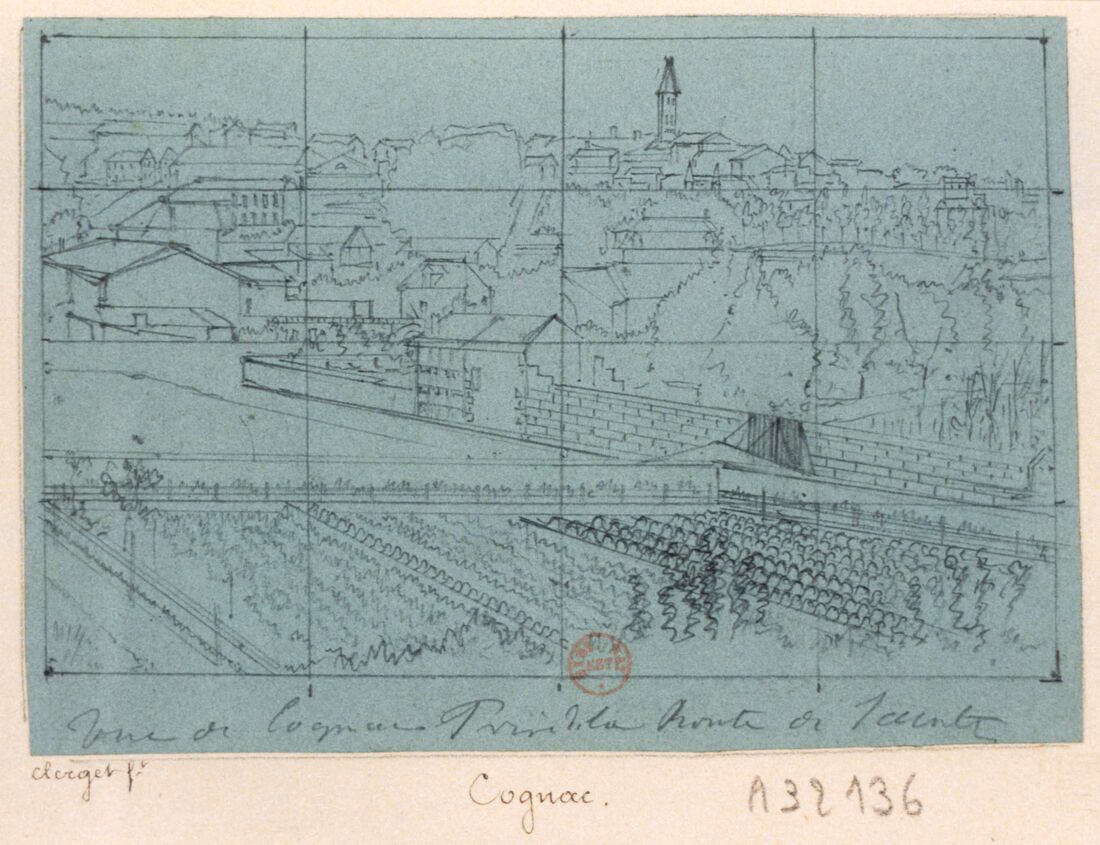
A spirit made from white wine, distilled twice in a Charentais still and then aged in oak casks for years, sometimes decades. It comes from around the town of Cognac, from a light, very acidic wine that is ill suited to drinking as it is.
Six crus, from Grande Champagne to Bois ordinaires, divide the vineyard according to the nature of the soil. According to Charentais tradition, the purer the chalk, the finer the spirit and the slower it is to mature.
How it is made
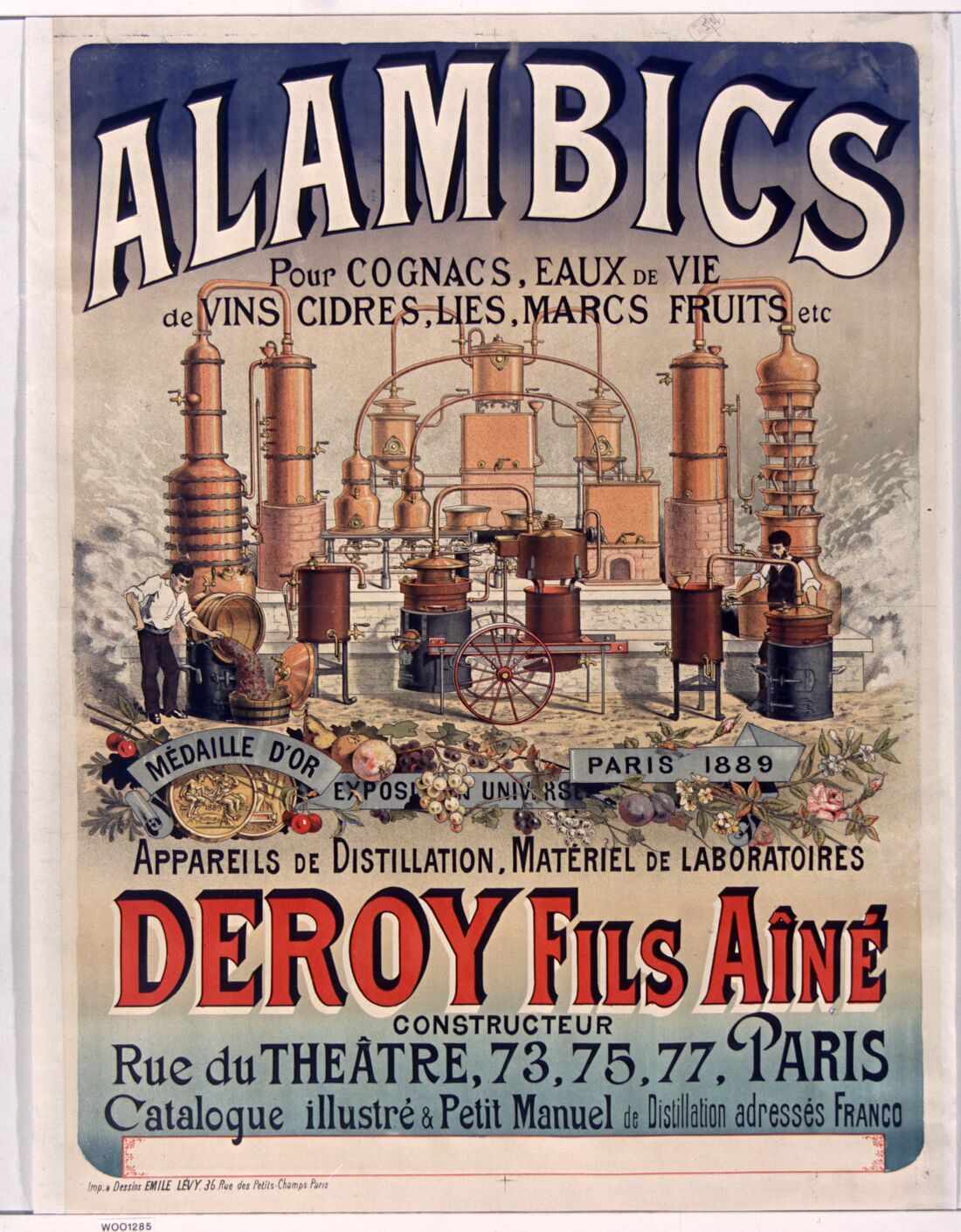
The wine comes mainly from ugni blanc, a grape variety that gives little alcohol and plenty of acidity. It is distilled, often on its lees, in a copper still heated over an open flame. A first heating gives the “brouillis”, at around 30% vol.; a second, the “bonne chauffe”, separates out the heart, the spirit at about 70% vol., from the heads, the seconds and the tails, which are returned to be distilled with the following charges.
Distillation must be completed by 31 March following the harvest. The spirit, colourless as it leaves the still, then spends at least two years in oak casks. The cellar master blends spirits of different ages and crus, and gradually brings them down to bottling strength, 40% vol. at the minimum.
A story
In the 17th century, the Dutch merchants who came for the wines of the Charentes had them distilled so that they would better withstand the voyage: this was brandewijn, “burnt wine”, which English turned into brandy. It was found that the spirit improved with time in the cask.
At the end of the 19th century, phylloxera destroyed most of the vineyard. It was replanted on American rootstocks, and ugni blanc, more resistant once grafted, took over in the mid-20th century from folle blanche and colombard. Today it covers almost the entire vineyard.
In the glass
Young, cognac is lively, marked by fresh fruit and vine blossom. With years in the cask it takes on an amber colour and notes of dried fruit, vanilla and spice. Very old cognacs develop what cellar masters call “rancio”, a note of walnut and undergrowth.
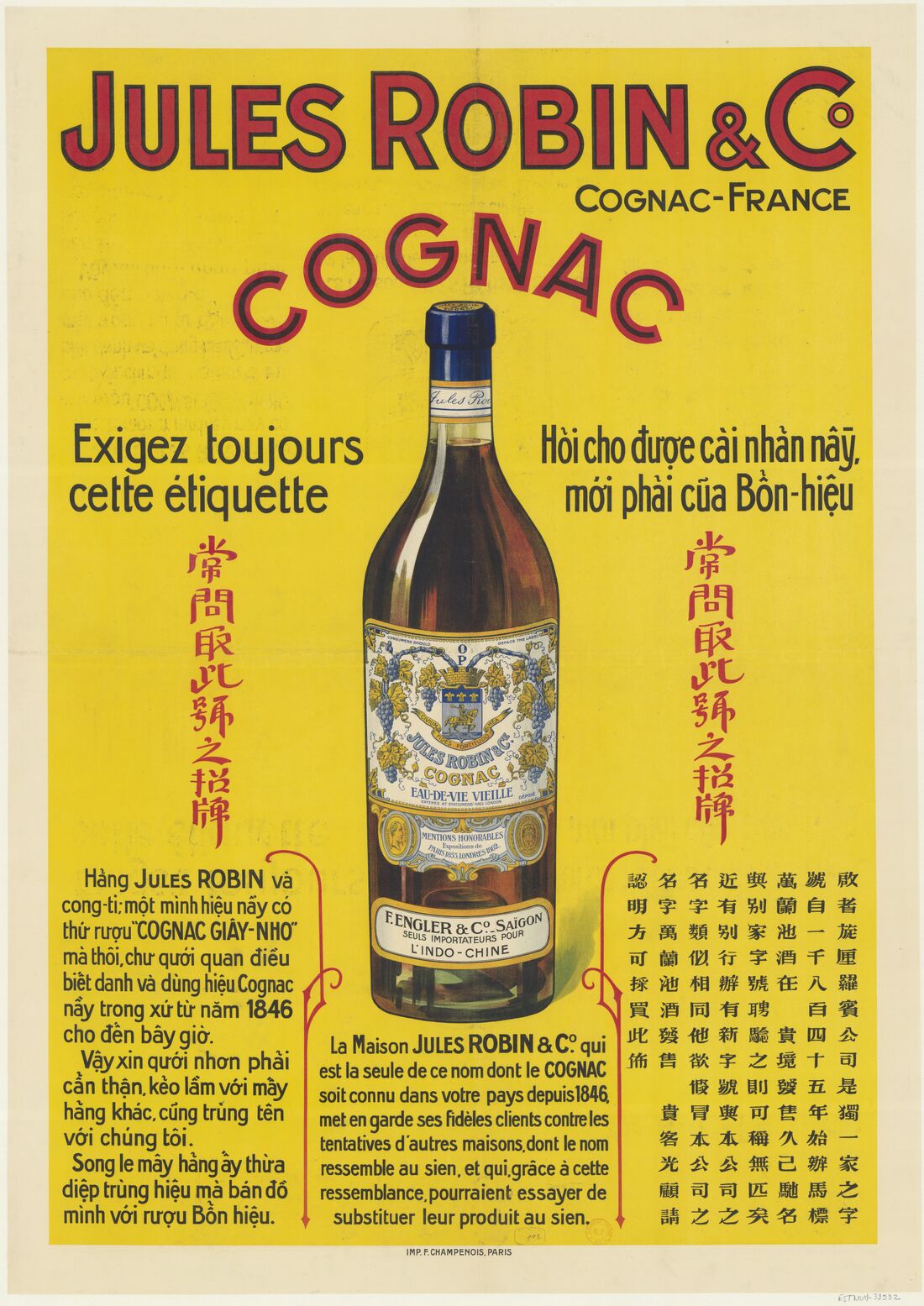
The terms VS, VSOP and XO indicate the age of the youngest spirit in the blend: at least two, four and ten years.
Amber from the cask, adjustable — maturation in wood, caramel allowed to even it out. See the six ways of making colour
Terroirs and geographical indications
The recognised production areas attached to this category in the Atlas.
- Eau-de-vie de Cognac Geographical indication registered in the European Union · France
- Cognac Bois ordinaires ou Bois à terroirs Complementary geographical denomination · France
- Cognac Bons Bois Complementary geographical denomination · France
- Cognac Borderies Complementary geographical denomination · France
- Cognac Fine Champagne Complementary geographical denomination · France
- Cognac Fins Bois Complementary geographical denomination · France
- Cognac Grande Champagne ou Grande Fine Champagne Complementary geographical denomination · France
- Cognac Petite Champagne ou Petite Fine Champagne Complementary geographical denomination · France
Sources and validation
- Sources of the corpus
- Names and statuses: eAmbrosia, the official register of geographical indications of the European Union. Geometries: INAO, Délimitation des aires géographiques des SIQO (27/07/2026), Licence Ouverte v2.0, reprojected to WGS84.
- Corpus updated on
- 1 August 2026
- Validation
- First version Corpus under construction. Each entry is checked and sourced before validation by the future scholarly board. Protection status and mode of location are carried by each entry: an area delimited by a product specification and a reference-town point do not carry the same weight.