House stories · Hennessy
Did an Irish officer from Fontenoy found Hennessy in 1765?
Every Hennessy label bears a date, 1765, and behind it a story: Richard Hennessy, an Irish officer in the brigade that distinguished itself at Fontenoy, settled in Cognac and founded his house there. The work of the historian Louis Cullen tells a longer story: that of a merchant who bought the wine spirit of the Charentes, shipped it in casks to northern Europe, and took thirty years to succeed.
The story
In 1765, Richard Hennessy began a small trade in wine spirit at Cognac; it was his son who, a generation later, made it into a great house.
In the 18th century, an Irish Catholic who wanted a career found few doors open at home. The Penal Laws shut him out of the army, the judiciary and much of the ownership of land. Thousands of young men therefore crossed to the Continent and enlisted in the service of the King of France, in Irish regiments. They were known as the “Wild Geese”.
Richard Hennessy was one of them. He was born around 1724 at Killavullen, in County Cork, into a family of minor Catholic gentry. An officer in the Irish Brigade, he left the army and turned to trade. In 1757 he is found in Ostend, a port of the Austrian Netherlands where Irish merchants prospered, and it was there that his son James was born, in October 1765.
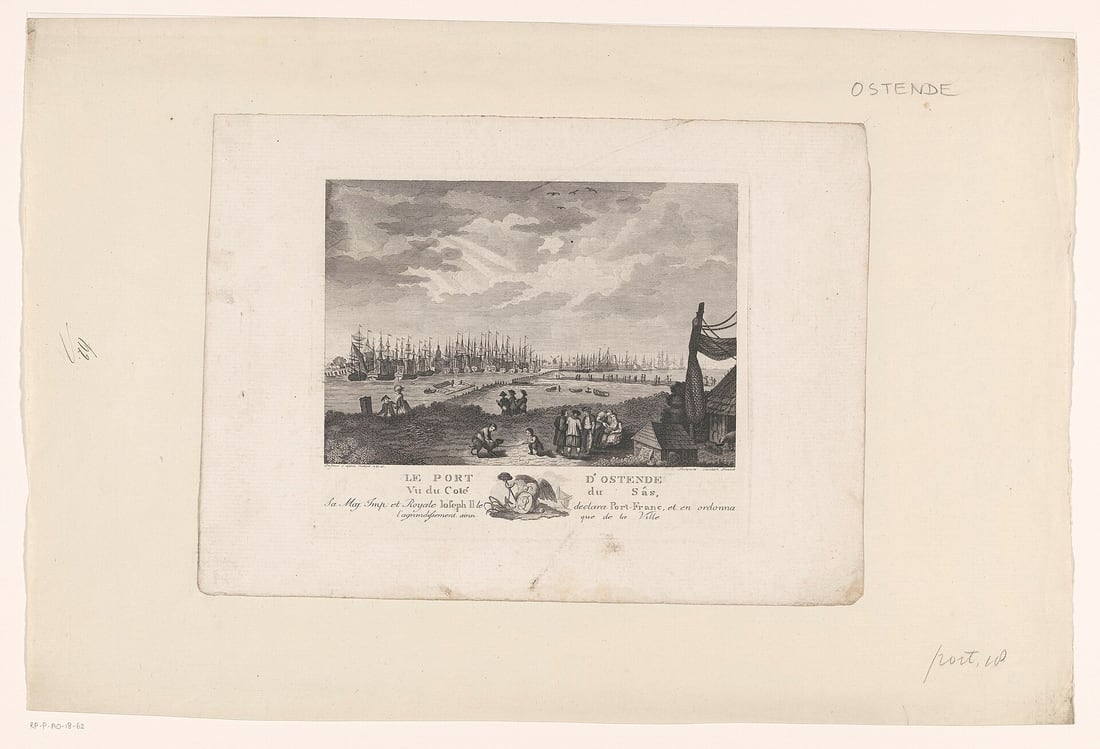
That same year, Richard Hennessy joined with other Irishmen to trade in wine spirit at Cognac. This is the act the house takes as its founding. But the beginnings were modest. According to Louis Cullen, the business counted for little in the 1770s; in 1776 Hennessy even moved to Bordeaux, as a distiller, with a partner. Cognac was then only one of the places in the career of a mobile merchant, moving between Ireland, Flanders and Aquitaine.
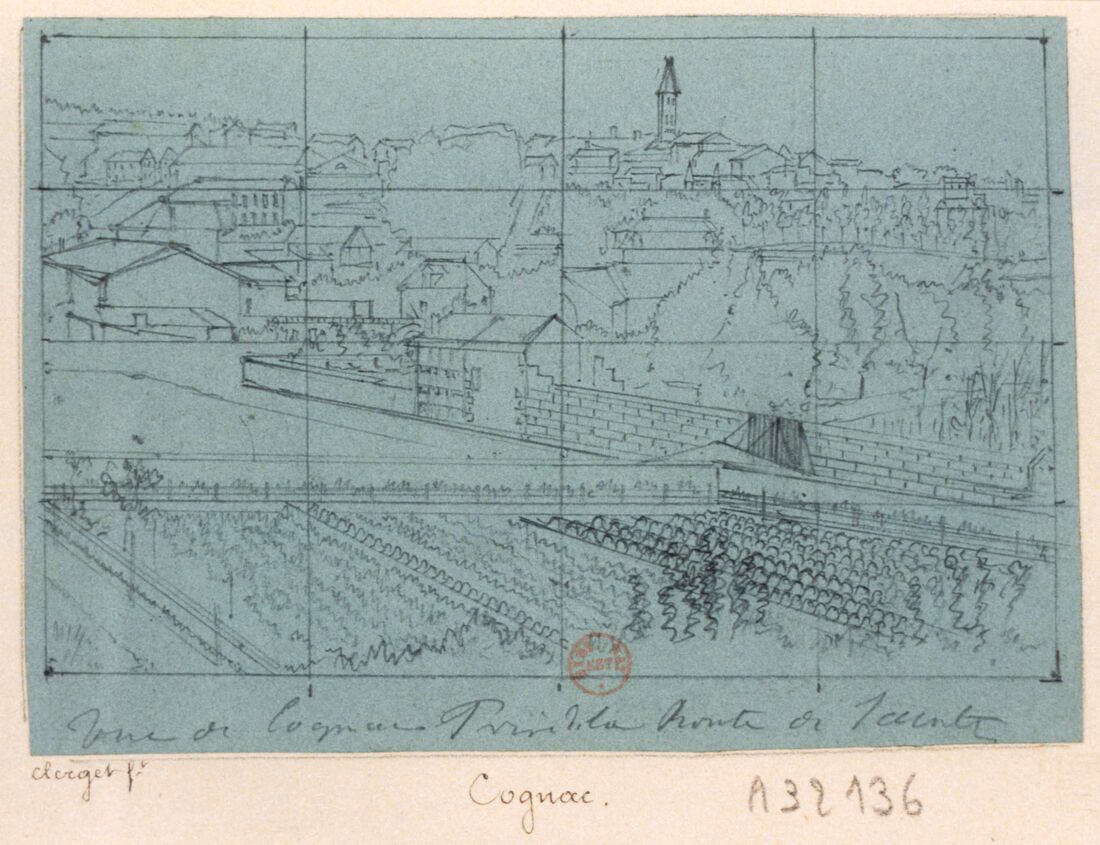
The trade dealt in a wine spirit. In the Charente countryside, the white wine, acidic and low in alcohol, is distilled twice in copper stills heated over a naked flame; out of them comes a colourless spirit, at around 70% vol. The merchant bought it from the distillers, let it rest in his cellars, blended it and shipped it, in the 18th century most often in casks. It is in the oak that it takes on its amber colour and its notes of dried fruit, vanilla and spice. At Hennessy, blending has been entrusted since the early 19th century to a single family of cellar masters, the Fillioux.
The rise came in the 1790s, with the son. James Hennessy, whom France called Jacques, married into the Martell family, the great rival. In 1813 he created the firm “Jas Hennessy & Co”, sat as a deputy in parliament, and made the house one of the town's leading exporters. Richard had died in Cognac in 1800.
In the 19th century, the house invented part of the vocabulary of cognac. It used stars to distinguish its qualities from 1865; in 1870, Maurice Hennessy had a very old spirit prepared for his family and friends, which he called “X.O”. In 1971 the house joined forces with Moët & Chandon, and in 1987 it became part of the LVMH group.
The legend set against the sources
The legend
As told by the house and family tradition
An officer of the Irish Brigade, Richard Hennessy fought at Fontenoy in 1745, the great victory of Louis XV, where the Irish regiments charged the English column. After the war he discovered the spirits of the Charentes, settled in Cognac and there, in 1765, founded the house that bears his name.
What the sources say
Richard Hennessy's presence at Fontenoy is not documented in the sources consulted: it is a family tradition, plausible since the Irish Brigade fought there. Even his regiment is unknown: Clare's or Dillon's, depending on the author.
The 1765 date is more solid, provided it is read correctly. Louis Cullen, who worked through the correspondence of the Irish merchants, sees it as the beginning of a business partnership, not the birth of a great house: the rise came only in the 1790s, when the son took over the business, allied himself with the Martells and profited from the upheavals in trade during the Revolution. The founder of the legend is an officer; the founder of history, a merchant who took thirty years to succeed.
Moreover, in October 1765, the founder's son was born in Ostend: the family was not yet settled in the Charente.
So, legend or history?
Before you read the answer, what do you think?
Choose a degree: it is the question a historian asks of every story.
Degree of certainty : Probable
Probable for 1765, tradition for Fontenoy.
In 1765 Richard Hennessy did begin trading at Cognac: the date is probable, provided it is seen as a starting point and not as a success. His charge at Fontenoy remains a tradition, plausible but undocumented. The real story is one of emigration: a Catholic officer with no future in Ireland, a trade that felt its way for thirty years, and a son who turned it into a dynasty.
How we know
Each date in this story refers to one of the sources below. The degree of certainty can be read from the pattern of the rule: solid for attested, dashed for probable, dotted for tradition, double for legend.
Key dates
-
1745 Battle of Fontenoy; Richard Hennessy is said to have fought there -
1765 The wine-spirit trade at Cognac begins; James born in Ostend -
1776 Richard Hennessy a distiller in Bordeaux -
1813 The firm “Jas Hennessy & Co” is created -
1870 Maurice Hennessy and the first spirit called “X.O” -
1987 The house joins the LVMH group
Attested- established by documents contemporary with the events.
Probable- plausible and consistent with the sources, without direct proof.
Tradition- handed down by the house or by local memory, with no document to confirm or refute it.
Legend- contradicted by the sources, or invented after the fact.
What remains uncertain
- Richard Hennessy's date of birth: 1720, 1724 or 1727 depending on the author.
- His regiment (Clare's or Dillon's) and his presence at Fontenoy.
- The names and exact roles of his partners in 1765.
- The work of Louis Cullen and Gilles Le Tac, consulted through reviews and quotations, still to be checked against the books themselves.
Sources
- Louis M. Cullen, The Irish Brandy Houses of Eighteenth-Century France , Lilliput Press , 2000.
- Gilles Le Tac, Naissance d'une dynastie du cognac : les Hennessy , Le Croît Vif , 2008.
- LVMH, Hennessy , 2026.
- Ministère de la Culture, base Joconde, Horace Vernet, Bataille de Fontenoy. 11 mai 1745 .