Gallery · space
The Atlas
Where are the world's spirits born?
The Atlas places on the map the categories of spirits, their terroirs, their raw materials and the links between them, each entry with its sources.
- 130terroirs
- 26categories
- 8raw materials
This page was machine-translated from French. It has not been reviewed by a native speaker: the French version prevails. Read the French version
A banned green fairy, monks on the labels but not always in the archives, a gin that made London tremble. SpiLi tells the history of spirits the way you visit a museum: one question per room, and sources to answer it.
Green, transparent liqueur.
A click lets a few drops fall; press and hold, on the button or on the glass, to pour for longer.
On display · The Green Fairy room
A clear liquid, clear water, and yet a cloud. In the 19th century, a slotted spoon and a lump of sugar were laid on the absinthe glass, then water was poured in drop by drop.
Where does this cloud come from, and why did it survive the law of 1915? The gesture continues in the room, and the story moves forward with the water.
Enter the room “The Green Fairy”
Reservoir glass, slotted spoon and sugar: SpiLi illustration based on the 19th-century gesture. Degree of certainty of the gesture: attested.
The rooms
Each room tells a story, and each wing has its own mode: it transforms, it decants or it brings to the surface. Approach a door: it opens slightly and hints at what is happening behind it.
A slit in the dark for what is brought to the surface, a clouded file for what settles, a vaulted hearth for what is transformed.
Mode · out of the dark
What settled at the bottom of time returns to the surface: the bans, the trials, what people wanted to forget.
2 rooms
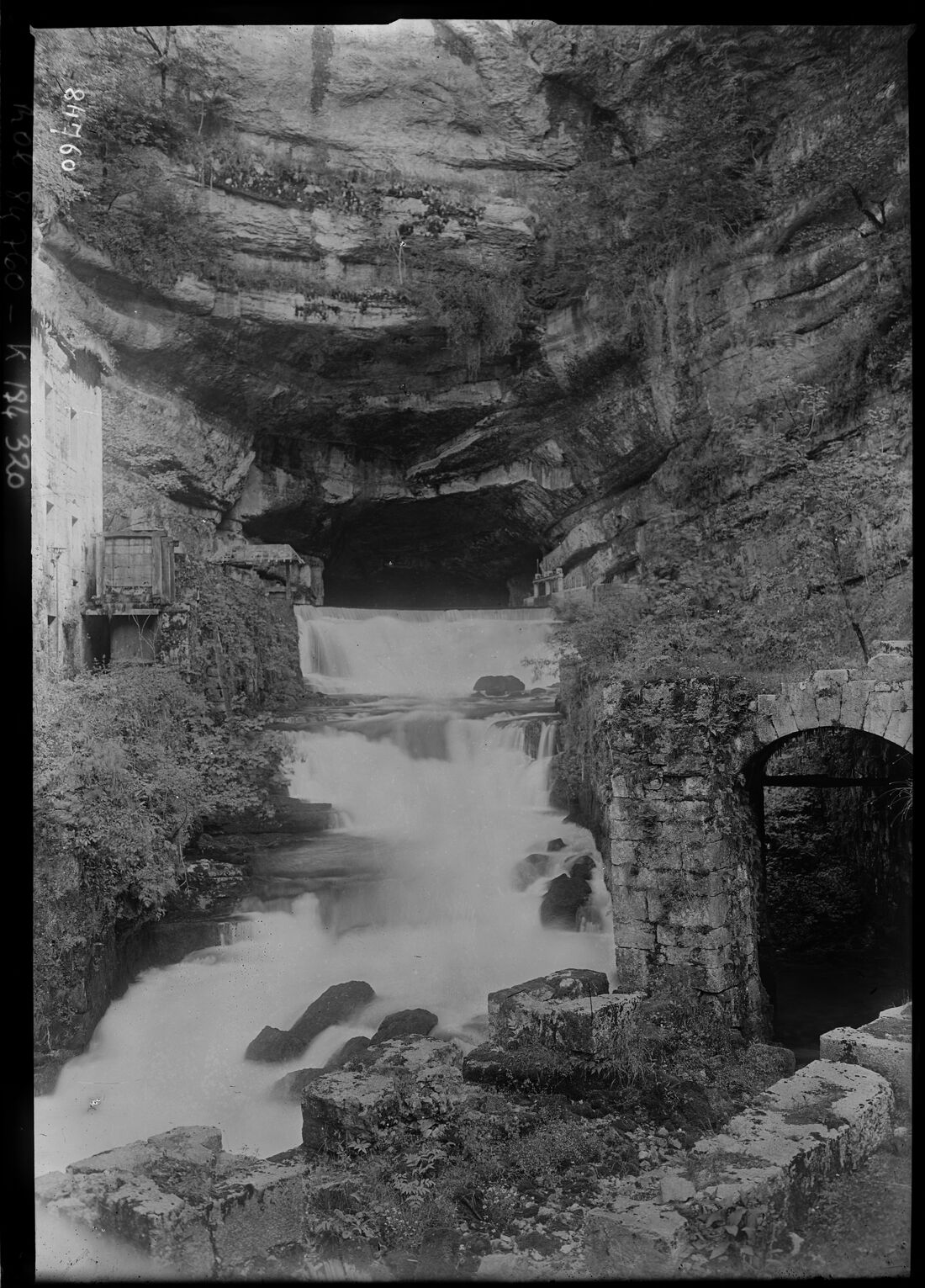
Room · 7 display cases · 8 min · with the absinthe moment
Why did France ban absinthe?
In 1901, absinthe resurfaces at the source of the Loue; in 1915, it is outlawed. Seven display cases following a pharmacy elixir that became an industry, an emblem, a scapegoat, then a geographical indication.
Source de la Loue, Agence Rol (press photograph), 1923. Gallica / BnF, ark:/12148/btv1b53111197c, public domain.
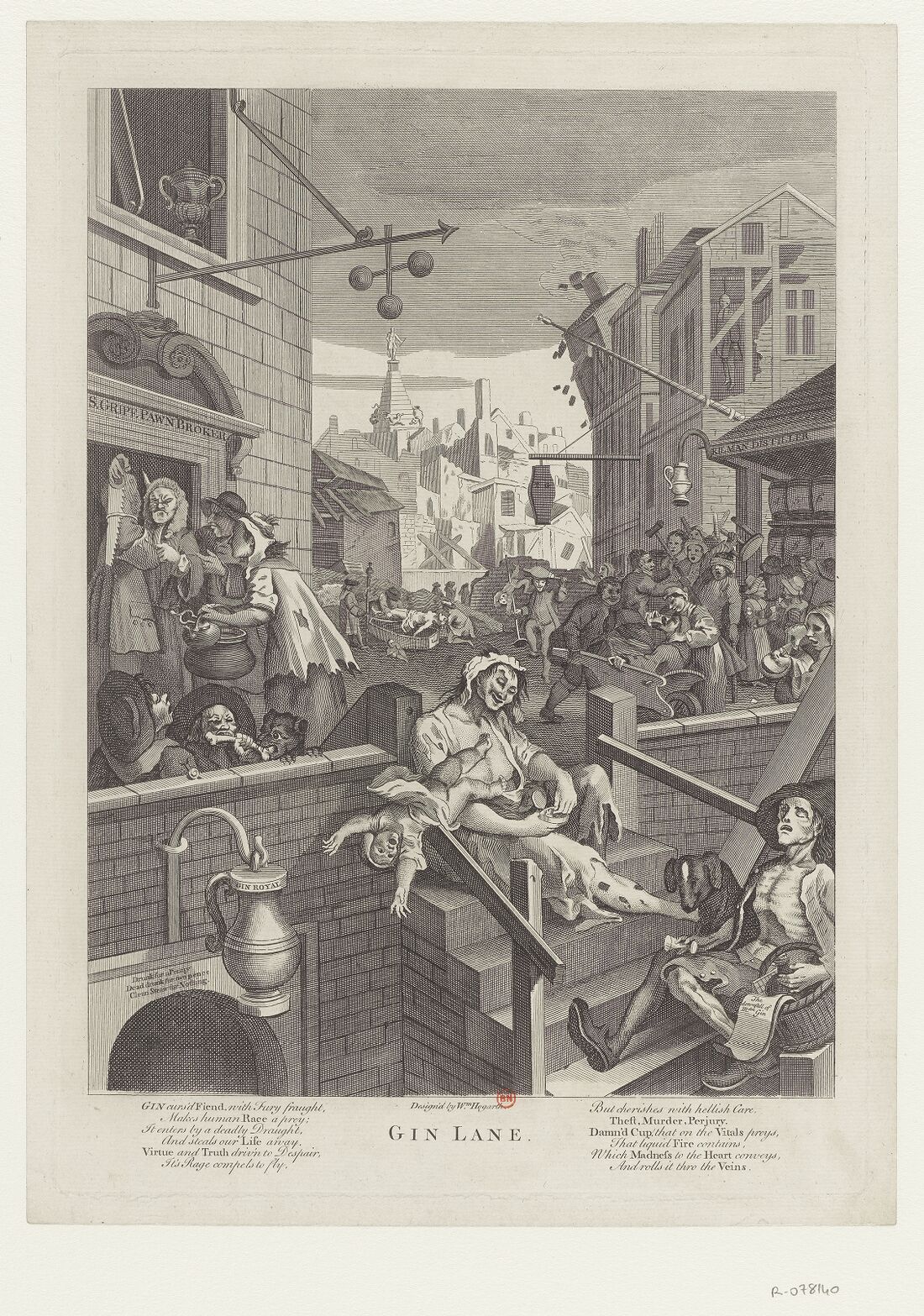
Room · 5 display cases · 6 min
Did gin really ruin London?
In 1751, an engraving by Hogarth makes a London alley the very image of ruin. Five display cases to trace this image back to its causes: a Flemish remedy, a Dutch king, laws that fail.
Gin Lane, William Hogarth, 1751. Gallica / BnF, ark:/12148/btv1b10844098s, public domain.
Mode · the inquiry
The story is left to rest so that the clear can be separated from the sediment: a legend set against the archives.
1 room · 23 houses · 2 games
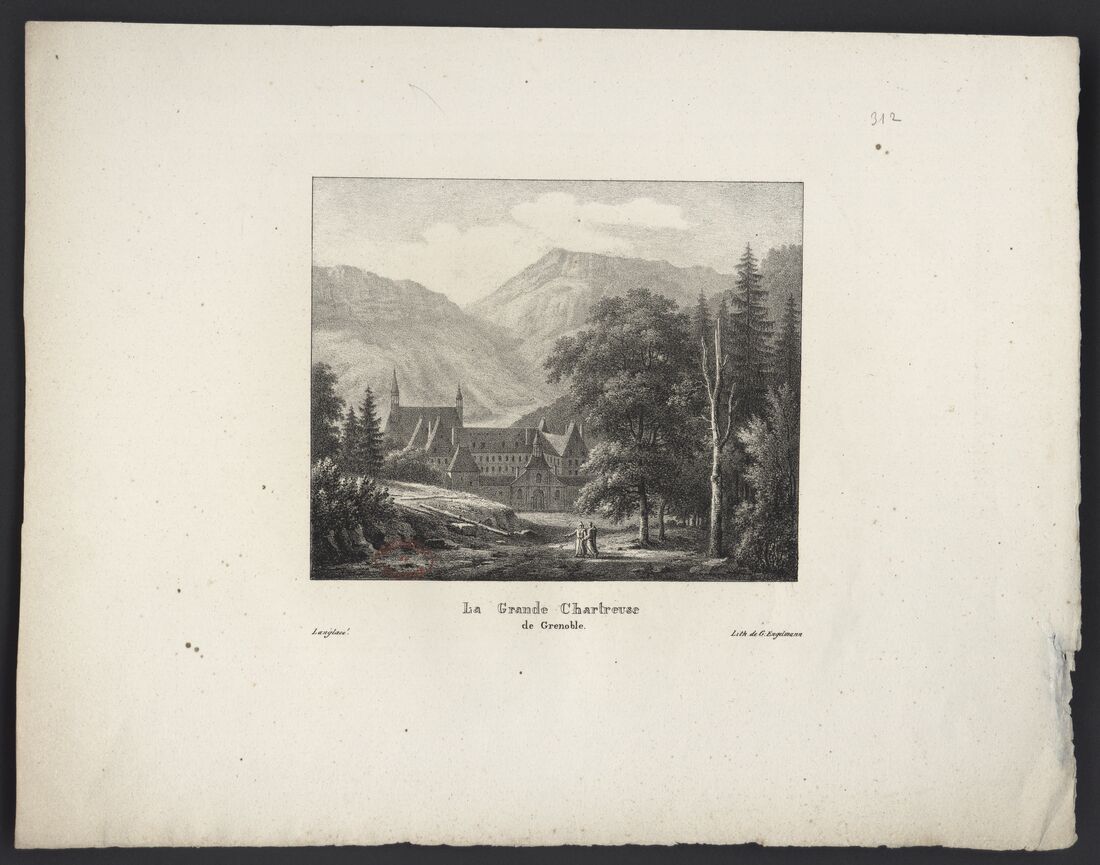
Room · 6 display cases · 7 min
Are monks' liqueurs made by monks?
Two liqueurs, two monasteries in the imagery, two opposite stories. Six display cases to separate what belongs to the archive, to tradition and to advertising.
La Grande Chartreuse, Godefroy Engelmann, lithographer, after Jean-Baptiste-Gabriel Langlacé, 19th century (before 1839). Gallica / BnF, ark:/12148/btv1b10488099r, public domain.
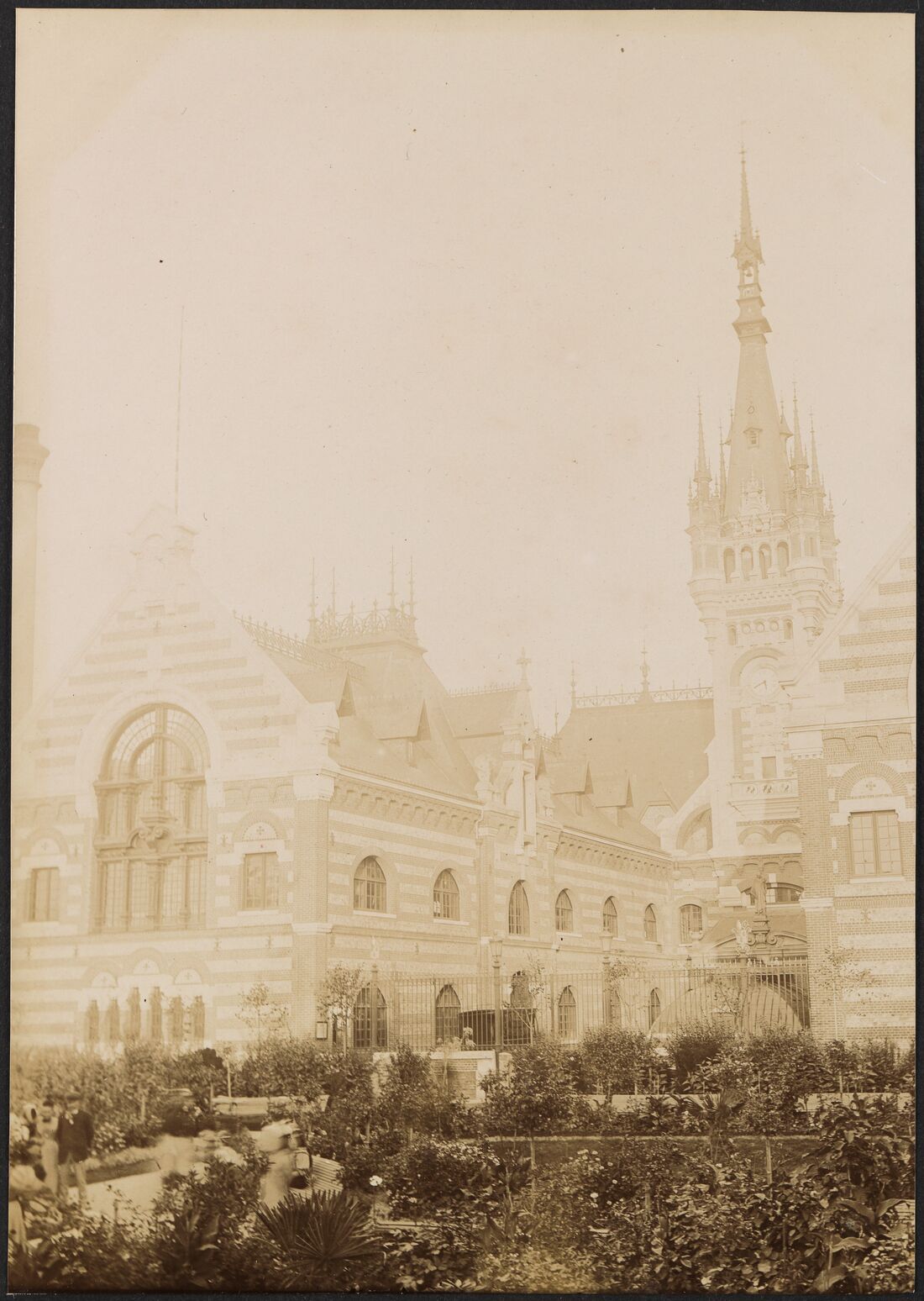
House stories · 23 houses
Every house has its founding story. We set it against the archives.
Chartreuse, Bénédictine, Marie Brizard, Picon, Pernod, Cointreau, Saint-James, Hennessy, Get 27, Suze, Lillet, Angostura, Jägermeister, Lucas Bols, Bushmills, Jose Cuervo, Smirnoff, Fernet-Branca, Linie Aquavit, Bacardí, Jack Daniel's, Kweichow Moutai, Nikka.
[Palais de la Bénédictine à Fécamp], anonymous photograph, 1890. Gallica / BnF, ark:/12148/btv1b10679228r, public domain.
Game · 10 statements · 10 min
A monk of 1510, an absinthe that drives people mad, a doctor who invents gin: it is up to you to decide, evidence in hand.
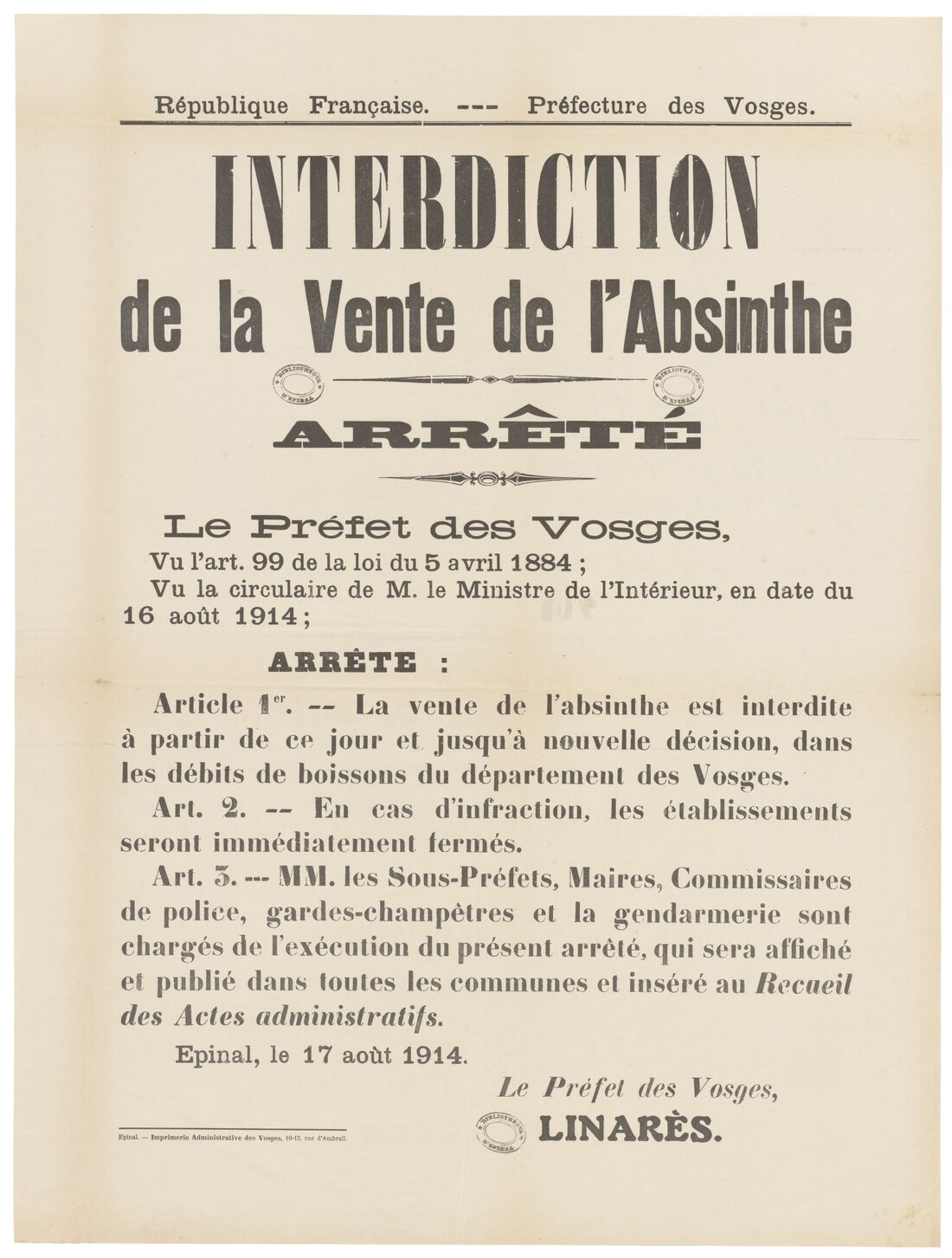
Game · 9 boxes to confirm · 15 min
Six archive documents from 1911 to 1915. Who banned absinthe, when, and what exactly was banned?
Préfecture des Vosges. Interdiction de la vente de l'absinthe. Arrêté, Pierre Linarès, prefect of the Vosges, 1914. Gallica / BnF, ark:/12148/btv1b106734075, public domain.
Mode · the hearth
Matter passes through fire, becomes vapour, condenses, ages, turns cloudy: techniques, materials, time, terroirs.
2 rooms · 2 games
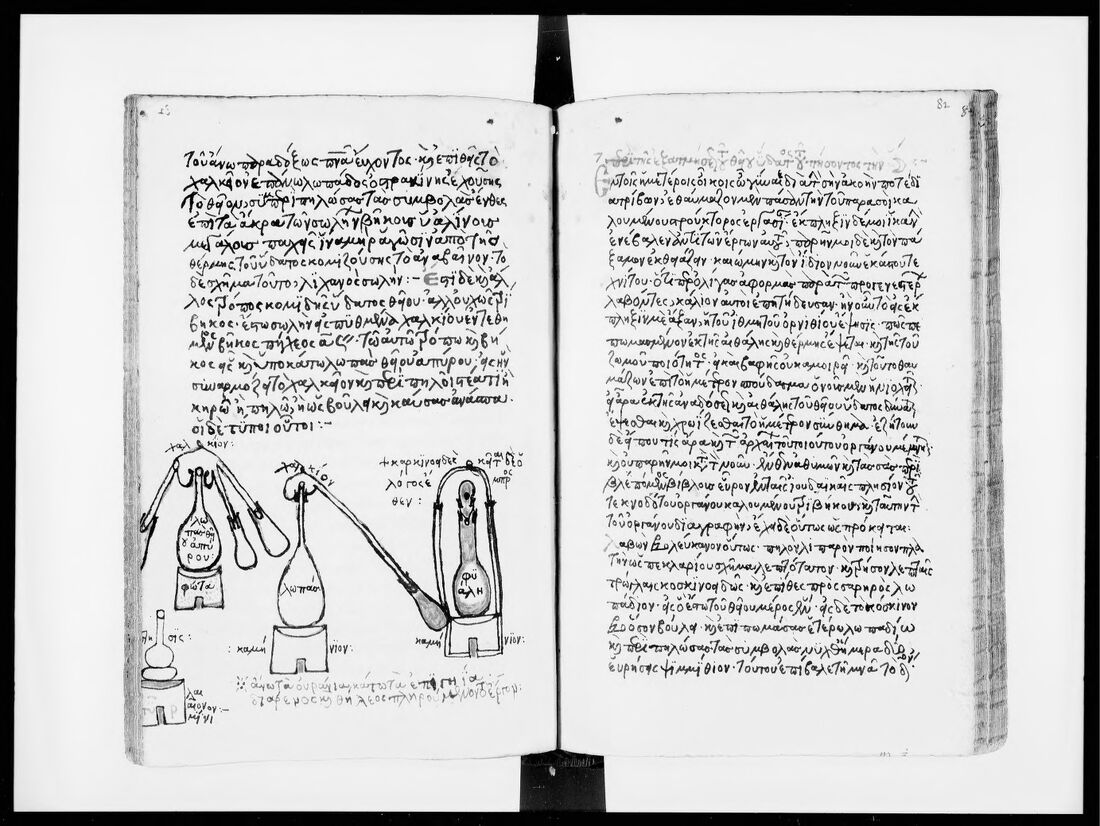
Room · 6 display cases · 7 min
Who invented the still?
A vessel, a head, a tube that cools: the apparatus has changed little in nearly two thousand years, but what is asked of it has changed completely. Six display cases, from the quest for gold to the law on home distillers.
Grec 2327, recueil des alchimistes grecs, dessins d'appareils, Théodore Pélécanos, copyist, 1478. Gallica / BnF, ark:/12148/btv1b10723905w, f. 88, public domain.
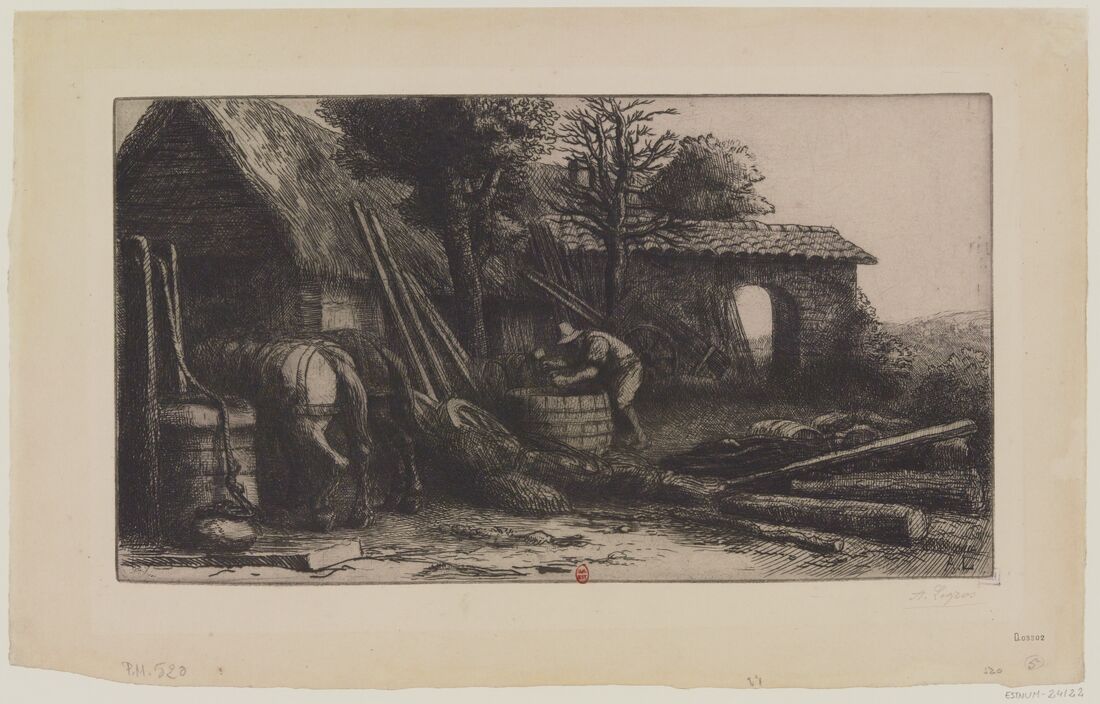
Room · 6 display cases · 7 min
What does time do to an eau-de-vie?
A cask, a cellar, years. Six display cases to understand what happens between leaving the still and reaching the bottle, and what age statements really say.
[Le tonnelier], Alphonse Legros, engraver, 1885-1893. Gallica / BnF, ark:/12148/btv1b10545348c, public domain.
Game · 10 riddles · 10 min
Ten plants from liqueurs and bitters, three clues each: history, botany, use.
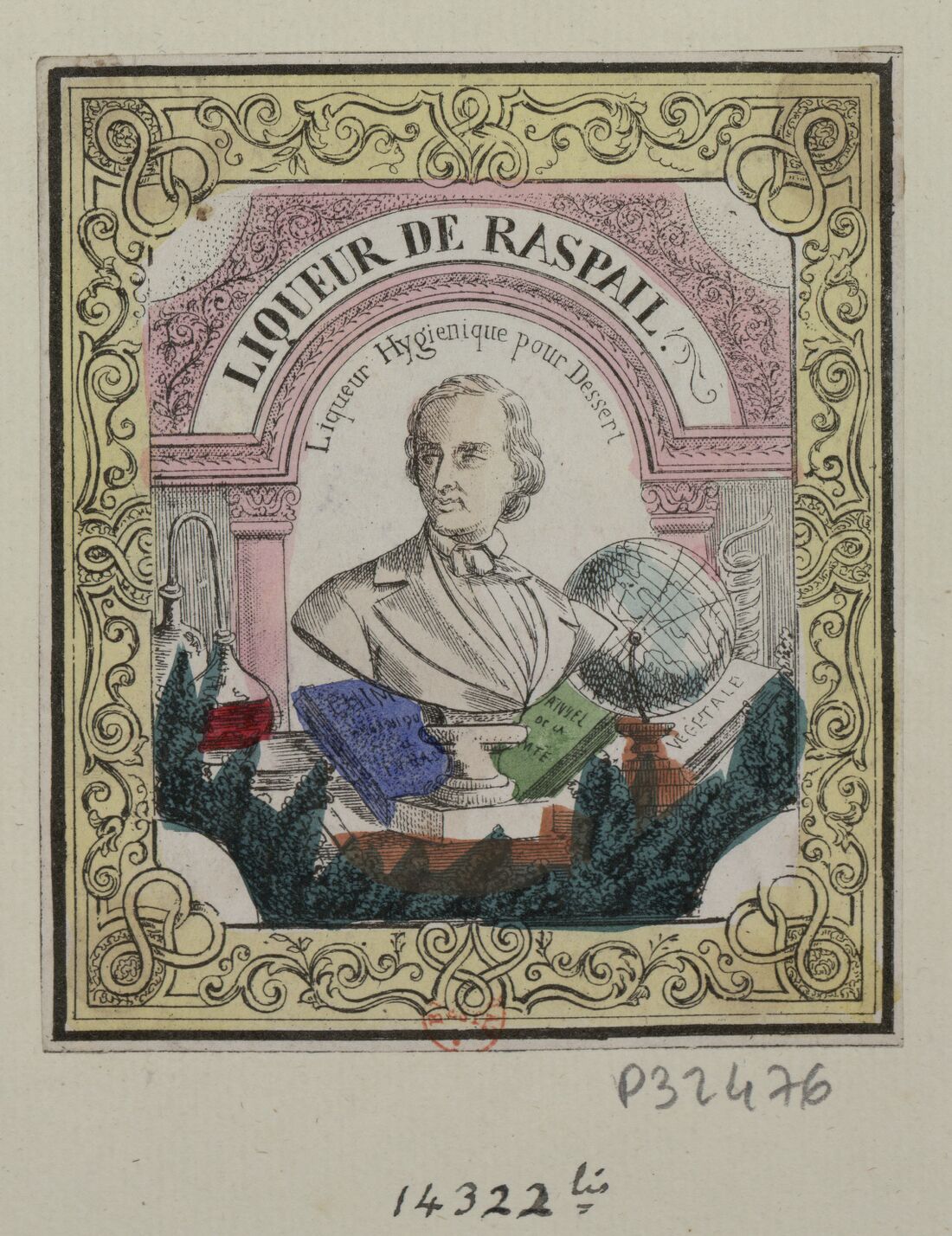
Game · 5 documents · 15 min
Medals, monks, health promises: five old posters and labels to decipher, area by area.
Liqueur de Raspail. Liqueur hygiénique pour dessert, anonymous, undated (19th century). Gallica / BnF, ark:/12148/btv1b530152843, public domain.
The galleries
Between the rooms, three galleries carry what circulates: through space, through time, from a material to its descendants. They connect the rooms to one another.
Everything is handed down, the worst included. Rum was born of the sugar economy and the slave trade: its history is inseparable from slavery. From 1720 to 1751, gin consumption exploded in the poor districts of London and caused a major health and social crisis. From 1920 to 1933, American Prohibition destroyed one industry and gave rise to a clandestine one. The galleries say this too.
Gallery · space
Where are the world's spirits born?
The Atlas places on the map the categories of spirits, their terroirs, their raw materials and the links between them, each entry with its sources.
Gallery · time
Who invented gin? Since when has whisky been distilled in Scotland?
The turning points of a gesture nearly two thousand years old: the apparatus that changes, the product that is born, the law that decides, the society that takes alarm. Each date says where it comes from and how certain it is.
Gallery · lineage
What is a spirit made of, and who protects it?
Six plates cross raw materials, families, countries and legal statuses: each cell says what links two worlds, and on what evidence.
The project
Whiskies, rums, cognacs, gins, eaux-de-vie, liqueurs, mezcals, baijius… Spirits tell centuries of the history of civilisations: the science of distilling, trade routes, farming terroirs, the arts of the table, literature and myth. This immense heritage is scattered: to our knowledge, no museum tells it as a whole today.
SpiLi aims to fill this gap: a museum in the Paris region devoted to the culture of spirits and liqueurs, open to all — newcomers and connoisseurs, families, international visitors, people with disabilities. A permanent route, temporary exhibitions, outreach and a cultural programme.
The project is led by a preparatory association, currently being formed. The structure envisaged afterwards, an endowment fund and then a foundation, is under study: this site does not present it as settled.
Objectives, not commitments
The preparatory association, the circle of founders, and the open online corpus you are browsing.
An immersive, touring exhibition in the Paris region: the terroirs of French spirits.
The exhibition travels to key cities around the world, in dialogue with local cultures.
The permanent museum, devoted to the spirits of the whole world.
The SpiLi letter
Once a month: a story drawn from the collection, the rooms opening on the site, news of the project. Nothing else.
To subscribe, write to contact@spili-museum.com with “Letter” as the subject.
A museum funded by a single brand becomes its showcase, and no one believes it. SpiLi will be born of a coalition. Four commitments make this possible, and they apply to every house, yours included.
No room and no story is for sale. Content will rest with an independent scholarly board, under a charter of independence intended to be annexed to the statutes.
The route tells of categories, terroirs and gestures. House stories are set against the archives, yours as much as the others'.
The slave trade, mass alcohol abuse, prohibitions and prevention all have their place. That is what makes the museum credible to the public and to institutions.
Showing without promoting: a cultural register, never one that encourages consumption, and the health warning on every page that shows a product.