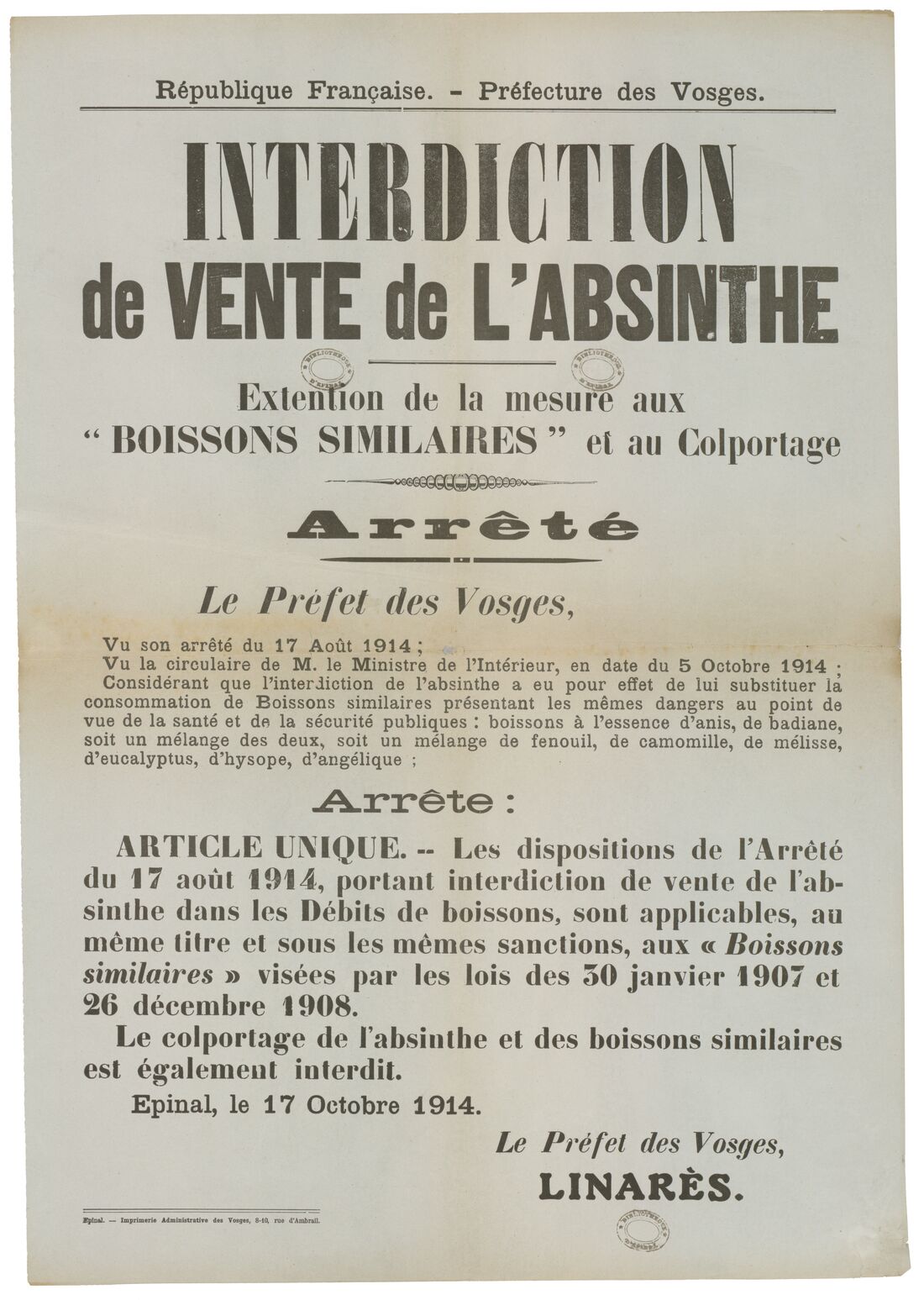
Why does pastis turn cloudy in water?
Two clear liquids that make an opaque one: the story of a cloudiness that outlived the ban on absinthe and waited until 2003 to be named.
Image: Source gallica.bnf.fr / BnF
This page was machine-translated from French. It has not been reviewed by a native speaker: the French version prevails. Read the French version
Why does pastis turn cloudy in water? Where does the word “alcohol” come from? Where does the angels' share fly off to? Simple questions, sourced answers — and, every time, what is fact and what is legend.
Two clear liquids that make an opaque one: the story of a cloudiness that outlived the ban on absinthe and waited until 2003 to be named.
Image: Source gallica.bnf.fr / BnF
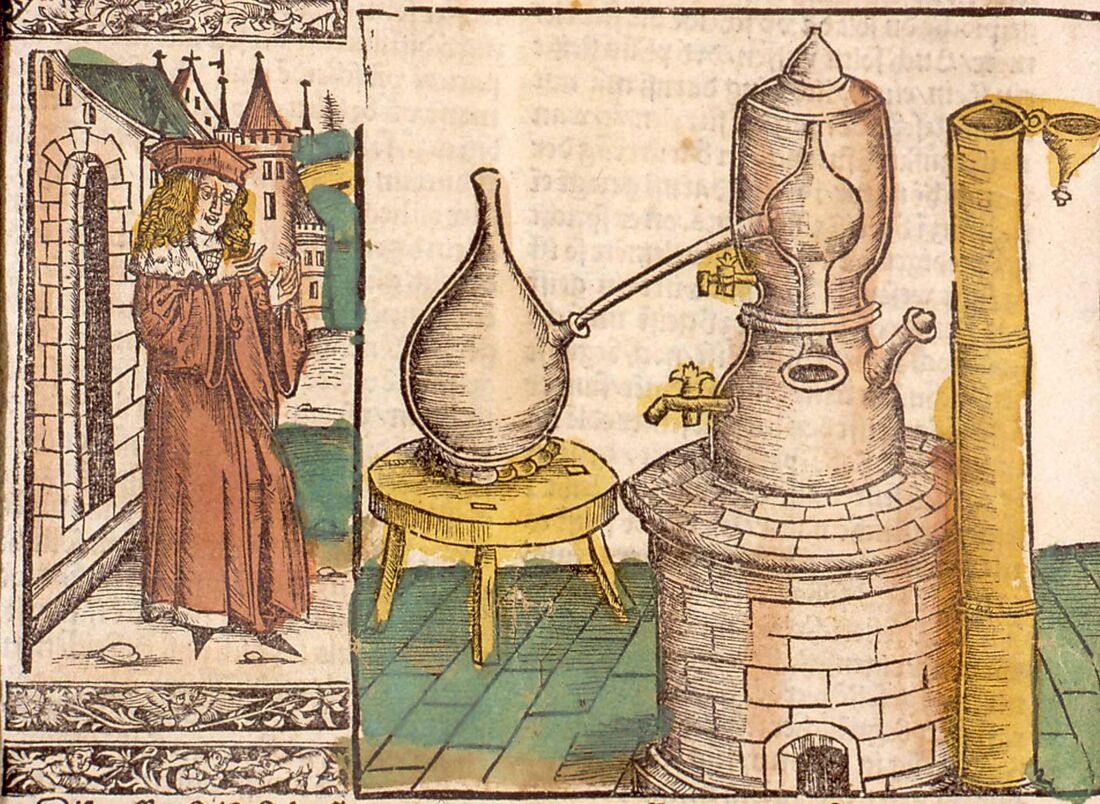
A black powder for the eyes, an Arabic word, alchemists and a dictionary of 1612: how kohl gave its name to spirit of wine.
Image: Source gallica.bnf.fr / BnF
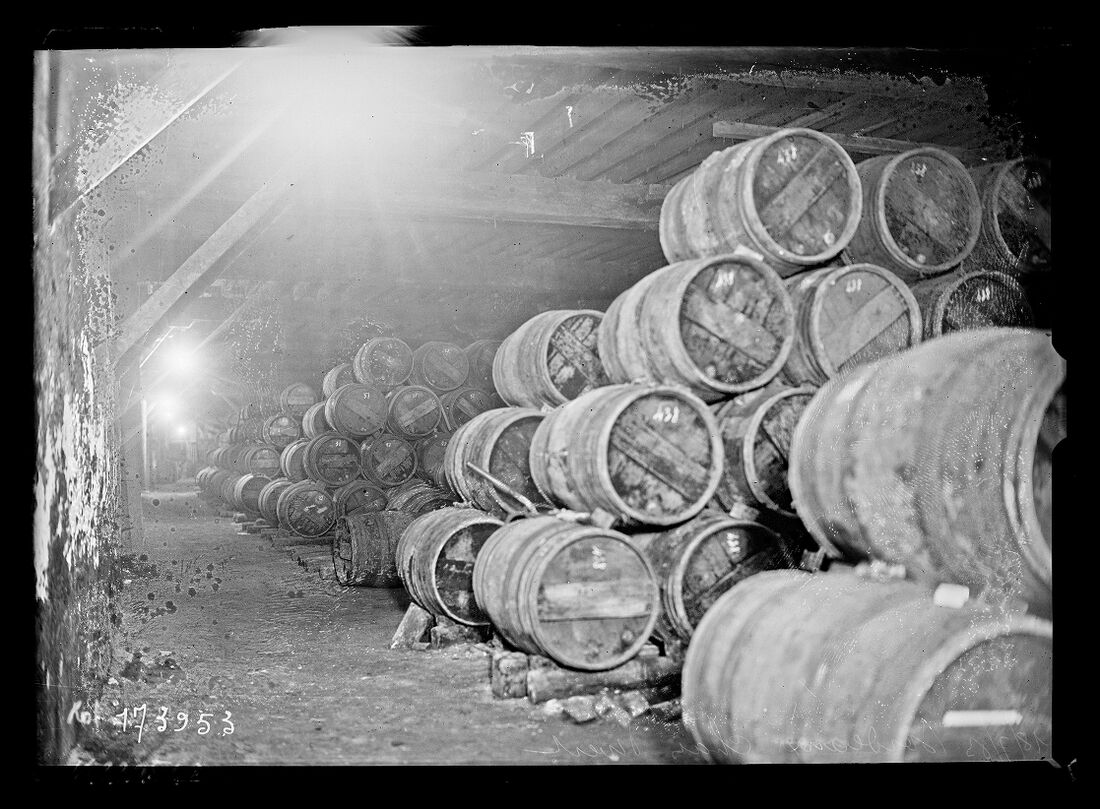
Casks that empty without leaking, blackened walls around the cellars, a fungus named in 2007: the story of what the angels do with their share.
Image: Source gallica.bnf.fr / BnF
From the genever cases of the 17th century to the trade mark filings of the late 19th: how a packaging shape became a signature.
Image: Source gallica.bnf.fr / BnF
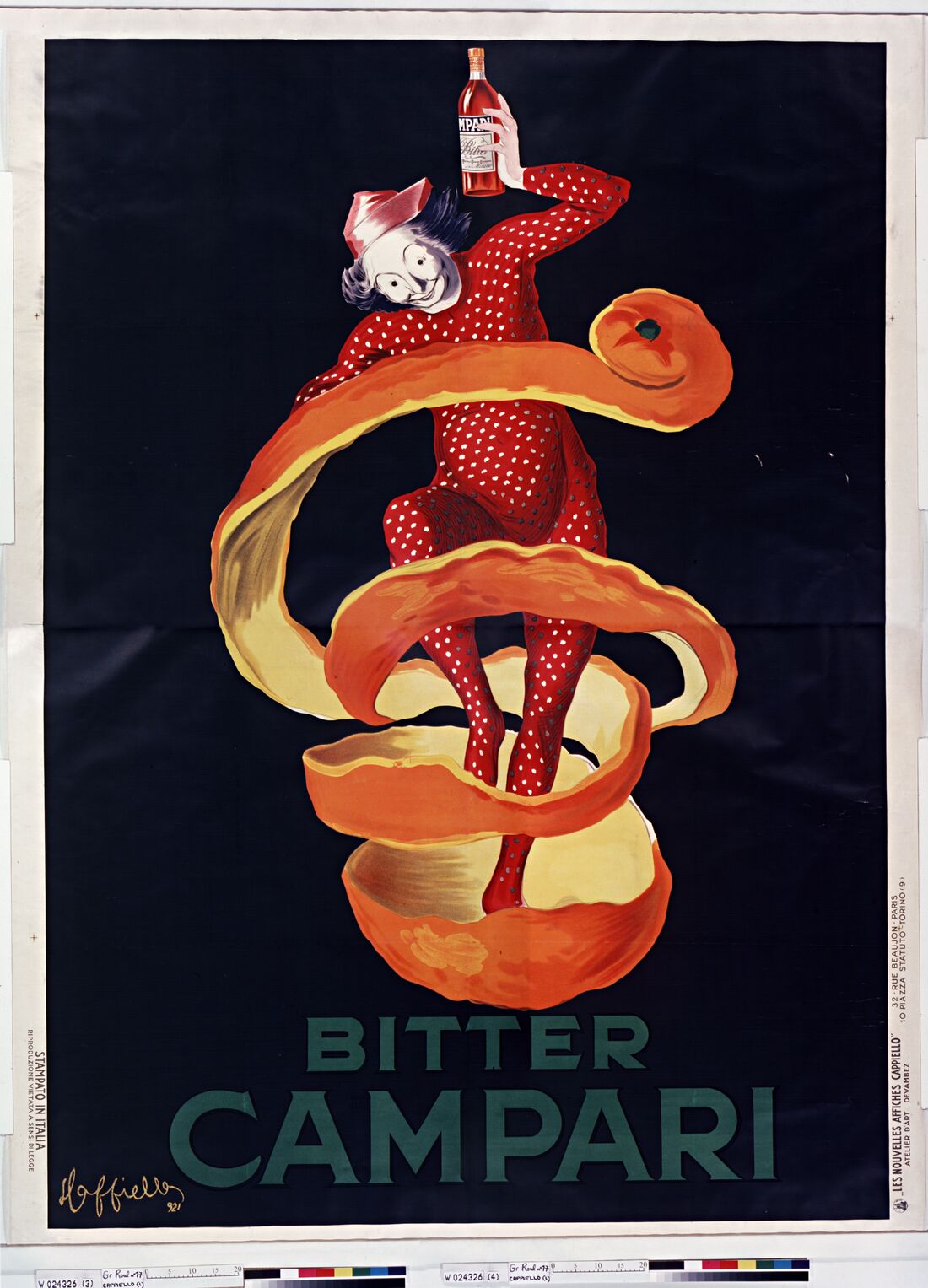
Three origin stories put to the test: a letter from 1920, a tradition with no document and an article from 1948 written by the sellers themselves.
Image: Source gallica.bnf.fr / BnF
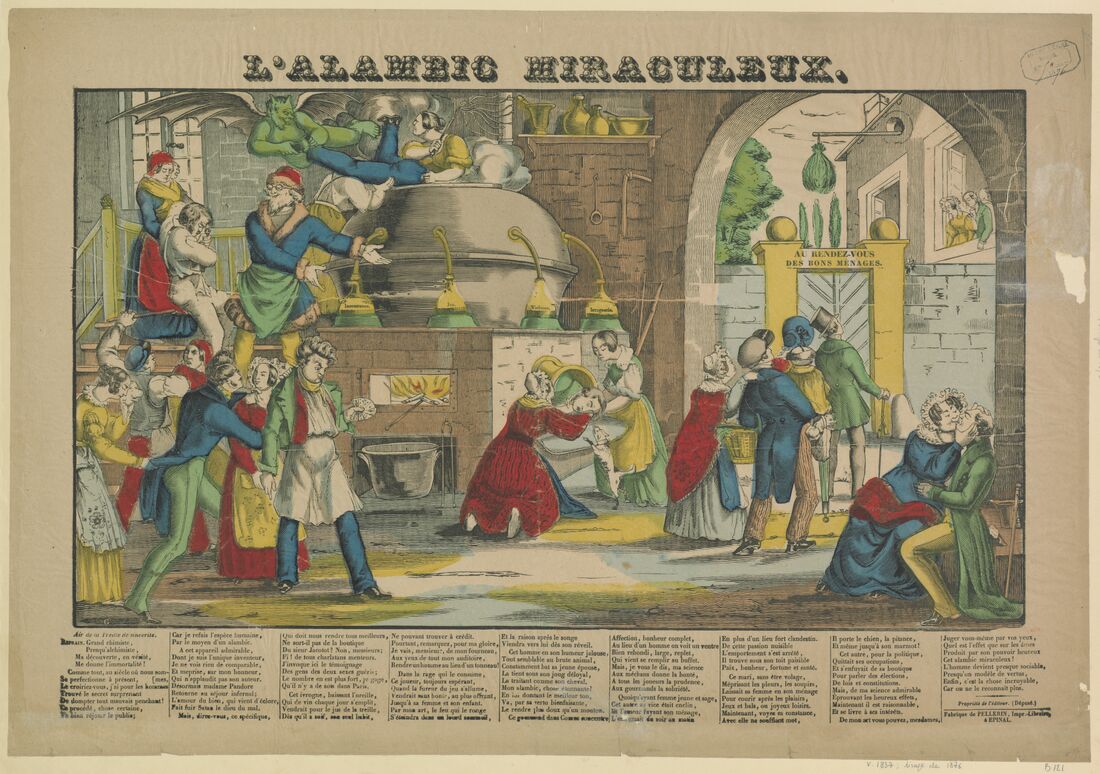
From the aqua vitae of the physicians of Bologna to the whisky of the Gaels: how the name of a remedy became the name of a whole family of spirits.
Image: Source gallica.bnf.fr / BnF
The name brings a Kentucky county to mind. The law has the whole country in mind.
The still that changed the spirits industry was patented by a former taxman.
Every winter, the stills of the Charente work against the calendar. The text of the appellation explains why.
In the vocabulary of liqueurs, “crème” does not come from milk. It comes from sugar.
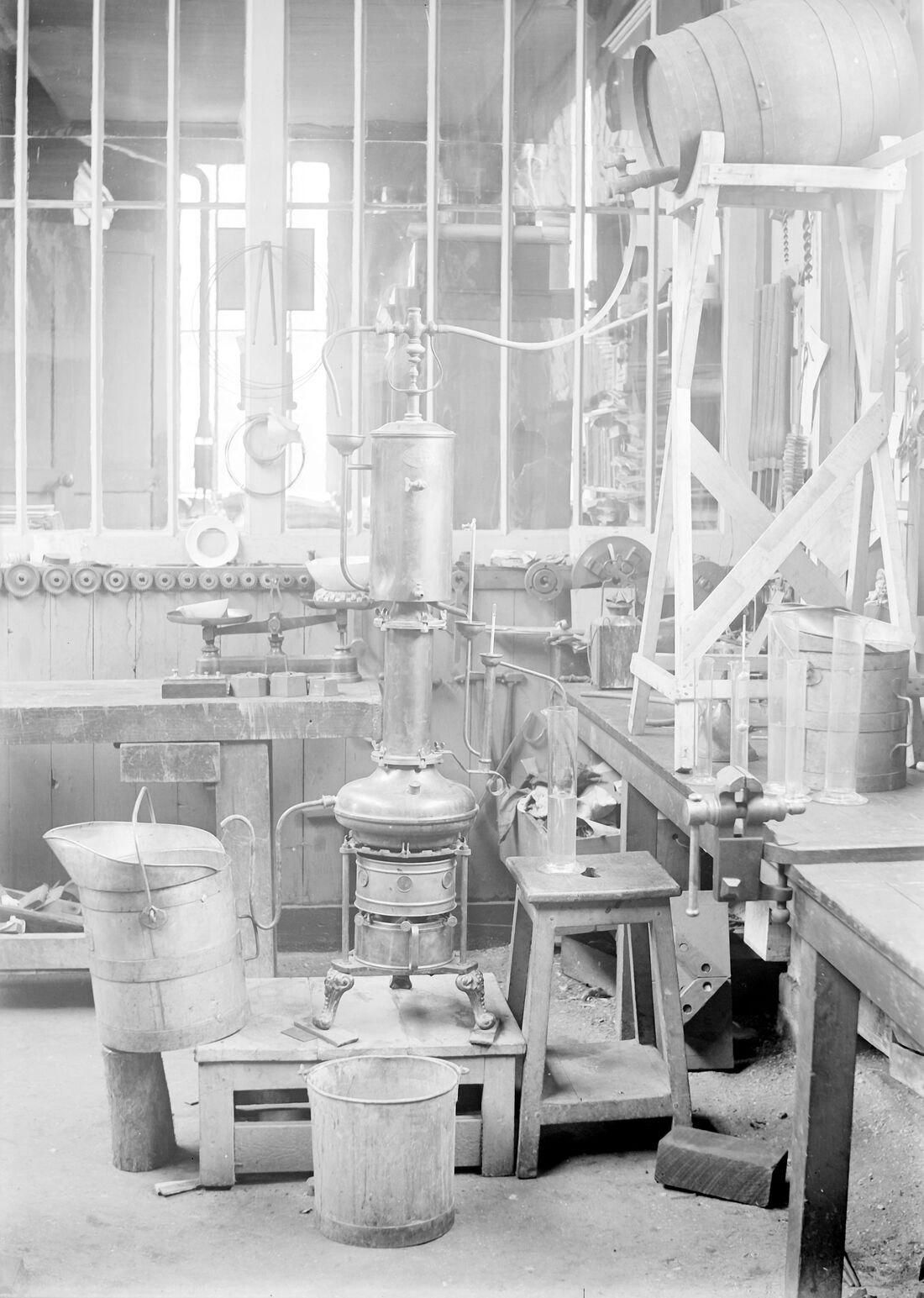
You might see nothing in it but a craftsman's habit. Chemistry says otherwise.
Image: Source gallica.bnf.fr / BnF
Thick leaves, spines, a desert: everything says cactus, except the plant.
A kitchen utensil keeps the memory of an alchemist. What she really invented is another question.
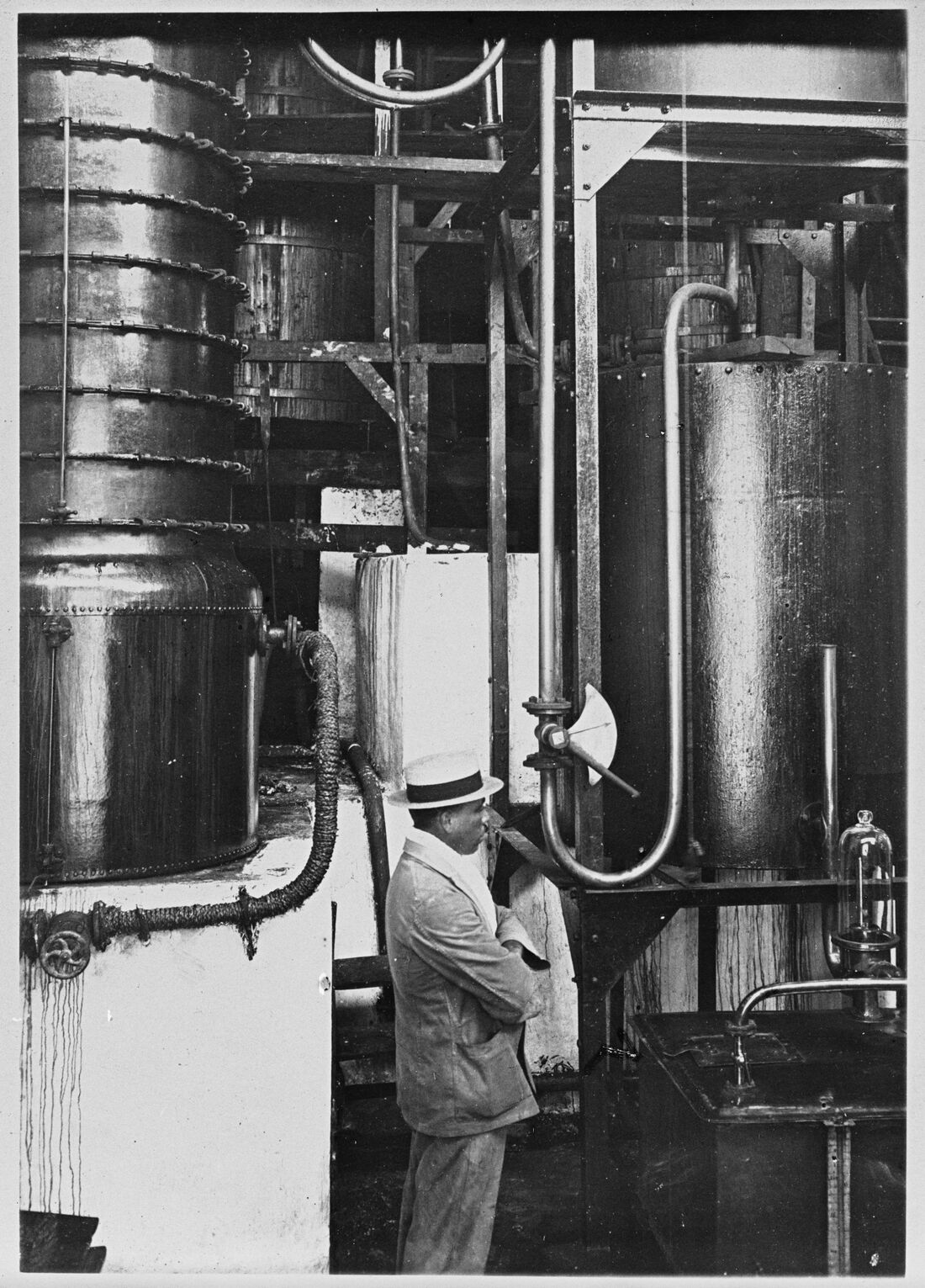
Wine spirits had their appellations from the 1930s. Rum waited until 1996.
Image: Source gallica.bnf.fr / BnF
The word that would give us “whiskey” enters the Irish annals through a death.
The word “single” promises oneness. The question is: of what?
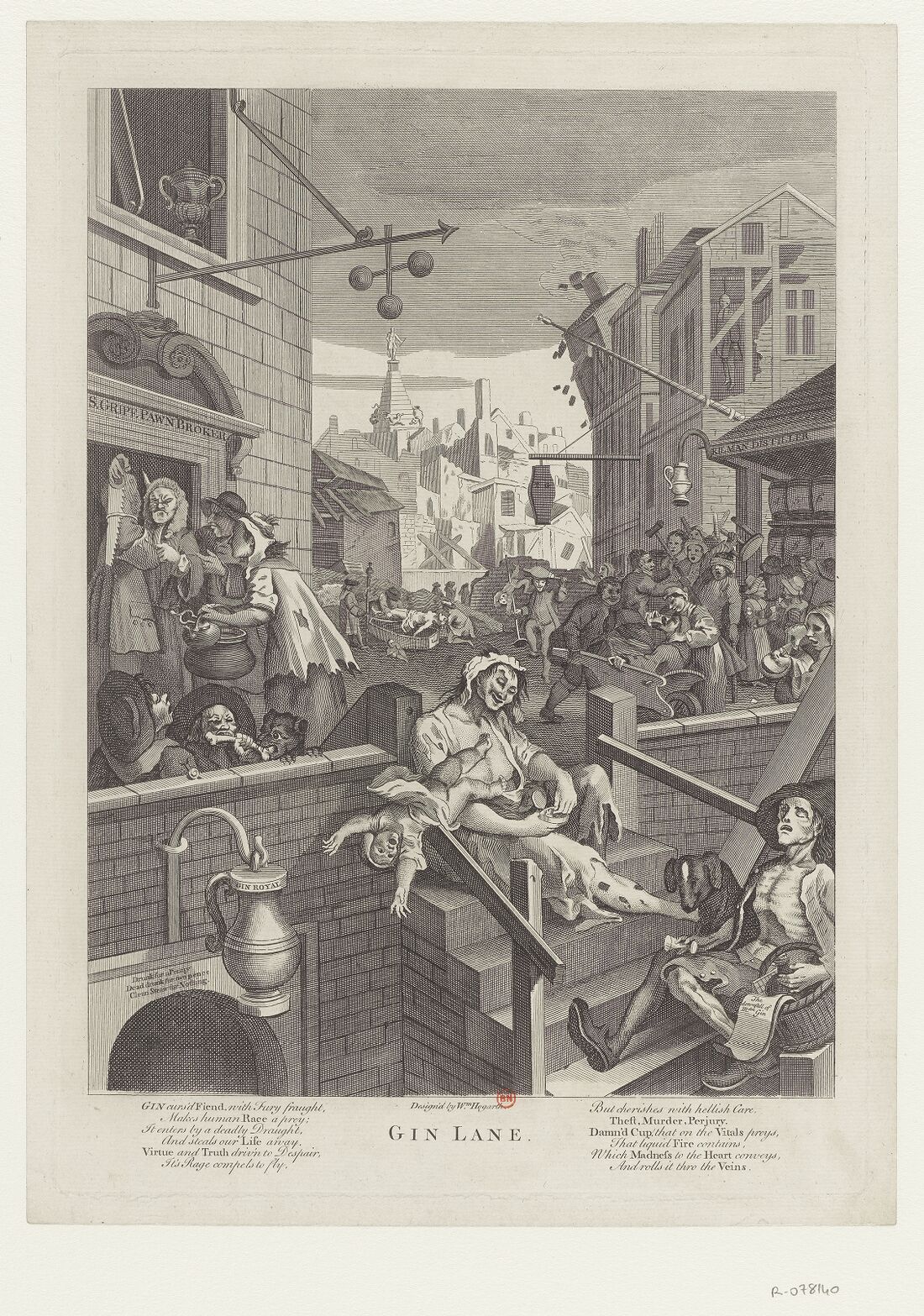
Legend points to a Leiden professor; the distilling books prove it wrong by sixty years.
The letters on the label give not an average, but a minimum.
16 March 1915
5 December 1933
How did a laboratory instrument designed for perfumes and remedies become the heart of a world culture ? A thousand years of history, from Mesopotamia to the monasteries of the West.
AOC, GI, appellations : behind a technical vocabulary lies the way France invented legal protection for distilled terroir. What these acronyms really guarantee, and what they do not.
The country of appellations, of centuries-old houses and of the world's greatest diversity of spirits has never devoted a place to that heritage. It is not an oversight : it is the result of a history, a body of law and a certain unease.
The Journal appears at the pace of the project's research. An error, a clarification, a source to add ? Write to us — correction is part of the method.
The SpiLi letter
Once a month: a story drawn from the collection, the rooms opening on the site, news of the project. Nothing else.
To subscribe, write to contact@spili-museum.com with “Letter” as the subject.