House stories · Jägermeister
Does Jägermeister owe its name to Hermann Göring?
Jägermeister is sometimes called “Göring's schnapps”. The word means master of the hunt, and in 1934 the German hunting law made it Hermann Göring's official title. The liqueur received its name a few months later. Coincidence, tribute or calculation? Historians have answers, and the house eventually opened its archives to them.
The story
Jägermeister does not bear Göring's name, but that of the title the Nazi regime had just given him — and its creator was a member of the party.
Wolfenbüttel, a small town in Lower Saxony with half-timbered houses. In 1878 Wilhelm Mast founded a vinegar works there, which became a wine and spirits business. His son Curt, born in 1897, was a keen hunter. In the early 1930s he developed a liqueur of herbs, fruits, roots and spices — fifty-six ingredients, according to the house — at 35%.
The house does not publish its recipe, but it does describe how it is made. The herbs, roots, barks and fruits are ground and macerated for several weeks in a mixture of water and alcohol; the extracts are then aged for about a year in oak casks, before being blended, sweetened and filtered. Among the ingredients, the house names orange peel, ginger, star anise, cloves and liquorice. The liqueur is dark brown; the bitterness of the herbs mingles in it with spices and sugar.
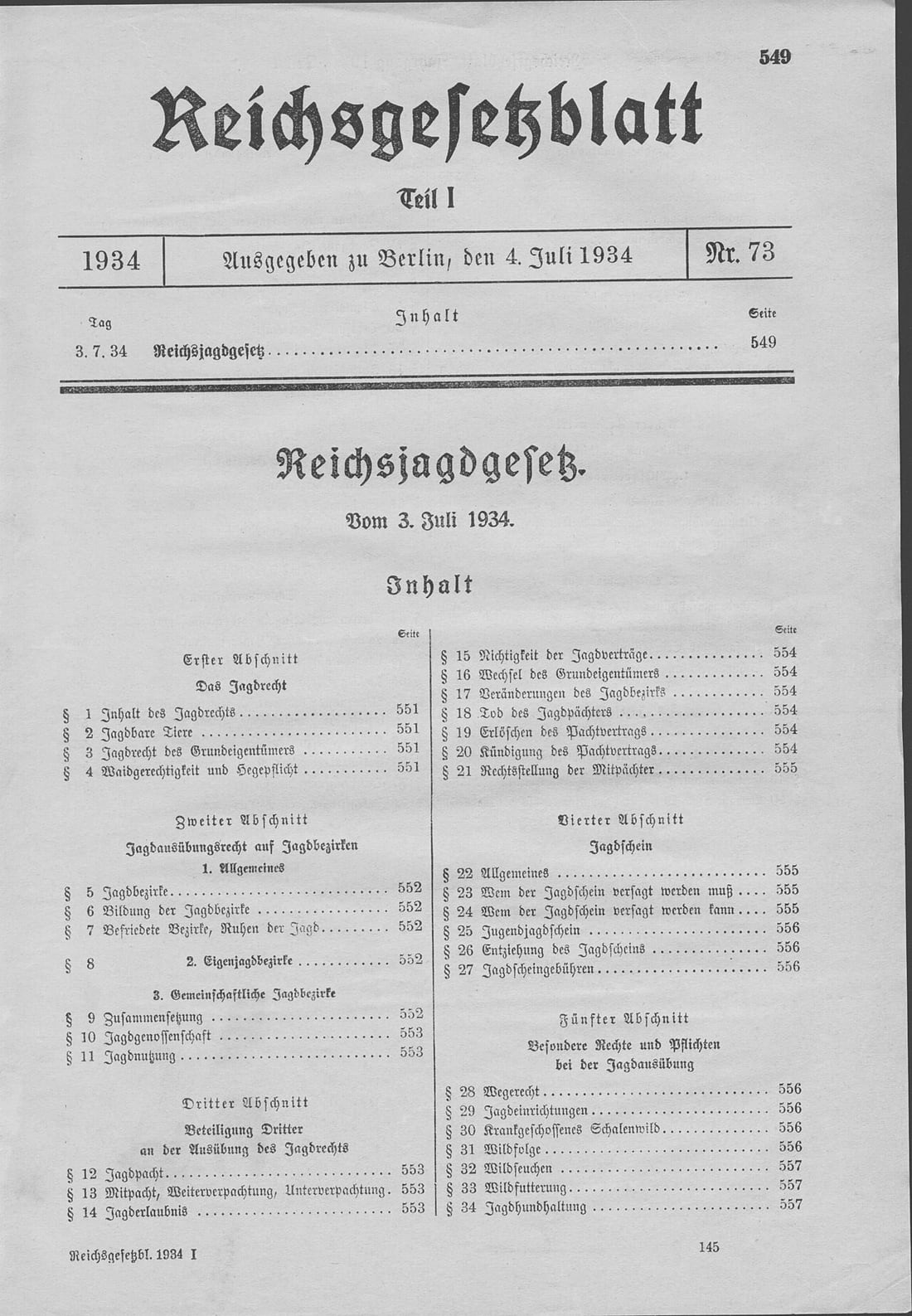
He first called it “Hubertusbitter”, after Saint Hubert, patron saint of hunters. Then, at the end of 1934, he changed his mind: it would be “Jägermeister”. The word is an old one in German, where for centuries it had designated an officer in charge of the hunts. But it had just taken on a new meaning. On 3 July 1934, the Reich hunting law created the office of “Reichsjägermeister”, Reich Master of the Hunt, and entrusted it to Hermann Göring. The liqueur was launched in 1935.
Curt Mast was no mere onlooker in his times. He joined the Nazi party with effect from 1 May 1933, under the number 3,183,016, and sat on the town council until 1935. In 1941 he bought the estate of the Esberg brothers, Jews forced to sell; their heirs were compensated in November 1945. In 1947 the denazification commission classified him as “exonerated”, the most lenient category, after he had denied his membership.
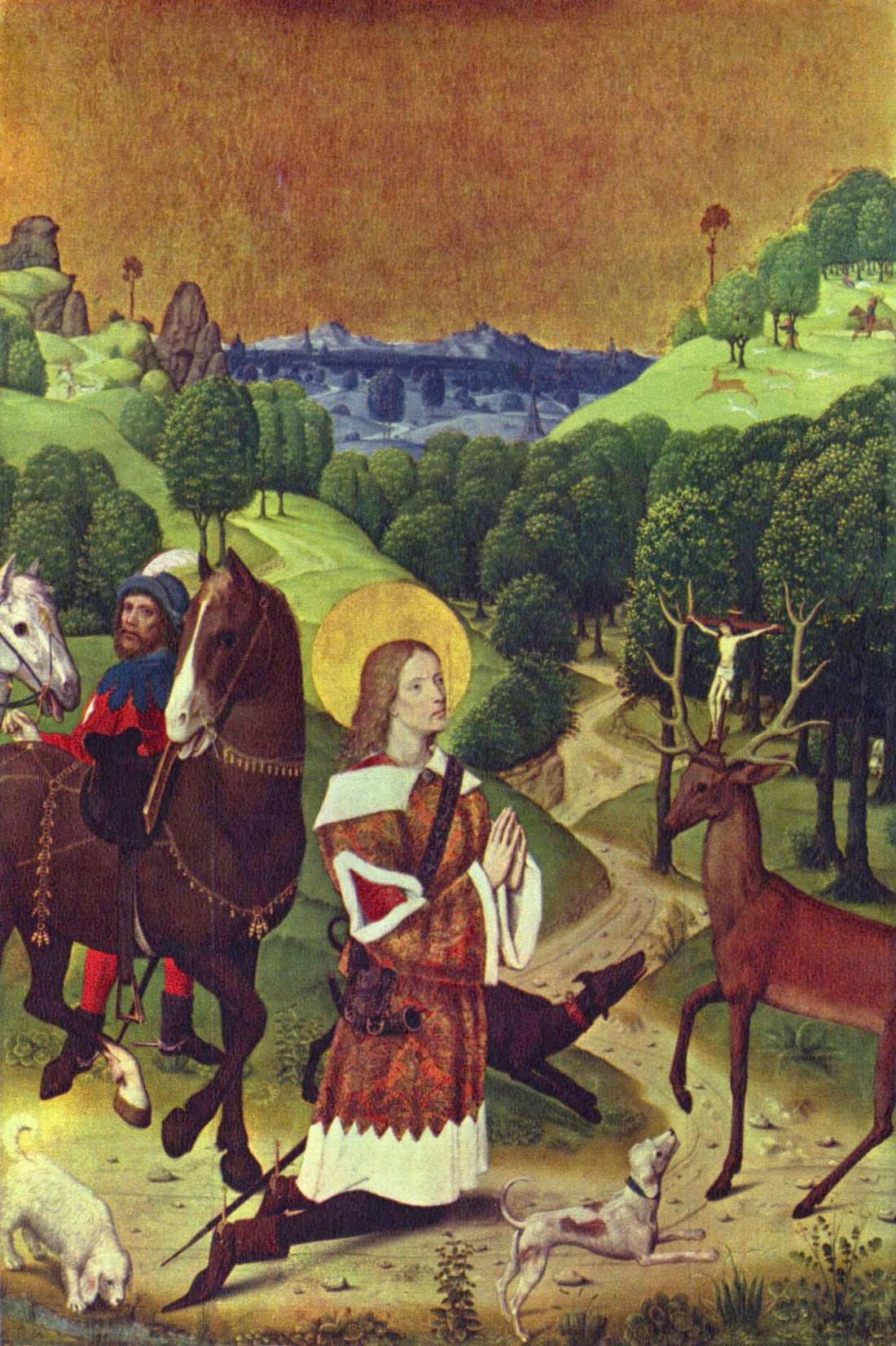
The label, for its part, carries an older image: a stag whose antlers frame a shining cross. It is the vision of Saint Hubert, as it has been told since the late Middle Ages. It was borrowed from an earlier legend, that of Saint Eustace, which the painter Pisanello depicted around 1440. A quatrain on the hunter's honour by the hunting poet Oskar von Riesenthal accompanies the image.
After the war the brand became one of the great success stories of West Germany. In 1973 it was the first brand to appear on the shirt of a Bundesliga club, Eintracht Braunschweig.
The legend set against the sources
The legend
As told by popular rumour, and the house for the opposite version
Rumour has it that Curt Mast named his liqueur in tribute to Hermann Göring, and that Wehrmacht soldiers nicknamed it “Göring-Schnaps”.
According to the house, the name comes from Curt Mast's passion for hunting and from the figure of the hunter who respects the game, the figure of the quatrain printed on the label.
What the sources say
The chronology is solid: the law of July 1934 came a few months before the change of name. But no evidence establishes a personal link between Curt Mast and Göring, as the Oxford Companion to Spirits and Cocktails points out, and the historian Thomas Klingebiel, commissioned by the company, considers such a link unverifiable. The nickname “Göring-Schnaps” appears in no source dated before 1945 that we have found: it is a tradition, probably from after the war.
Klingebiel's biography, published in 2017, met with a mixed reception. In the Historische Zeitschrift, Lutz praises a dense piece of work; in sehepunkte, Henkel sees it as an apologia rather than a search for the truth, and concludes that Mast was “an opportunist without great scruples”.
The house's version is not false, but it is incomplete: a passion for hunting does not explain why one would give up Saint Hubert for a title the regime had just given to one of its leaders.
So, legend or history?
Before you read the answer, what do you think?
Choose a degree: it is the question a historian asks of every story.
Degree of certainty : Probable
Probable, but not after the man: after the title the 1934 law had just given him.
It is probable that the name was chosen in the wake of the 1934 law and its “Reichsjägermeister”; a personal tribute to Göring, however, is not established. The nickname “Göring-Schnaps” is a tradition. What matters lies elsewhere, and it is attested: the liqueur's creator was a member of the Nazi party, profited from a spoliation, and after the war obtained a lenient classification by denying his involvement.
How we know
Each date in this story refers to one of the sources below. The degree of certainty can be read from the pattern of the rule: solid for attested, dashed for probable, dotted for tradition, double for legend.
Key dates
-
1878 Wilhelm Mast founds his vinegar works in Wolfenbüttel -
1933 Curt Mast a member of the NSDAP, with effect from 1 May -
1934 Hunting law: Göring becomes Reichsjägermeister; Hubertusbitter becomes Jägermeister -
1935 The liqueur is launched -
1941 Purchase of the Esberg brothers' estate, a forced sale -
1947 Curt Mast classified as “exonerated” in denazification -
1973 First sponsored football shirt, Eintracht Braunschweig
Attested- established by documents contemporary with the events.
Probable- plausible and consistent with the sources, without direct proof.
Tradition- handed down by the house or by local memory, with no document to confirm or refute it.
Legend- contradicted by the sources, or invented after the fact.
What remains uncertain
- The real motives for the change of name at the end of 1934.
- The origin and date of the nickname “Göring-Schnaps”.
- Curt Mast's departure from the party, if he did leave it: 1935 according to one source, whereas another still lists him as a member in 1944.
- Klingebiel's biography, consulted through its reviews only.
Sources
- Henkel, Recension de T. Klingebiel, Curt Mast. Ein Unternehmer in der Politik , sehepunkte 18, n° 3 , 2018.
- Lutz, Recension de T. Klingebiel, Curt Mast , Historische Zeitschrift 307 , 2018.
- Thomas Klingebiel, Curt Mast. Ein Unternehmer in der Politik , Wallstein , 2017.
- Rowley, « Jägermeister », in The Oxford Companion to Spirits and Cocktails , Oxford University Press , 2021.
- Deutsches Historisches Museum, LeMO, Hermann Göring .
- Mast-Jägermeister SE, Wie alles begann , 2026.
- Bundesliga, Kurios, lustig, Momente : 60 Jahre Eintracht Braunschweig .