The copper in stills captures sulphur
You might see nothing in it but a craftsman's habit. Chemistry says otherwise.
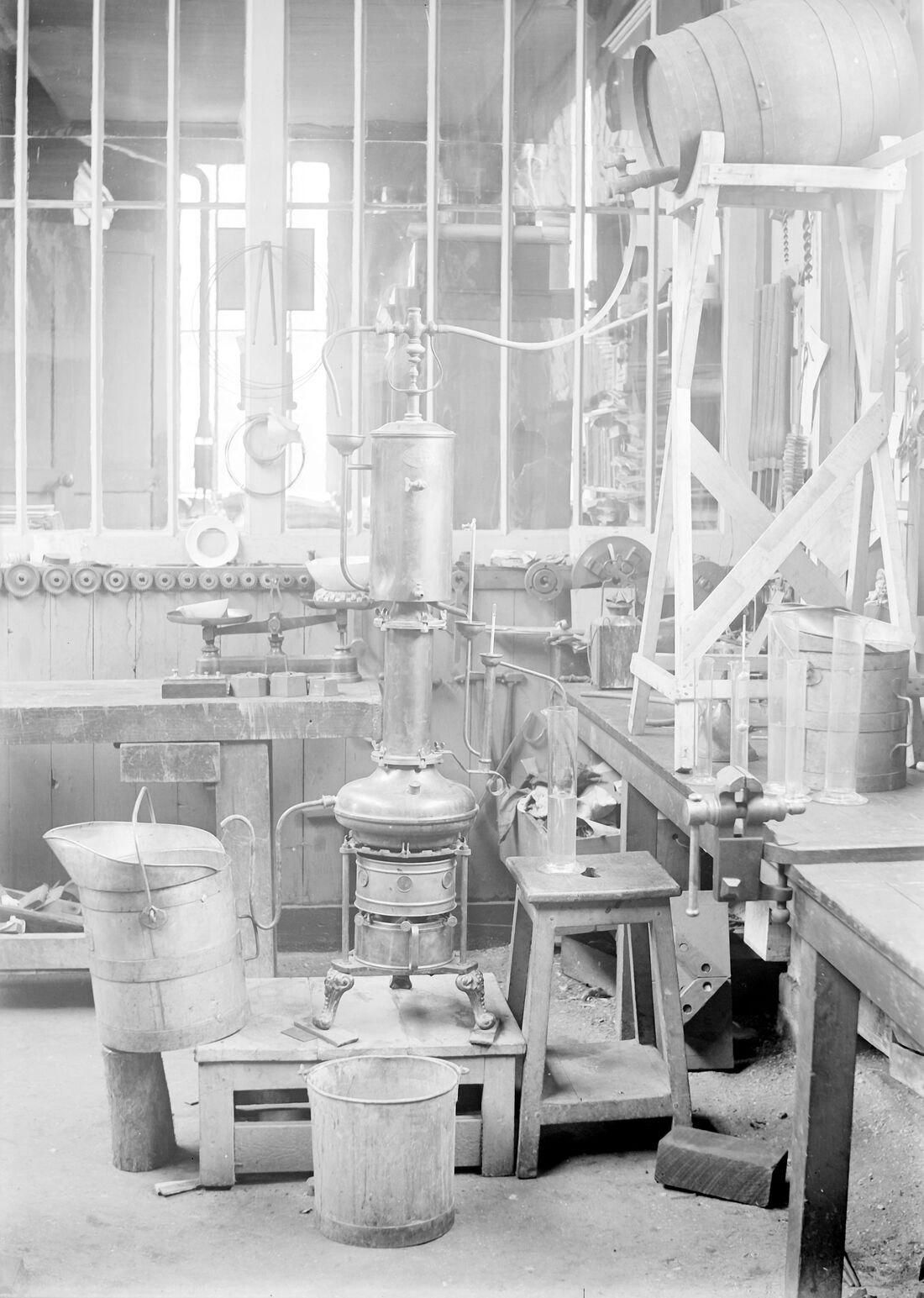
Stills have been made of copper for centuries. During distillation, the metal reacts with the sulphur compounds produced by fermentation and holds them on its walls.
In 2011, researchers at the Scotch Whisky Research Institute distilled with and without copper in the different parts of a small still. Without copper, the distillate had more sulphury and “meaty” odours, linked in particular to dimethyl trisulphide. The most useful copper was in the condenser and the pot: the metal does a job; it is not there for decoration.
This card has its own address, made to be shared : spili-museum.com/en/blog/le-saviez-vous-cuivre-des-alambics.html
More “Did you know?”
Bourbon can be distilled outside Kentucky
The name brings a Kentucky county to mind. The law has the whole country in mind.
The inventor of the column still had first hunted down distillers
The still that changed the spirits industry was patented by a former taxman.
Cognac must be distilled before 31 March
Every winter, the stills of the Charente work against the calendar. The text of the appellation explains why.