House stories · Saint-James
Was the square Saint-James bottle designed for ships' holds?
Inside the square Saint-James bottle today is a rhum agricole from Martinique, made from fresh cane juice. The story goes that its shape was designed to stack in ships' holds without breaking; the explanation is so practical that no one ever thought to check it. The only period texts that mention this bottle, judgments of 1884 and 1885, say something else.
The story
Nothing links the square Saint-James bottle to ships' holds: it appears in Marseille in 1882, with a merchant who registered it to reserve it for his rum.
In the 18th century, Saint-Pierre was the economic capital of Martinique, a port where sugar and tafia, the cane spirit, were loaded. On the heights above, the Trou-Vaillant estate belonged to the Brothers of Charity, a hospital order. According to the house's tradition, one of them, Father Edmond Lefébure, distilled a rum there in 1765 and gave it an English name, Saint-James, so as to sell it in New England.
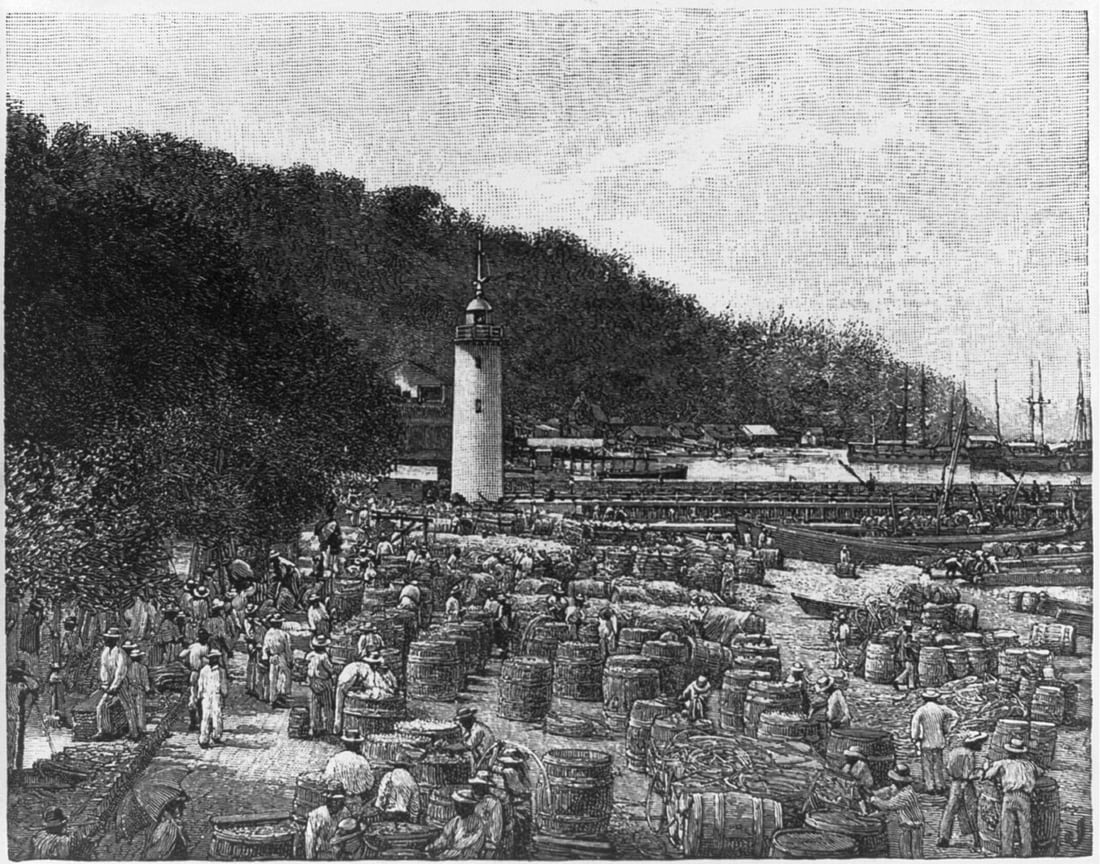
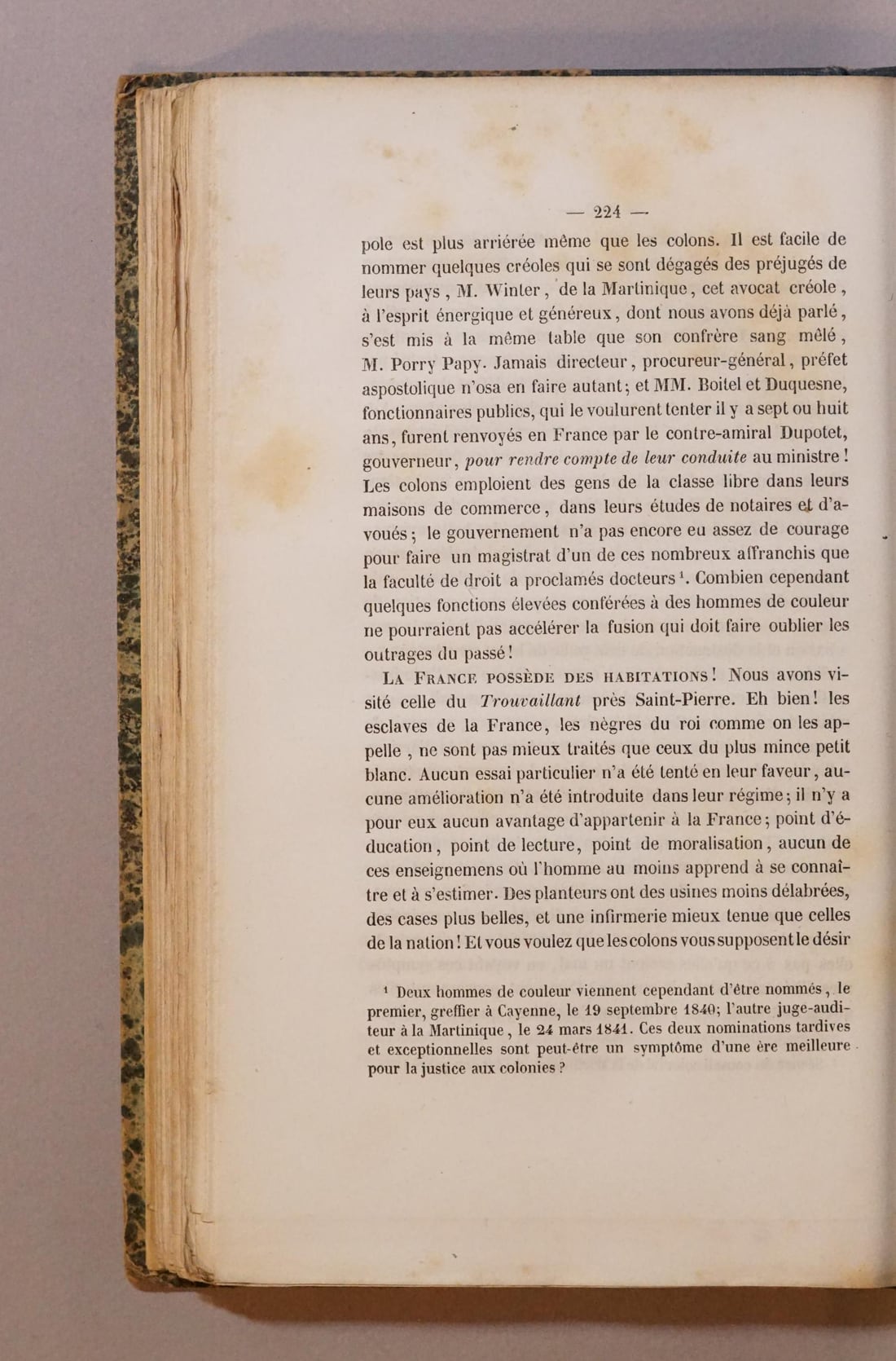
On a plantation estate, the work was done by enslaved people. When Victor Schœlcher visited Trouvaillant in 1842, the property belonged to the state; he describes the “nègres du roi”, the slaves of the Crown. Abolition came six years later, in 1848.
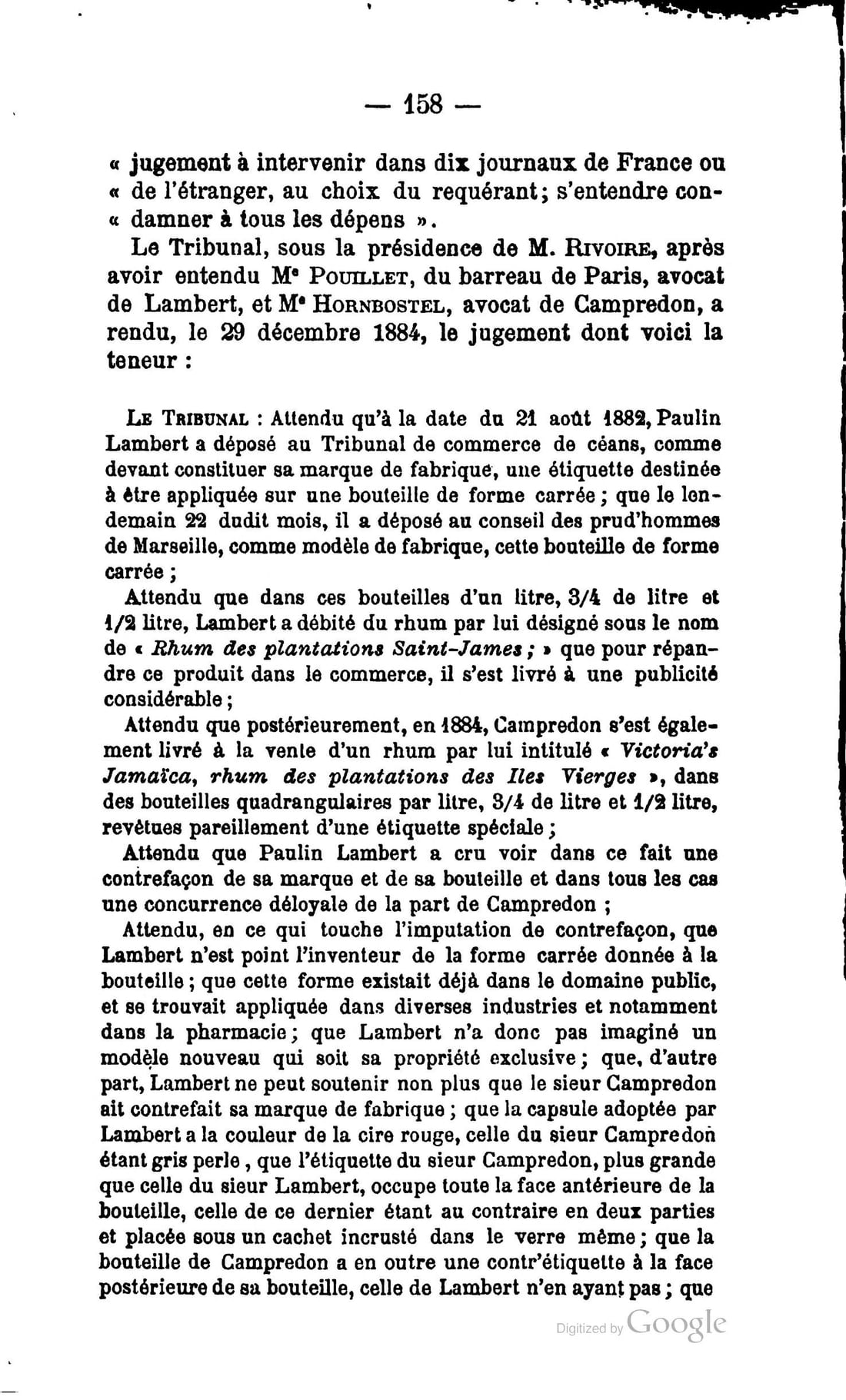
The story of the bottle begins in Marseille. Paulin Lambert imported Martinique rum there. On 21 August 1882 he registered the “Saint-James” brand and, the next day, a square bottle as a design. A competitor contested it. The Marseille commercial court in 1884, then the court of appeal at Aix on 10 April 1885, found in his favour: he had not invented the square shape, but he was the first to have registered it for rum. The national press, Le Figaro included, reported on the case.
In 1890, Lambert bought the Saint-Pierre estate. The same year, a poster showed the bay, the rum distillery, the sugar works, the viaduct bridge, and vignettes captioned “Nègres de St James” or “Village indien” (Indian village): the workers, often indentured labourers who had come from India after abolition, appear as a curiosity of the landscape.
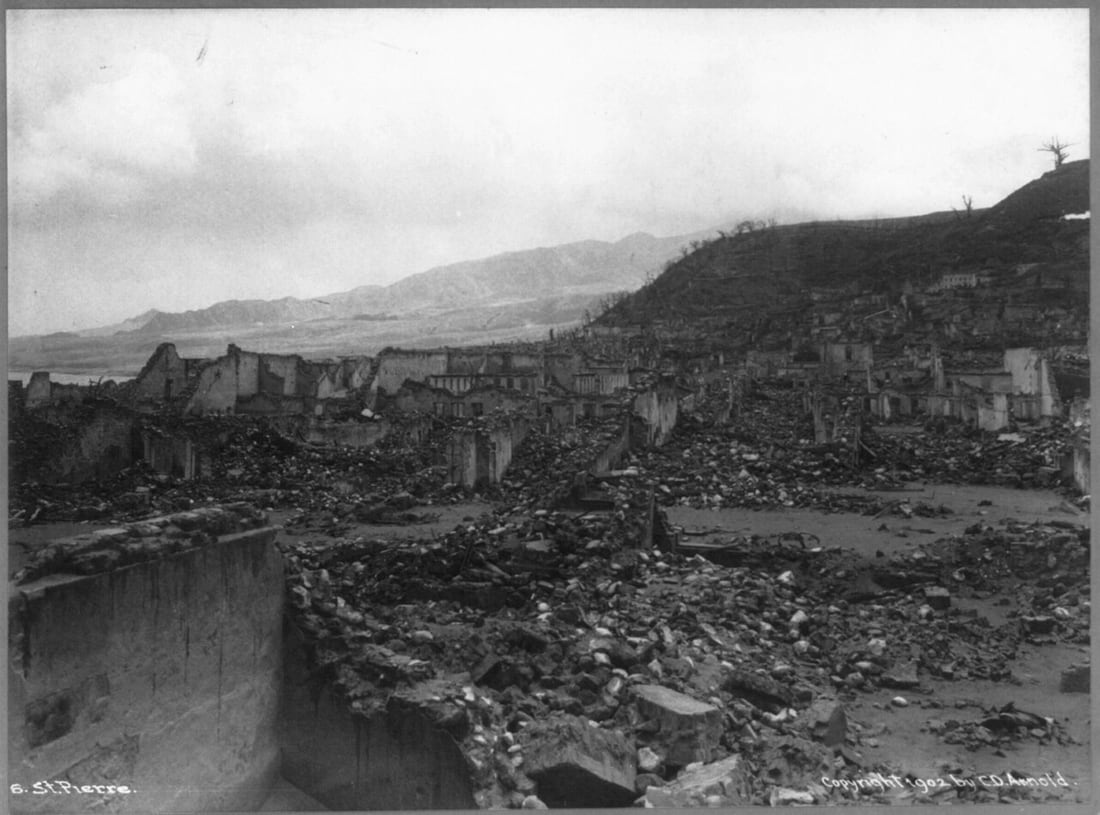
On 8 May 1902, Mount Pelée destroyed Saint-Pierre and killed almost all its inhabitants. The distillery, on higher ground, was partly spared; production resumed a few years later. In 1974 it left Saint-Pierre for Sainte-Marie, on the Atlantic coast, where a rum museum later opened. The house now belongs to La Martiniquaise.
What goes into the square bottle today is a rhum agricole. The cane, cut during the carême, the dry season, is crushed within hours; its juice, the vesou, ferments for a few days, then passes through a distillation column, from which the spirit emerges at around 70% vol. White, this rum keeps the smell of fresh cane, grassy and peppery. Aged for years in oak casks, in a heat that speeds up the exchanges with the wood, it takes on an amber colour and notes of wood, vanilla and candied fruit. The rum Lambert imported in 1882 was not necessarily of this kind: in 19th-century Martinique, a large share of rum was distilled from the molasses of the sugar works.
The legend set against the sources
The legend
As told by the tradition taken up by the house and the specialist press
To withstand long crossings, the house is said to have invented a square bottle: it could be stacked tightly in the holds, without rolling or breaking. Saint-James would thus have been the first rum in a square bottle.
What the sources say
The lawsuits of 1884 and 1885, the only period documents that discuss the bottle, say nothing of holds, breakage or crossings. In them Lambert defends a “forme tout à fait originale” (an entirely original shape), that is to say a distinctive sign. The judgment, reported in the Annales de la propriété industrielle, specifies that he did not invent the square shape: his right rests on the registration, not on invention.
The logic of the holds is not absurd, but it applies to many bottles and, here, rests on no text at all; it turns a legal act into a sailor's ingenuity. It also runs up against the chronology: rum then travelled mostly in casks, and it was the merchant in mainland France who bottled it. The Saint-James bottle appears in Marseille, not on the quay at Saint-Pierre.
The 1765 date, the name of Father Lefébure and the English origin of the name rest on tradition alone; another version attributes the name to an English admiral. The archives of the order and of the estate have yet to be worked through.
So, legend or history?
Before you read the answer, what do you think?
Choose a degree: it is the question a historian asks of every story.
Degree of certainty : Tradition
Tradition. No document links the square shape to ships' holds.
The holds motif is a tradition: plausible, never documented, and absent from the only period texts that mention the bottle. What those texts say is clearer: in 1882, a Marseille merchant registered a shape he had not invented, and the courts reserved it for him. The square bottle is first and foremost a trademark, in the legal sense of the word.
How we know
Each date in this story refers to one of the sources below. The degree of certainty can be read from the pattern of the rule: solid for attested, dashed for probable, dotted for tradition, double for legend.
Key dates
-
1765 Father Lefébure distils at Trou-Vaillant, according to tradition -
1842 Victor Schœlcher describes the estate and its enslaved people -
1882 Paulin Lambert registers the brand and the square bottle -
1885 The court at Aix confirms the exclusive use of the square shape -
1890 Lambert buys the Saint-Pierre estate -
1902 Eruption of Mount Pelée; the distillery partly spared -
1974 Production moves to Sainte-Marie
Attested- established by documents contemporary with the events.
Probable- plausible and consistent with the sources, without direct proof.
Tradition- handed down by the house or by local memory, with no document to confirm or refute it.
Legend- contradicted by the sources, or invented after the fact.
What remains uncertain
- The 1765 date and the role of Father Lefébure.
- The origin of the name: the New England market or an English admiral.
- The date on which production resumed after 1902.
- The status of the workers depicted on the 1890 poster.
Sources
- Victor Schœlcher, Des colonies françaises. Abolition immédiate de l'esclavage , 1842.
- Annales de la propriété industrielle, artistique et littéraire , 1885.
- Le Figaro, 19 avril 1885 , 1885.
- Le Républicain de Constantine, 15 novembre 1884 , 1884.
- Bélia Sainte-Marie, Saint-James, de Saint-Pierre à Sainte-Marie , 2018.