House stories · Lucas Bols
Was the world's oldest spirits brand born in Amsterdam in 1575?
On the labels, a date: 1575. The house of Lucas Bols uses it to call itself the oldest distilled spirits brand in the world. The Amsterdam records tell a different chronology: the Lucas Bols line appears in them only in the mid-17th century, with a cooper from the Rhineland.
The story
The Bols were indeed a very old family of Amsterdam distillers, whose line probably appears in the city's records as early as the 1640s; but the only known document from 1575 concerns refugees near Cologne, not a distillery.
On 20 August 1646, a cooper was entered in the Amsterdam register of burghers. The register names him Pieter Jacobsz Bulsius and has him coming from the “Land van Gulick”, the Land of Jülich, west of Cologne. According to the Oxford Companion to Spirits and Cocktails, he had arrived in the city in 1640, a date that no register consulted confirms; he is the first man of the Lucas Bols line to appear in the indexes of the City Archives. The name Bols itself appears there as early as 1591, borne by other families whose links with this one are unknown.
That name carries an exile. According to the same Oxford Companion, the Bulsius family had fled the troubles of northern Flanders to settle near Cologne. The 1646 register, which has Pieter Jacobsz coming from the Land of Jülich, fits this Rhineland detour. According to the same source, he learned the trade from a renowned distiller, and his name was shortened to Bols.
In 1661, Pieter Jacobsz Bols bought a plot of land on the Rozengracht, a canal in the west of the city. The house places its origins there, in a small distillery called 't Lootsje, “the little shed”. A Lucas Bols was born in Amsterdam in 1652, according to the Oxford Companion. On 17 March 1719, a Lucas Bols was buried in the Westerkerk, the neighbourhood church; the house sees him as the same man.
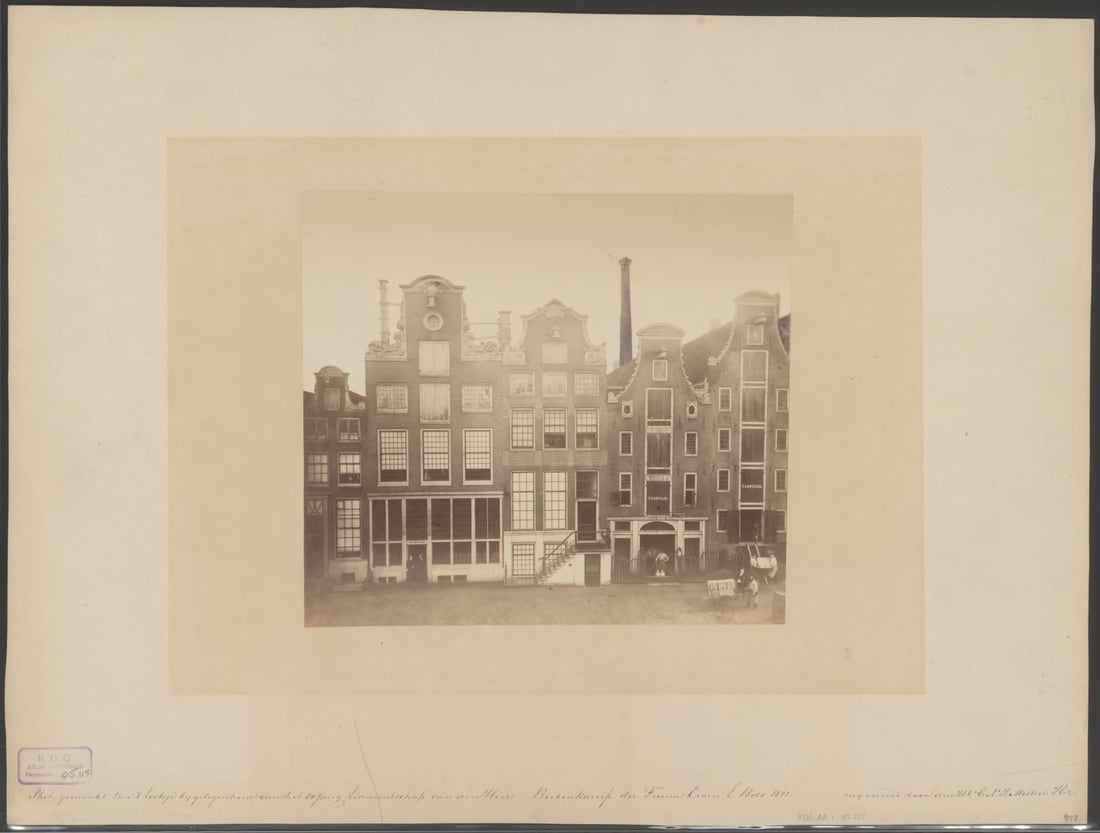
Dutch genever is based on moutwijn, “malt wine”: a mash of rye, maize and malted barley is fermented, then distilled several times, today first in a column still, then in a pot still, to 46 to 48% vol. It used to be redistilled with juniper berries and other plants; today it is blended with a neutral spirit distilled with those plants. Oude genever contains at least 15% moutwijn, jonge genever less, for a strength of at least 35% vol. Bols sells mainly liqueurs; according to the Oxford Companion, its production left Amsterdam in 1964 and has since been almost entirely entrusted to third parties.
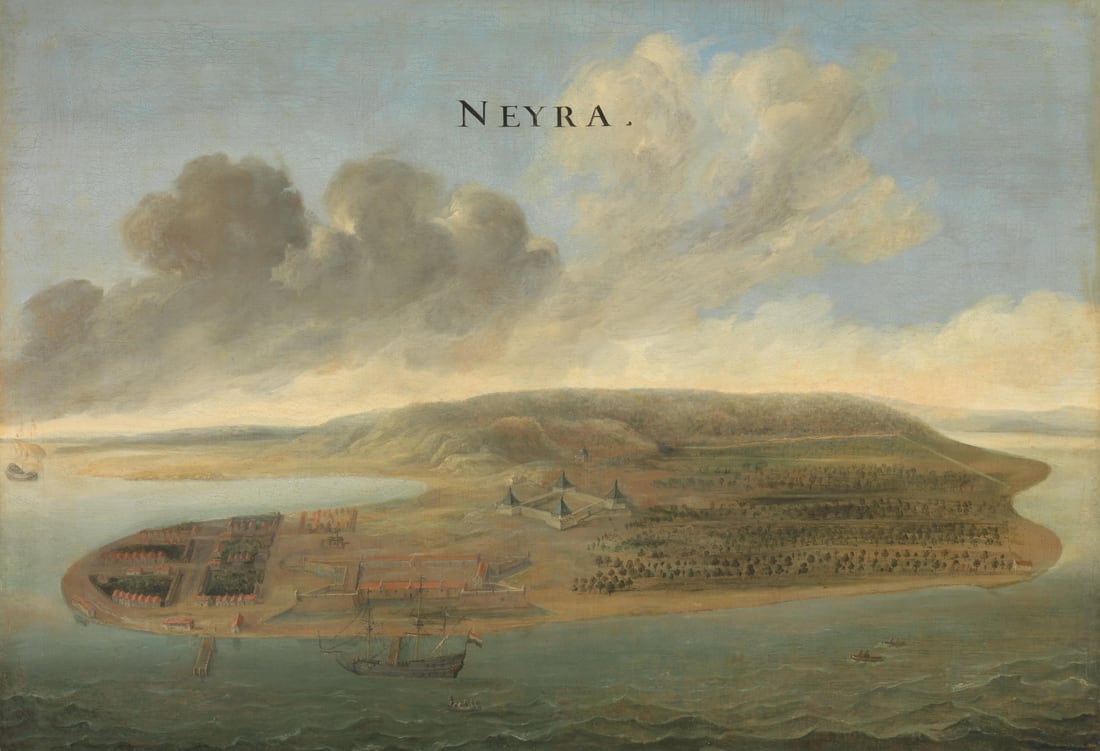
The house links Lucas Bols to the Dutch East India Company, the VOC, which is said to have given him access to spices. Those spices have a history. In 1621, on the orders of Jan Pieterszoon Coen, the VOC seized the Banda Islands, where nutmeg grows. According to the historian Frank Dhont, who speaks of genocide, the islands' 15,000 or so inhabitants were killed, enslaved or forced to flee, and the Company secured the monopoly on nutmeg and mace.
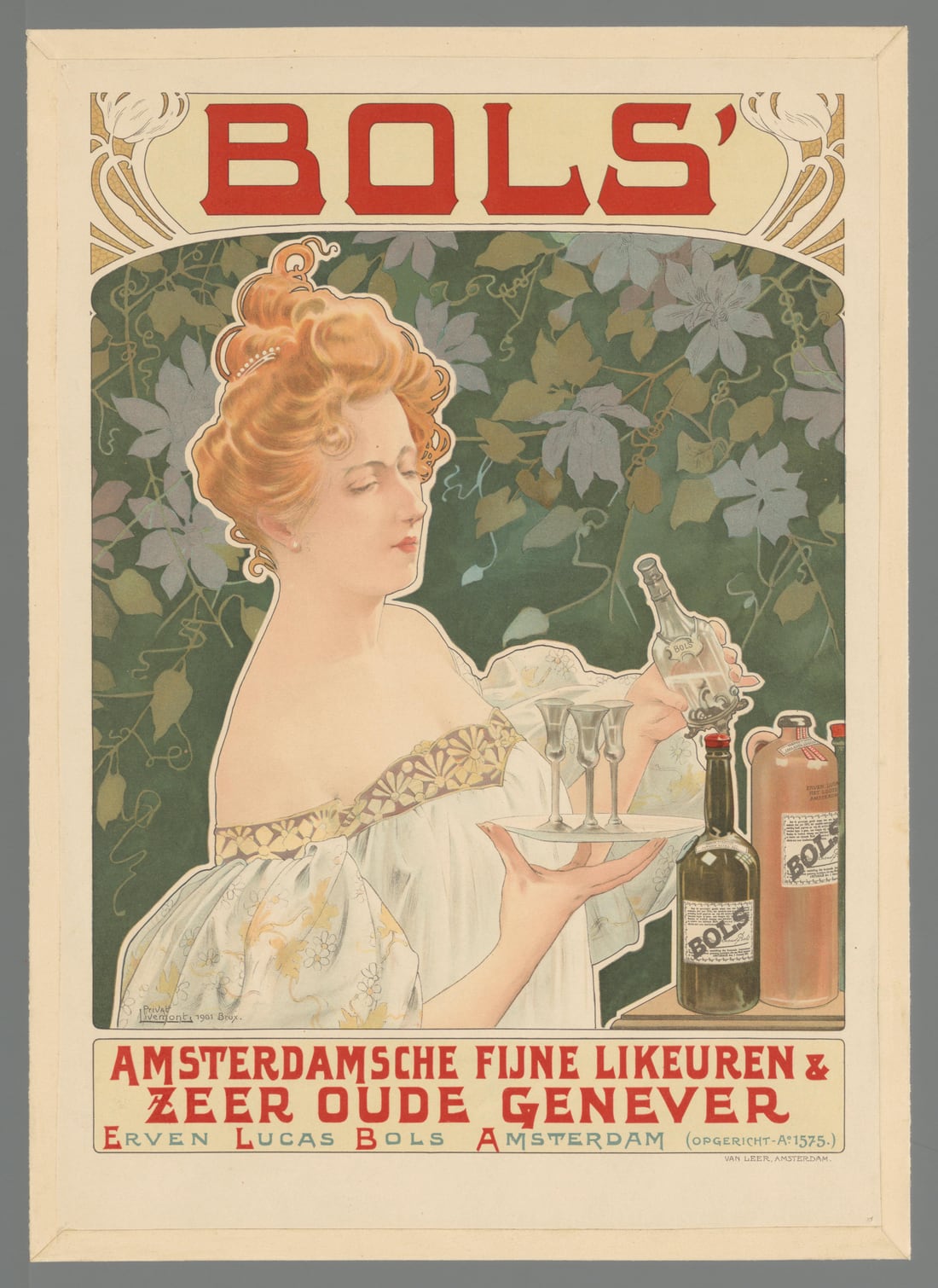
At the beginning of the 19th century, the family lost the business: in 1813 according to the Oxford Companion, in 1816 according to the house. The buyer kept the name, then the business passed, according to the house, to the Moltzer family in 1868. Between about 1881 and 1915, a printed advertisement announced the 't Lootsje works, “opgericht Anno 1575”, founded in 1575. In 1941, under the German occupation, Bols's deliveries to the occupier set its deputy director, Ernst Moltzer, against the rest of the family management, according to the investigation by the writer Martin Hendriksma reported by the ANP news agency; suspended, he joined the resistance and disappeared in the North Sea while trying to reach England.
The legend set against the sources
The legend
As told by the house
In 1575, the Bols family set up a small distillery, 't Lootsje, in a wooden shed on the edge of Amsterdam, and began distilling liqueurs; genever followed in 1664. Lucas Bols, the founder's grandson, became the majority shareholder in the VOC, which gave him the privilege of first choice of the herbs and spices brought back from the Indies. The house thus calls itself the oldest distilled spirits brand in the world.
What the sources say
The indexes of the Amsterdam City Archives yield no Bols before 1591, although their coverage of the 16th century is uneven. Those who appear there afterwards are linked neither to a distillery nor to Lucas Bols. The house's line enters them in 1646 with a cooper, whom the Oxford Companion has arriving in 1640, and buys land on the Rozengracht in 1661. The genever of 1664 is supported only by the house.
For 1575, the Oxford Companion knows of only one document: a petition addressed to the Protestant synod of Cologne by a community of refugees from the Southern Netherlands, which probably included a widow Bulsius. It asked whether religious law allowed grain to be brewed and distilled. This paper may place an ancestor near Cologne, in a milieu that was asking itself questions about distillation; it says nothing of a distillery in Amsterdam.
No independent source consulted makes Lucas Bols a shareholder in the VOC, let alone a majority shareholder, and the house produces no document. The Company's capital, some 6.4 million guilders, had been subscribed in 1602; its shares changed hands, but holding a majority of them would have meant buying more than 3.2 million guilders' worth.
So, legend or history?
Before you read the answer, what do you think?
Choose a degree: it is the question a historian asks of every story.
Degree of certainty : Legend
Legend as to 1575. The Lucas Bols line was probably in Amsterdam from the 1640s.
The Lucas Bols line is an old one, and the city's records keep probable traces of it from the mid-17th century: a cooper in 1646, a plot on the Rozengracht in 1661, a Lucas Bols buried in 1719. But 1575 rests on no Amsterdam archive; the only known document from that year speaks of refugees near Cologne. The title of the world's oldest spirits brand depends on that date. The VOC privilege, for its part, has no support at all.
How we know
Each date in this story refers to one of the sources below. The degree of certainty can be read from the pattern of the rule: solid for attested, dashed for probable, dotted for tradition, double for legend.
Key dates
-
1575 Founding of 't Lootsje, according to the house -
1591 First Bols in the Amsterdam records, with no established link to the house -
1640 Pieter Jacobsz Bulsius arrives in Amsterdam -
1646 Pieter Jacobsz Bulsius, cooper, registered as a burgher of Amsterdam -
1652 Birth of Lucas Bols in Amsterdam -
1661 Pieter Jacobsz Bols buys a plot of land on the Rozengracht -
1664 First genever, according to the house -
1719 Lucas Bols buried in the Westerkerk -
1813 The business sold to Gabriel van 't Wout -
1941 Ernst Moltzer opposes deliveries to the occupier and joins the resistance
Attested- established by documents contemporary with the events.
Probable- plausible and consistent with the sources, without direct proof.
Tradition- handed down by the house or by local memory, with no document to confirm or refute it.
Legend- contradicted by the sources, or invented after the fact.
What remains uncertain
- The filiation between Pieter Jacobsz Bulsius and Lucas Bols: likely, but not found in the indexes (the baptism of Lucas Bols in 1652 does not appear there). That the Lucas Bols buried in 1719 is the one born in 1652 is the house's claim.
- The Bols present in Amsterdam from 1591 (burghers in 1591, 1593 and 1597, then Jan, Jacob and Samuel “Jacobsz” Bols, married between 1604 and 1641): no link with the Lucas Bols line has been established or ruled out. The indexes do not give their trade.
- Whether the Pieter Jacobsz Bulsius of 1646 and the Pieter Jacobsz Bols of 1661 are the same man: the surname and given names match, and the Oxford Companion describes the shortening of the name; no deed consulted makes the link explicitly.
- The arrival in Amsterdam in 1640 and the apprenticeship with a distiller, given by the Oxford Companion with neither a name nor a document; the register consulted is that of 1646, which says “kuiper”, cooper.
- The date of the sale of the business: 1813 according to the Oxford Companion, 1816 according to the house.
- The passing of the business to the Moltzer family in 1868 is given by the house alone.
- The 1941 episode is known through the ANP agency, which summarises Martin Hendriksma's book Bol's Secret (De Geus, 2024), not consulted; the scale of the deliveries and whether they were made under duress are not documented here.
- The location of 't Lootsje in 1575, “on the edge of the city” according to the house: no attempt has been made to date the layout of the Rozengracht, and nothing is said here of the state of the land before 1661.
- The 1575 document is known only through the Oxford Companion; we have not seen it.
- The Dutch press of record has published nothing that could be found on the 1575 date; the only report consulted (NH Nieuws, 17 March 2025) repeats the house's date without discussing it.
- The argument from silence has its limits: the indexes of the City Archives cover only some of the 16th-century series (property transfers, for example, from 1563); the spelling Bulsius appears in them only from 1646.
Sources
- Lucas Bols, Corporate history Lucas Bols , 2015.
- Bols, Heritage , 2026.
- Bols, Amsterdam's distilling heritage: the physical landscape of Bols , 2026.
- Philip Duff, « Bols », in The Oxford Companion to Spirits and Cocktails , Oxford University Press , 2021.
- Philip Duff, « genever », in The Oxford Companion to Spirits and Cocktails , Oxford University Press , 2021.
- Stadsarchief Amsterdam, Poorterboeken : Pieter Jacobsz Bulsius, kuiper, 20 août 1646 (archives 5033, inv. 2) .
- Stadsarchief Amsterdam, Kwijtscheldingen : Pieter Jacobsz Bols, erf sur la Rozengracht, 3 juin 1661 (archives 5062, inv. 52) .
- Stadsarchief Amsterdam, Begraafregisters : Lucas Bols, Westerkerk, 17 mars 1719 (archives 5001, inv. 1103) .
- Stadsarchief Amsterdam, Index des personnes, recherche « Bols » : 1 722 mentions, la plus ancienne datée du 4 novembre 1591 (Poorterboeken) .
- Gebroeders Reimeringer, Reclame voor likeurstokerij 't Lootsje (Erven Lucas Bols) te Amsterdam (KOG-AA-1-45-119C) , Rijksmuseum .
- Frank Dhont, « Genocide in the Spice Islands: The Dutch East India Company and the Destruction of the Banda Archipelago Civilisation in 1621 », in The Cambridge World History of Genocide, vol. II , Cambridge University Press , 2023.
- ANP, repris par NL Times, After 82 years, author solves the mystery behind remains of resistance fighter in WWII , NL Times , 2024.
- Oscar Gelderblom, Abe de Jong et Joost Jonker, The Formative Years of the Modern Corporation: The Dutch East India Company VOC, 1602-1623 , Erasmus Research Institute of Management (version publiée dans The Journal of Economic History, 2013) , 2012.