House stories · Get 27
Did the Get brothers create their mint liqueur in 1796?
The Revel liqueur comes down to three things: peppermint, alcohol, sugar. For a long time the brand wrote that Jean Get had created it in 1796. Researchers from the Société d'histoire de Revel have reconstructed the chain: an older recipe, a founder who had not yet been born, a name that changed twice.
The story
The mint liqueur of Revel is older than the Get brothers: in 1843 they took over another liqueur maker's business, and gave the liqueur the name Pippermint.
Revel is a bastide town in the Lauragais, between Toulouse and the Montagne Noire, with its great covered market and its ruler-straight streets. At the end of the 18th century, a liqueur maker in the town, François Pons, is said to have prepared a mint liqueur there. This is the date local tradition holds to: 1796. Peppermint was then as much a pharmacist's plant as a liqueur maker's, and the distillers of the small towns of southern France drew scented waters from it as well as liqueurs.
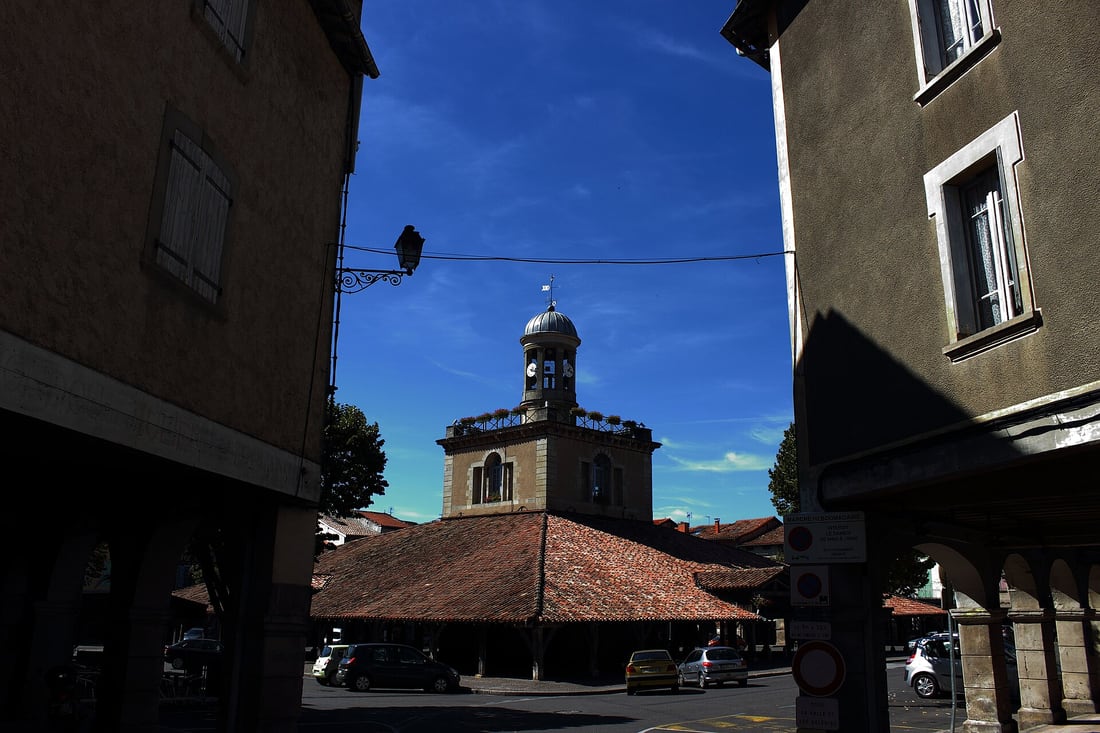
In 1843, Pons sold his business to two of his employees, Dirat and Get. The firm became “Dirat-Get” in 1853, then “Get Frères” in 1858. The brothers were called Jean, born in 1818, and Pierre, born in 1824. Jean Get was also a local notable: he was mayor of Revel from 1858 to 1878.
In the bottle, a peppermint liqueur: the alcohol takes up the plant's essential oil, rich in menthol, and is then sweetened. It is the menthol that gives the sensation of freshness, almost of cold, peculiar to peppermint. The bright green of the liqueur does not come from the leaf: it is an added colouring, and the white version, Get 31, does without it.
In the 1860s the liqueur found a name, borrowed from the English peppermint but spelt the French way: “Pippermint”. The brand was registered at the commercial court of Villefranche-de-Lauragais on 18 July 1868, according to the Société d'histoire de Revel. In 1898 it became “Pippermint Get”. Two years later, Jules Chéret designed a poster for it: a young woman in a wide-brimmed hat holds a red bottle, and the name of the liqueur unfurls across an arch. No number appears on it.
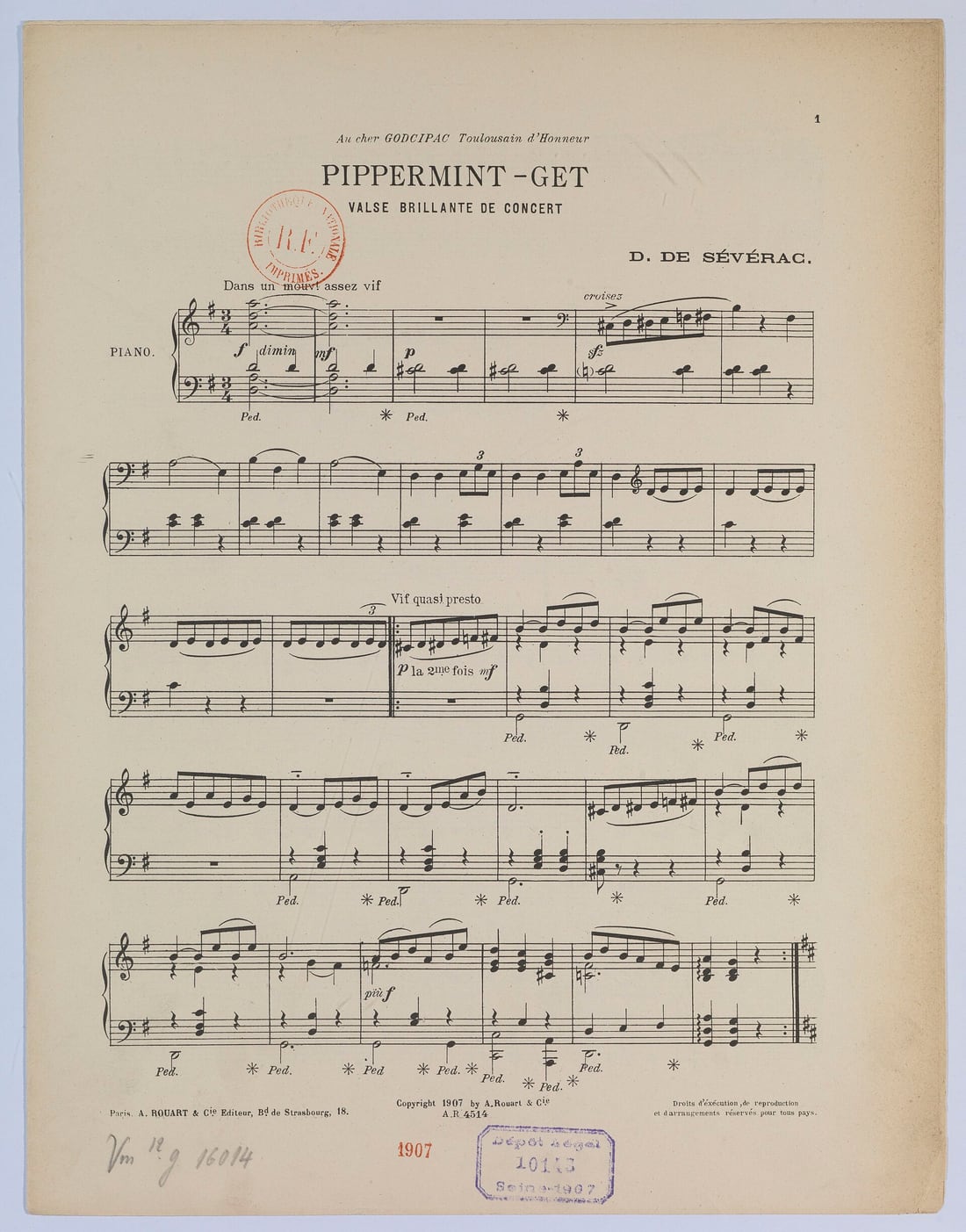
The number came much later. In 1969 the house joined the Bénédictine group, and the liqueur was renamed Get 27 in the course of the 1970s. The 27 very probably refers to the alcoholic strength: the liqueur was 28% around 1830, then around 27% between 1900 and 1980. In 1977 a white version appeared, Get 31. For this 31, an export strength is suggested, without any document, and sometimes the number of the Haute-Garonne département, without any source at all.
Production left Revel for Provence in 1991. The brand now belongs to the Bacardi group, and the liqueur that bears the name 27 has been 17.9% since 2022: the number has become a name, detached from what it once measured.
The legend set against the sources
The legend
As told by the brand, in its older texts
In 1796, in Revel, Jean Get created a peppermint liqueur. His descendants made it known throughout France, then throughout the world, under the name it still bears.
What the sources say
The sentence contains an impossibility: Jean Get was born in 1818, twenty-two years after the date attributed to him. The Société d'histoire de Revel, in “Pippermint Get, 200 ans d'histoire”, gives the 1796 recipe back to François Pons and dates the arrival of the Gets to 1843. The brand has corrected its story: its website presents François Pons, “ancien directeur de la Bonbonnière de Revel” (former director of the Bonbonnière de Revel), as the author of the recipe, and Jean Get as the man who married the heiress to the business, Victoire Sablier, and found the name Pippermint.
Pons's recipe is known only through tradition: no document from 1796 has been published. The 1868 registration is cited with its date and jurisdiction, but we have not seen it in the registers.
The current name did not exist before the 1970s: for more than a century, the liqueur of Revel was called Pippermint.
So, legend or history?
Before you read the answer, what do you think?
Choose a degree: it is the question a historian asks of every story.
Degree of certainty : Legend
Legend. Jean Get had not been born in 1796.
The Get brothers did not create the liqueur in 1796: the date belongs, according to tradition, to another liqueur maker, François Pons, and the Gets entered the business only in 1843. The legend merged two stories to give the brand's name the antiquity of the recipe. What the Gets really brought was a name, Pippermint, and a house that made Revel a capital of mint liqueur.
How we know
Each date in this story refers to one of the sources below. The degree of certainty can be read from the pattern of the rule: solid for attested, dashed for probable, dotted for tradition, double for legend.
Key dates
-
1796 François Pons's recipe, according to tradition -
1818 Jean Get is born -
1843 Pons sells his business to Dirat and Get -
1858 The firm becomes “Get Frères” -
1868 The Pippermint brand registered at Villefranche-de-Lauragais -
1900 Jules Chéret's poster -
1969 The house joins the Bénédictine group -
1977 Get 31 is launched
Attested- established by documents contemporary with the events.
Probable- plausible and consistent with the sources, without direct proof.
Tradition- handed down by the house or by local memory, with no document to confirm or refute it.
Legend- contradicted by the sources, or invented after the fact.
What remains uncertain
- The 1796 recipe and the role of François Pons, known through tradition alone.
- The registration of 18 July 1868, still to be checked at the court in Villefranche-de-Lauragais.
- The date of the name Get 27: 1970, 1972 or 1975 depending on the source.
- The meaning of the 31 in Get 31.
Sources
- Société d'histoire de Revel Saint-Ferréol, Pippermint Get, 200 ans d'histoire .
- Get 27, Heritage , 2026.