House stories · Nikka
Did a young Japanese man steal the secrets of Scotch whisky with a pen and a notebook?
A British politician is credited with a remark that has become famous in Japan: a young Japanese man is said to have come to Scotland and left again with the secrets of whisky, thanks to a pen and a notebook. The young man was Masataka Taketsuru, the future founder of Nikka, and his notebooks exist. But the author of the remark has never been established, and what the sources tell looks less like a theft than an apprenticeship.
The story
Masataka Taketsuru stole nothing: Scottish distilleries took him in as an apprentice, and the Scotswoman he married left her country to follow his project all the way to Hokkaidō.
Kirkintilloch, near Glasgow. Dr Samuel Cowan had died in 1918, and his family, in the large house at Middlecroft, took in a lodger to make ends meet. He was a Japanese student, Masataka Taketsuru, whom Ella, one of the daughters, had met at the university. Her elder sister was called Jessie Roberta, though everyone called her Rita. In January 1920, against the wishes of both their families, they married at the Calton registry office, in Glasgow.
Taketsuru was not in Scotland by chance. The son of a family of sake brewers from Takehara, in Hiroshima prefecture, he worked for Settsu Shuzō, an Osaka house that wanted to make whisky in Japan and in 1918 sent him to learn it on the spot. At the University of Glasgow, he attended Thomas Stewart Patterson's classes in organic chemistry. But above all he was looking for distilleries willing to train him. Longmorn, in Speyside, took him on as an apprentice; at Bo'ness he observed a grain distillery and its column still; then he spent a few months at Hazelburn, in Campbeltown.
At Hazelburn, guided by the chief technician Peter Margach Innes, he recorded everything: malting, mashing, fermentation, the running of the stills, but also, according to the house, the treatment of the workers, working conditions and the excise on spirits. From this he drew two notebooks, a report for his employer dated Campbeltown, May 1920. They teach how to make a malt whisky: barley germinated then dried, sometimes over peat smoke, mashed, fermented, distilled in copper pot stills; the distillate, colourless, ages for years in oak casks, where it takes on its colour. At Yoichi, the house still distils today in coal-fired stills, over a direct flame.
The couple arrived in Japan in November 1920. Settsu Shuzō, in difficulty, had shelved its whisky project. In 1923, another Osaka merchant, Shinjirō Torii, founder of Kotobukiya, the future Suntory, hired Taketsuru to run the distillery he was having built at Yamazaki, near Kyōto, the first in the country built for whisky. The first distillate ran there in 1924. Taketsuru stayed with Torii until 1934, then resigned, having been moved aside to the brewery according to the specialist Dave Broom.
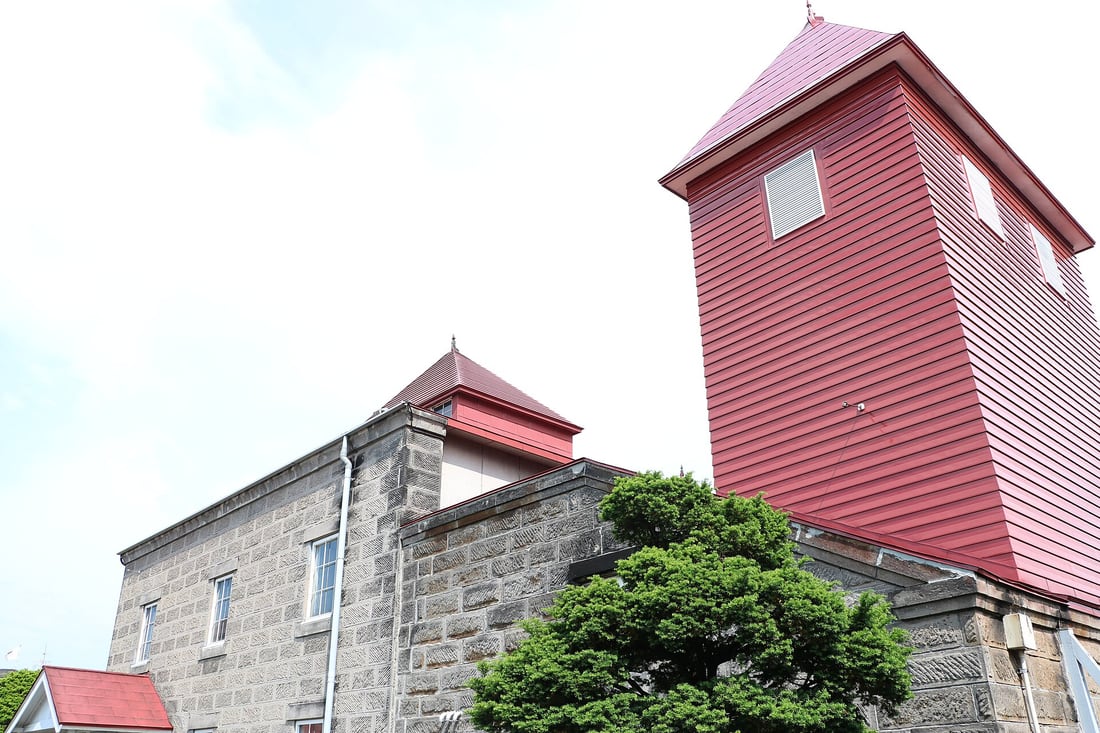
He then left for Yoichi, a fishing port on Hokkaidō, facing the Sea of Japan. There he sought, the house says, a cool, damp climate, bracing air, clear water, morning and evening mists, a landscape that reminded him of the Highlands. In July 1934, he founded Dai Nippon Kajū, the “Great Japan Fruit Juice Company”. Whisky takes years: in the meantime, the company sold apple juice. Distillation began in 1936; the first whisky came out in 1940 under the name “Nikka”, formed from Nippon and Kajū. The company took that name in 1952. In the 1960s, it installed a Coffey still at Nishinomiya, of the type Taketsuru had studied at Bo'ness.
Rita lived in Japan until her death, in January 1961. Masataka died in 1979. Since 2001, Nikka has belonged to the Asahi brewing group. And in Kirkintilloch, the town Rita left in 1920, the museum keeps a silk kimono that belonged to her.
The legend set against the sources
The legend
As told by the house and Japanese tradition
“A clever young Japanese man stole the secrets of making our whisky with a pen and a notebook.” The remark is attributed to a British politician visiting Japan, who is said to have made it with humour, as a tribute to Taketsuru. The house quotes it to open the story of its founder, and in Japan the Hazelburn notebooks have become the “Taketsuru Notes”.
What the sources say
The notebooks are real enough. Their English translation, published in 2021, bears the title On the Production Methods of Pot Still Whisky, with the words “Campbeltown, Scotland, May 1920”. But they owe nothing to theft: Taketsuru entered Longmorn and Hazelburn as an apprentice, and it was Hazelburn's chief technician who guided his work. The Scottish distillers showed him what he wrote down.
The remark, for its part, has no certain author or date. The house attributes it to “a former British Prime Minister”, without naming him. The Japanese Wikipedia credits it to Lord Home, then Foreign Secretary, during a visit to Japan in 1962. But according to the British Foreign Office, Lord Home went to Japan in 1963, and he did not become Prime Minister until October of that year. We have found neither the text of the speech nor a press article of the time reporting it.
So, legend or history?
Before you read the answer, what do you think?
Choose a degree: it is the question a historian asks of every story.
Degree of certainty : Tradition
Tradition. The remark has no established author or date, and the “theft” was an apprenticeship.
Taketsuru's notebooks exist, and they served to build Japanese whisky: that much is attested. The remark that turns them into a theft is a tradition, handed down with neither text nor date, and attributed to a politician whom no one names with certainty. It tells the truth about the young man's tenacity, and a falsehood about Scotland, which opened its distilleries to him. The boldest departure in this story, moreover, is not his: it is Rita's, who left in 1920 to live on the other side of the world.
How we know
Each date in this story refers to one of the sources below. The degree of certainty can be read from the pattern of the rule: solid for attested, dashed for probable, dotted for tradition, double for legend.
Key dates
-
1918 Settsu Shuzō sends Taketsuru to learn whisky-making in Scotland -
1919 Apprenticeship at Longmorn, in Speyside -
1920 Marriage to Rita Cowan in Glasgow, then the couple leaves for Japan -
1923 Shinjirō Torii hires Taketsuru for the Yamazaki distillery -
1934 Founding of Dai Nippon Kajū in Yoichi -
1940 First whisky sold under the name “Nikka” -
1952 The company takes the name Nikka Whisky -
1961 Death of Rita Taketsuru -
2021 English translation of Taketsuru's notebooks
Attested- established by documents contemporary with the events.
Probable- plausible and consistent with the sources, without direct proof.
Tradition- handed down by the house or by local memory, with no document to confirm or refute it.
Legend- contradicted by the sources, or invented after the fact.
What remains uncertain
- The author, date and exact wording of the “pen and notebook” remark remain unknown; the Japanese Wikipedia places it in 1962, but Lord Home, to whom it attributes the remark, went to Japan in 1963 according to Hansard.
- According to an extract from his memoirs quoted online, Taketsuru reports the remark preceded by “fifty years ago”, which would place it rather around 1970; the memoirs have not been consulted.
- The year of and reason for his departure from Torii's company: 1934 according to the house and the “Taketsuru” entry of the Oxford Companion, 1933 according to its “Japanese whisky” entry.
- The precise dates of his apprenticeships, given by the house alone (Longmorn in April 1919).
- Rita's life during the Second World War, often told, but for which no solid source has been consulted.
- The translation of the notebooks and Olive Checkland's book, Japanese Whisky, Scotch Blend (1998), have not been consulted directly.
Sources
- Dave Broom, « Taketsuru, Masataka », in The Oxford Companion to Spirits and Cocktails , Oxford University Press , 2021.
- Dave Broom, « Nikka », in The Oxford Companion to Spirits and Cocktails , Oxford University Press , 2021.
- University of Glasgow, Japanese whisky's Glasgow roots , 2013.
- Tony McNicol, The Woman Who Took Whisky to Japan: Remembering Rita Cowan Taketsuru , Nippon.com , 2014.
- Cleo Bowen, Imperial College London, Ruth Herd translates work by 'the father of Japanese whisky' , 2021.
- Masataka Taketsuru, On the Production Methods of Pot Still Whisky: Campbeltown, Scotland, May 1920, trad. Ruth Herd , Humming Earth , 2021.
- Nikka Whisky, The Founder , 2026.
- Wikipédia en japonais, Taketsuru Masataka , 2026.
- GOV.UK, History of Government, Sir Alec Douglas-Home .
- House of Commons (Hansard), Foreign Secretary (Overseas Visits), réponse écrite de George Brown, 22 janvier 1968 , 1968.
- East Dunbartonshire Leisure and Culture Trust, Japanese Kimono, KITAK.1987.42.1 .
- Asahi Group Holdings, Group companies , 2026.