House stories · Bacardí
Did a colony of bats give Bacardí its emblem?
On bottles of Bacardí, a bat keeps watch. The house explains it by a colony that nested in 1862 in the rafters of its first distillery, in Santiago de Cuba, and by the intuition of a woman, Doña Amalia. Behind the emblem lies a better-documented story: that of a rum born of the molasses of a slave-holding island, of a family committed to the fight against Spain, and of an exile.
The story
Bacardí's bat comes from a family story that nothing documents; the attested story is that of a rum made from Cuban molasses, carried by a family that fought for independence, then driven out of Cuba in 1960.
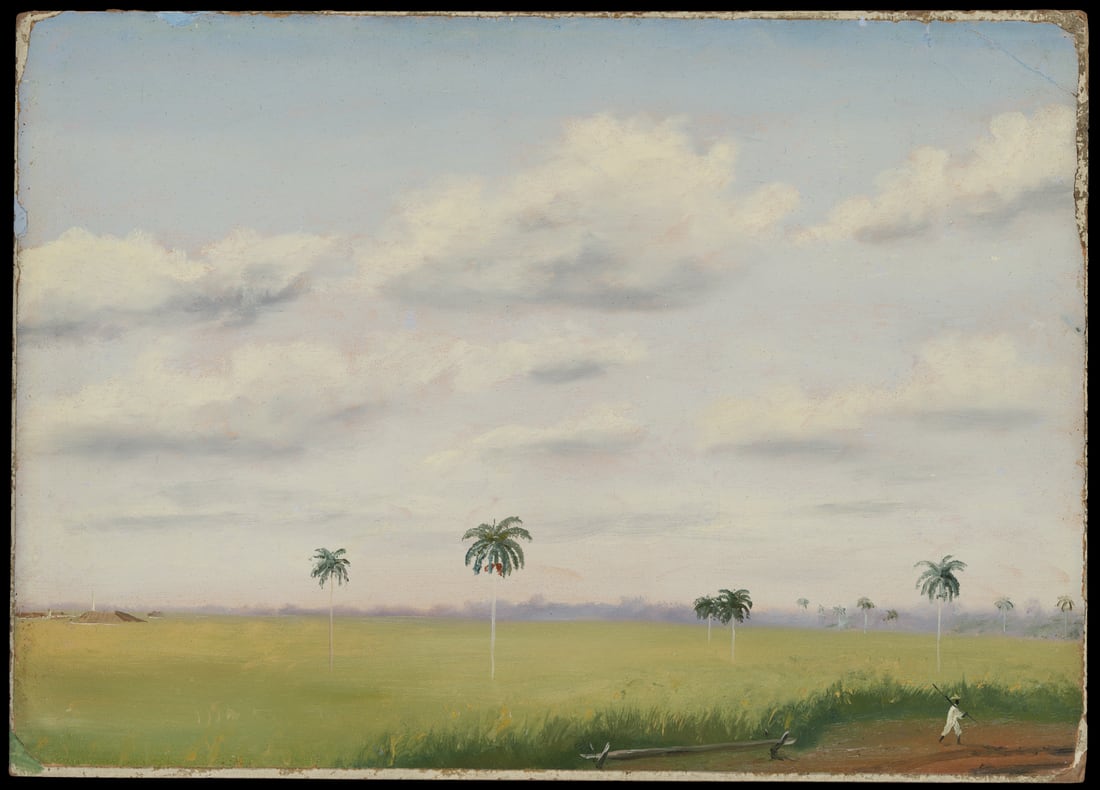
Santiago de Cuba, 1862. The island was still a Spanish colony, and one of the world's great sugar factories. Facundo Bacardí Massó, a merchant born in Sitges, in Catalonia, who had come to Santiago in his youth, bought with one of his brothers a small distillery that had belonged to an Englishman, John Nunes. He was nearly fifty. The business was modest; the family name would become a global brand.
This rum is made from molasses, the black syrup left once the sugar has been drawn from the cane. Cuban sugar at the time came from plantations founded on the labour of enslaved people: in 1868, the island supplied more than 40% of the cane sugar sold in the world, and slavery did not end there until 1886. None of the sources consulted says whether the Bacardís owned enslaved people. Their raw material, at any rate, came from that system.
The molasses, diluted, ferments with a yeast that the house says it has kept since the 19th century. The must is distilled, for a long time in a pot still: according to the Oxford Companion to Spirits and Cocktails, the house did not move to the column still until the end of the 1910s. The spirit ages in cask, then is filtered, through charcoal according to the house, which rids it of some of its heaviest compounds. This style is called “light”. Around 1900, a label announced 40 degrees.
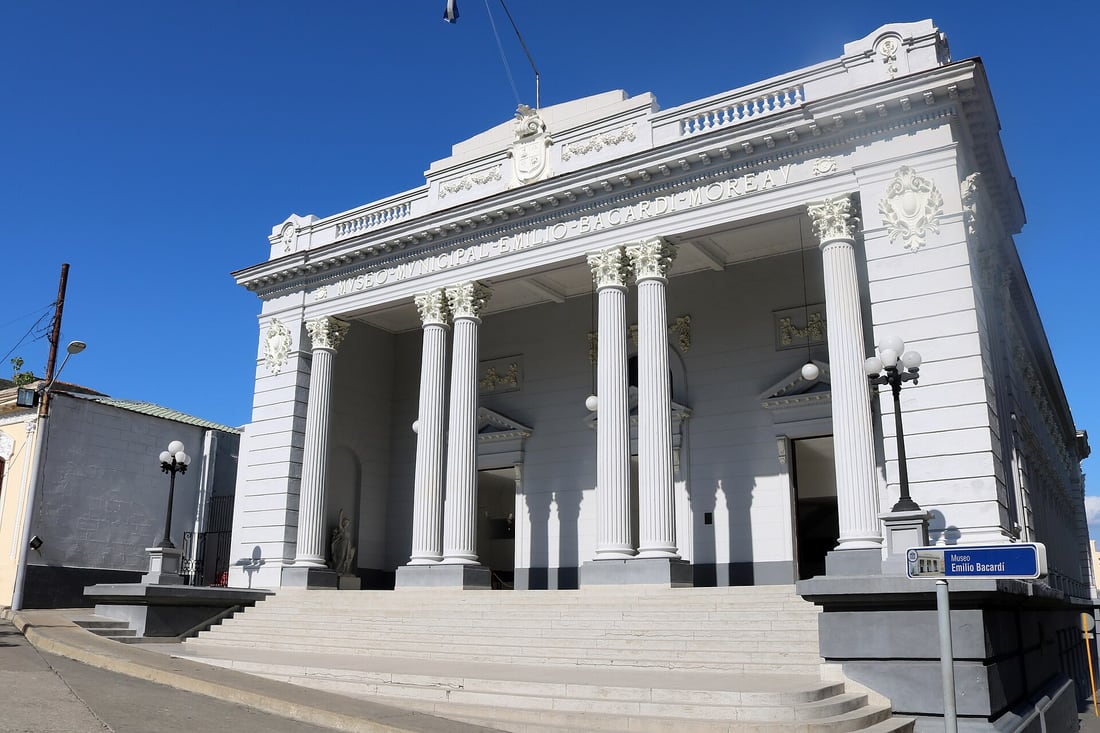
The son, Emilio, born in 1844, conspired against Spain from December 1868, at the start of the Ten Years' War. He endured the penal colony of the Chafarinas Islands, then, during the war of 1895, the prison of Ceuta. Opposed to slavery, he was appointed mayor of Santiago under the American occupation, the first Cuban to hold the post. There he founded the municipal museum in 1899 and compiled, in ten volumes, the Crónicas de Santiago de Cuba.
In 1936, to escape American customs duties, the family opened a distillery in Puerto Rico, a United States territory. At the end of the 1950s, the Bacardís supported Fidel Castro's guerrillas, who had set out from the mountains near Santiago. On 14 October 1960, the revolutionary government nationalised their company; the seized assets were valued at 76 million dollars of the time. The family went into exile. The yeast and the trademarks had already left the island; the company would later settle in Bermuda. In 2008, Tom Gjelten noted that a label sold in the United States read “Puerto Rican Rum” and “Established 1862”, without a word about Cuba; other bottles from Puerto Rico, however, read “Establecido en 1862, Santiago de Cuba”.
The legend set against the sources
The legend
As told by the house
In 1862, drawn by the smell of fermenting molasses, fruit bats settled in the rafters of the distillery. Doña Amalia, Facundo's wife, decided to leave them in peace: for the Taíno, the house says, the bat has a spiritual value; for the Spanish, it heralds health, fortune and family unity. She made it the emblem of the rum. Soon, in Santiago, people were asking for “el ron del murciélago”, the rum of the bat.
In front of the distillery, one of Facundo's sons planted a coconut palm, “El Coco”. The tree survived a fire, five earthquakes and countless hurricanes. A prophecy held that the company would live in Cuba as long as the coconut palm lived. It died in 1960, the year of the nationalisation.
What the sources say
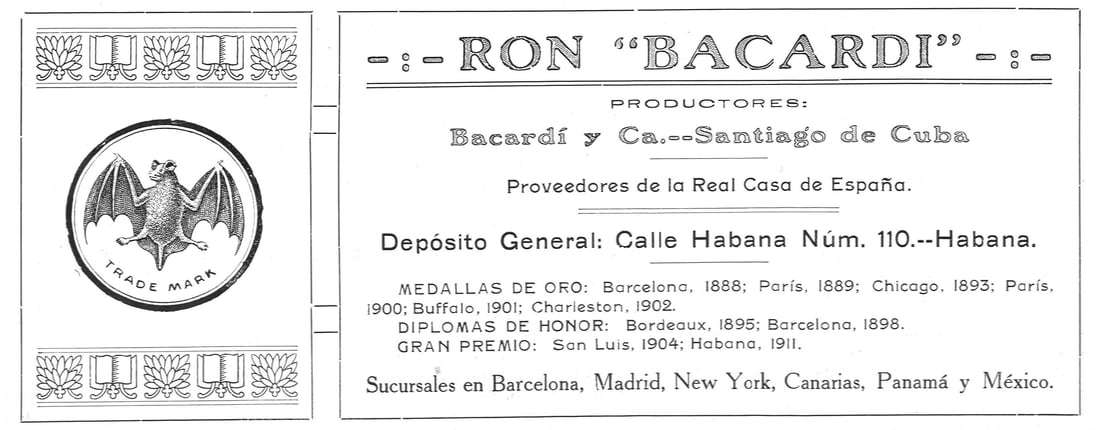
The bat is indeed on the bottles, but its origin is attested by no dated document. The Oxford Companion to Spirits and Cocktails files it under family tradition and offers a more down-to-earth explanation: on an island where many could not read, an image made it possible to ask for “the rum with the bat”. The house itself dates the oldest known version of its emblem to the 1890s. The bat does hold a place in Taíno beliefs, where it is associated with the spirits of the dead; but nothing links these beliefs to Doña Amalia's choice.
The coconut palm and its prophecy are known only from the house's account and from those who repeat it. Its death in 1960 comes too conveniently to be held as certain without another witness.
The rest is solid. The purchase of 1862, the award won in Philadelphia in 1876, Emilio's commitment and his imprisonments, the nationalisation of October 1960 and the exile are reported by independent sources, foremost among them the book by the journalist Tom Gjelten, Bacardi and the Long Fight for Cuba. In the Columbia Journalism Review, Mirta Ojito judges it “impeccably researched”, but too admiring of Pepín Bosch, who ran the company in the 1950s.
So, legend or history?
Before you read the answer, what do you think?
Choose a degree: it is the question a historian asks of every story.
Degree of certainty : Tradition
Tradition: the colony of bats is a family story, with no document behind it.
It is possible that bats nested under the roof of the distillery; nothing proves it, and the house itself shows no emblem earlier than the 1890s. The story of Doña Amalia is a family tradition, which the house tells as fact. The attested history is harsher and richer: a rum drawn from the molasses of a slave economy, a family fighting the Spanish Crown, then the nationalisation and the exile that made a Cuban rum into a rum without Cuba.
How we know
Each date in this story refers to one of the sources below. The degree of certainty can be read from the pattern of the rule: solid for attested, dashed for probable, dotted for tradition, double for legend.
Key dates
-
1862 Facundo Bacardí and a brother buy John Nunes's distillery -
1868 Cuba supplies more than 40% of the world's cane sugar, from slave plantations -
1876 Award at the Centennial Exhibition in Philadelphia -
1886 End of slavery in Cuba -
1899 Emilio Bacardí, mayor of Santiago, opens the municipal museum -
1936 A distillery in Puerto Rico -
1960 The revolutionary government nationalises the Cuban assets; exile -
1965 The international company settles in Bermuda
Attested- established by documents contemporary with the events.
Probable- plausible and consistent with the sources, without direct proof.
Tradition- handed down by the house or by local memory, with no document to confirm or refute it.
Legend- contradicted by the sources, or invented after the fact.
What remains uncertain
- The origin of the bat emblem; its oldest known version dates from the 1890s according to the house.
- The coconut palm, its planting by one of Facundo's sons and its death in 1960, known from the house alone.
- The birth of Facundo Bacardí Massó (October 1814 according to EcuRed) and his arrival in Santiago (1830 according to EcuRed, 1836 according to the Oxford Companion); the date of his death has not been verified.
- The first name of the brother who became his partner in 1862, named José by several accounts that we have not been able to verify.
- Whether the Bacardí family owned enslaved people, on which the sources consulted say nothing.
- The details of Emilio's imprisonments, known from the Cuban encyclopaedia EcuRed and from reviews.
- The move to Puerto Rico (1930 according to the house, 1936 according to the Oxford Companion) and the day of the nationalisation (14 or 15 October 1960).
- Tom Gjelten's book, consulted through an extract published by NPR and through reviews.
Sources
- Wayne Curtis, « Bacardi », in The Oxford Companion to Spirits and Cocktails , Oxford University Press , 2021.
- Tom Gjelten, Bacardi and the Long Fight for Cuba: The Biography of a Cause , Viking , 2008.
- Tom Gjelten, Excerpt: 'Bacardi And The Long Fight For Cuba' , NPR , 2008.
- Mirta Ojito, All in the Family (recension de Tom Gjelten, Bacardi and the Long Fight for Cuba) , Columbia Journalism Review , 2008.
- W. Blake Gray, Bacardi, and its yeast, await a return to Cuba , Los Angeles Times , 2011.
- Rebecca J. Scott, Explaining Abolition: Contradiction, Adaptation, and Challenge in Cuban Slave Society, 1860-1886 , Comparative Studies in Society and History, 26, n° 1 , 1984.
- Imilcy Balboa Navarro, Libertos, vagos y bandoleros. La reglamentación del trabajo tras la abolición de la esclavitud (Cuba, 1886-1895) , Relaciones. Estudios de historia y sociedad, XXXII, n° 127 , 2011.
- EcuRed, Emilio Bacardí Moreau .
- EcuRed, Facundo Bacardí Massó .
- Key West Art & Historical Society, Bacardi Rum Bottle Label (1987.01.1270) .
- rum.cz (base de données de collectionneurs), Bacardi Corp., Cataño, étiquettes .
- Museum of Art and Design, Miami Dade College, Offering Vessel in the Form of a Bat, Taíno, circa 900-1500 CE .
- Bacardí, The Bacardí Story , 2026.
- Bacardí, This is our story , 2026.