House stories · Linie Aquavit
Was linie born of unsold casks that came back from the Indies in 1805?
On the back of the label, a line gives the name of a ship and the dates of a round trip across the equator: the spirit crossed the equator twice before being bottled. The brand traces this practice back to 1805, to casks of akevitt that left for the East Indies and came back unsold, transformed by the sea. The ship existed. The story of its casks does not stand up to the sources.
The story
The 1805 voyage did take place, but the spirit it carried was part of the crew's provisions; linie was born later, from the trials of a Trondheim distiller on the klippfisk ships, and a State monopoly made a brand of it.
On 30 September 1927, the Taronga, a ship belonging to the Norwegian shipowner Wilhelmsen, left for Australia. On board were casks of akevitt, the Norwegian spirit flavoured with caraway. It returned on 2 April 1928. The label of the bottles drawn from these casks said so on the back: “Denne aquavit har medfulgt M/S ‘Taronga’” — this aquavit has travelled with the Taronga. The practice has scarcely stopped since, except in 1943 and 1944: to this day, the brand prints the ship and the dates of the voyage on the back of every bottle.
Akevitt is old in Norway. Its first known mention dates from 13 April 1531: the governor of Bergen, Eske Bille, sent the Archbishop of Trondheim a water “which is called aqua vite”. Jørgen Bernhoft Lysholm, born in 1796 into a family of the town's merchants, studied chemistry in Berlin from 1818 to 1820. In 1821, taking advantage of the relaxation of the rules on distillation in 1816, he founded a distillery in Trondheim, which became one of the main ones in Trøndelag.
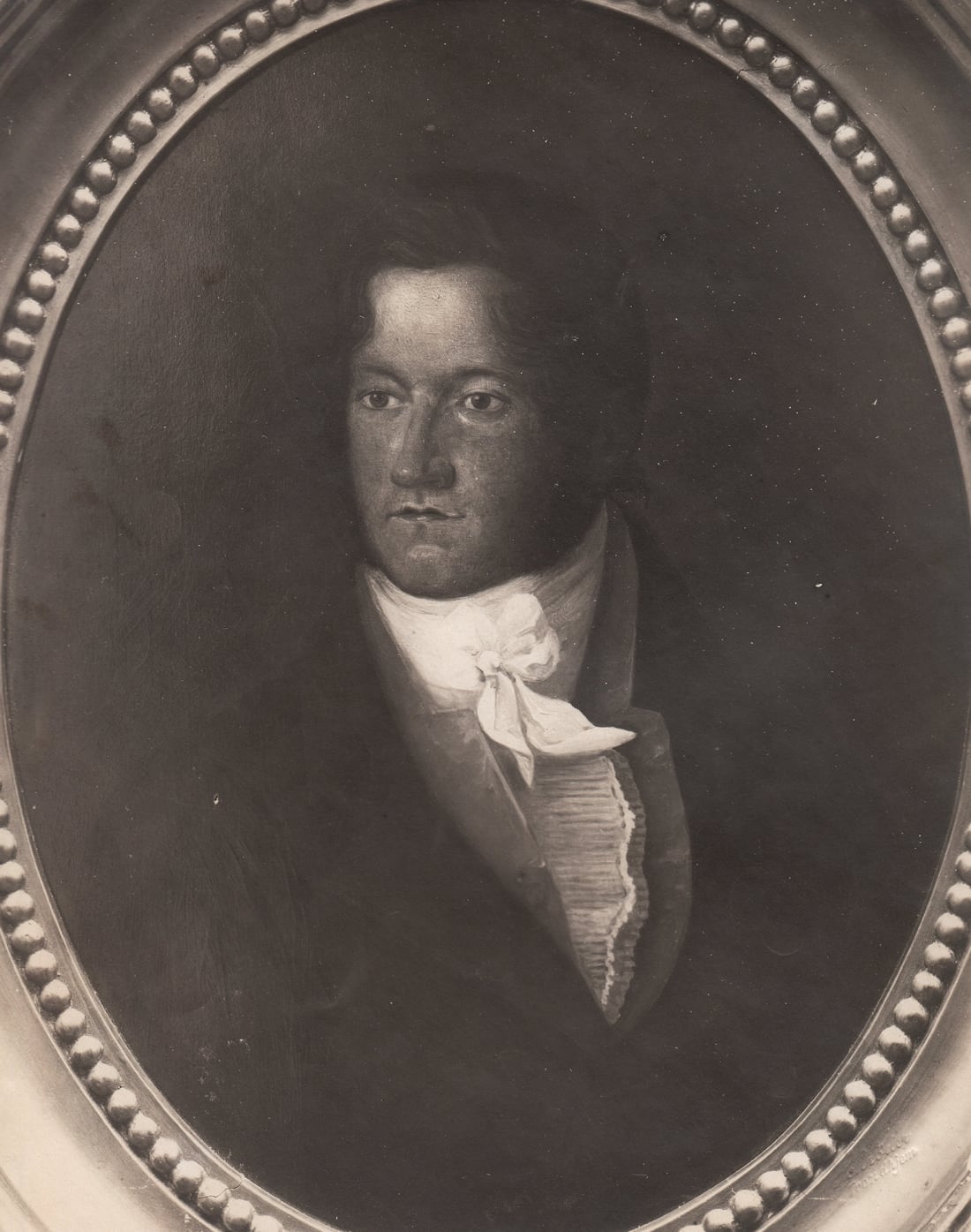
Lysholm experimented. According to the Store norske leksikon, he had casks loaded onto the ships carrying klippfisk, dried and salted cod, to Brazil, and observed that the voyage transformed the spirit: the swings in temperature, the humidity, the rolling of the ship. The first documented cargo left in 1842, aboard the schooner Nordstjernen, commanded by Johan Thiel Marstrand. Lysholm died the following year, in Frankfurt, on his way back from a spa cure. His widow, then his son Olaus, carried on the business.
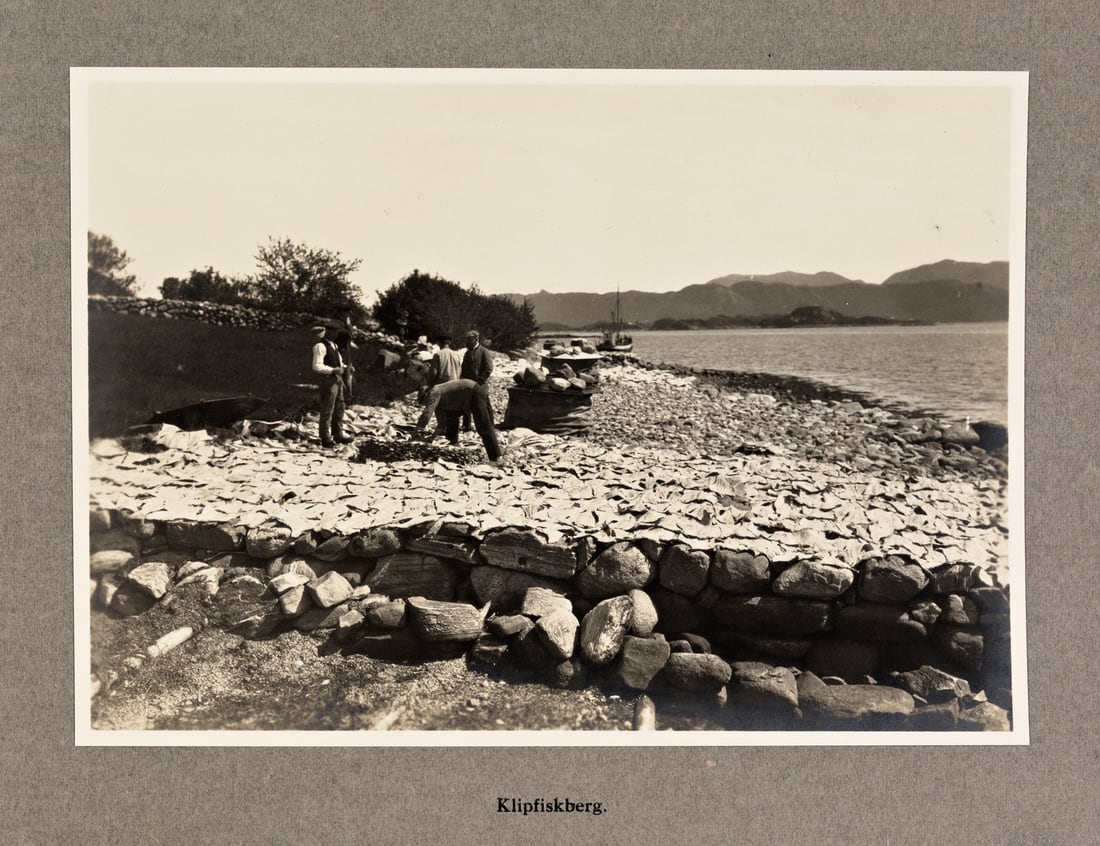
Linie starts from a potato spirit distilled in a column still to 96% vol., then flavoured: caraway is its main spice, often accompanied by dill, anise, fennel or coriander. According to the Oxford Companion to Spirits and Cocktails, it matures for twelve months in 500-litre casks that have held oloroso sherry, then travels on deck between Norway and Australia for four to six months (four months today, according to the brand). The geographical indication “Norsk Akevitt”, protected in Norway since 2011 and in the European Union since 2020, requires at least 95% Norwegian potatoes and a period in oak casks.
The 20th century made akevitt a matter of State. The public monopoly Vinmonopolet, created in 1922, took over the Lysholm distillery in 1924 and, when the prohibition of spirits was lifted in 1927, received the monopoly on the production of akevitt. From then on, linie travelled on Wilhelmsen's ships. The production monopoly ended in 2005. Linie is today produced by Anora, the country's leading akevitt producer with 70 to 80% of the market, born in 2021 from the merger of Arcus, which grew out of Vinmonopolet, and the Finnish company Altia.
Does the voyage really change the spirit? Around 1986, Teknisk Ukeblad had an akevitt analysed before and after the crossing, with the SI institute in Oslo, which later became SINTEF. The chemists found “distinct differences”, without being able to say what they change in the taste.
The legend set against the sources
The legend
As told by the brand, and the press that repeats it
In 1805, the shipowner Catharina Lysholm loaded casks of akevitt onto her brig, the Trondhjems Prøve, bound for the East Indies. In Batavia, nobody wanted them. The casks came back unsold to Trondheim two years later, having crossed the equator twice; they were opened, and the spirit was judged better than when it had left. Linie is said to have been born of a commercial failure.
The brand tells the same story without naming either the ship or the shipowner: in 1805, “the Lysholm merchant family” sent a potato akevitt to the East Indies, which came back for lack of interest — to Oslo, it writes, “its home town”.
What the sources say
The Store norske leksikon now regards this story as disproved. The ship did exist, and it had belonged to Catharina Lysholm. But she had retired from business in 1790. In 1805, as the historian of ideas Trond Åm points out in Adresseavisen, the Lysholm family had been out of the firm for fifteen years; her former partner, Hans Knudtzon, was its sole owner, and shared the cargo with a Copenhagen house, Duntzfeldt. According to the history of Trondheim shipping published by Henry Berg in 1940, there was indeed spirit on board — five barrels of spirit and four of grain spirit — but in the crew's provisions, not among the trade goods.
The return of the casks has left no written trace; what is documented, according to the Store norske leksikon, is that the ship returned to Copenhagen. Trond Åm follows the birth of the myth: older authors linked linie to the klippfisk exports of the late 1830s, and it was a book by Hroar Dege on Norwegian akevitts, in 1997, that first connected the 1805 voyage with akevitt. The story has flourished since: the Oxford Companion to Spirits and Cocktails repeats it, having the casks shipped, in 1805, by Jørgen B. Lysholm — who was then nine years old.
So, legend or history?
Before you read the answer, what do you think?
Choose a degree: it is the question a historian asks of every story.
Degree of certainty : Legend
Legend. The 1805 ship existed, but its spirit was part of the crew's provisions.
The Trondhiems Prøve is real, and it carried spirit — for its sailors. Nothing shows that unsold casks came back to Trondheim, and the Lysholm family no longer had any share in the voyage. The attested story is slower and less romantic: a chemist trained in Berlin, trials on the klippfisk ships, a first documented cargo in 1842, then a century of State monopoly that turned the voyage into a brand, down to the name of the ship printed on the back of the label.
How we know
Each date in this story refers to one of the sources below. The degree of certainty can be read from the pattern of the rule: solid for attested, dashed for probable, dotted for tradition, double for legend.
Key dates
-
1531 First known mention of akevitt in Norway, in a letter from Eske Bille -
1790 Catharina Lysholm retires from business -
1805 The Trondhiems Prøve leaves for the East Indies, with spirit among its provisions -
1807 Supposed return of unsold casks, improved by the sea -
1821 Jørgen B. Lysholm founds his distillery in Trondheim -
1842 First documented cargo of akevitt, on the schooner Nordstjernen -
1924 Vinmonopolet takes over the Lysholm distillery -
1927 Wilhelmsen's Taronga carries akevitt to Australia -
2005 End of the State monopoly on akevitt production
Attested- established by documents contemporary with the events.
Probable- plausible and consistent with the sources, without direct proof.
Tradition- handed down by the house or by local memory, with no document to confirm or refute it.
Legend- contradicted by the sources, or invented after the fact.
What remains uncertain
- The voyage of the Trondhiems Prøve: the year of departure (1805) and the presence of spirit in the provisions are known from Trond Åm's article, which cites Henry Berg (1940); we have not consulted Berg's book.
- The family relationship between Jørgen B. Lysholm and Catharina Lysholm: “nephew” according to the Store norske leksikon, great-nephew of her husband according to the Norwegian local history wiki.
- Lysholm's exact role: the Store norske leksikon considers him “in all likelihood” the originator of linie and places its marketing in the 1840s, whereas he died in 1843.
- The date at which the name “Linie” became a brand: production under that name is attested from 1927 by Atlungstad brenneri; earlier use is not established.
- The start of Wilhelmsen's contract: 1922 according to the Store norske leksikon, 1927 according to other accounts; the Taronga label (1927) is the oldest we have seen.
- The name of the ship: Trondhiems Prøve in the historical sources, Trondhjems Prøve in the legend.
- The effect of the voyage on the spirit: chemical analyses show differences, without establishing what they change in the taste.
Sources
- Lars Ole Ørjasæter, « linjeakevitt », in Store norske leksikon , 2026.
- Terje Øygard, Thor Richard Teien et Lars Ole Ørjasæter, « akevitt », in Store norske leksikon , 2025.
- Terje Bratberg, « Jørgen Bernhoft Lysholm », in Store norske leksikon , 2025.
- Terje Bratberg, « Catharina Lysholm », in Store norske leksikon , 2026.
- Trond Åm, Det er ingenting som tyder på at historien om linjeakevitten er sann , Adresseavisen , 2017.
- Lance J. Mayhew, « linie aquavit », in The Oxford Companion to Spirits and Cocktails , Oxford University Press , 2021.
- Atlungstad brenneri, Lysholm Linie Aquavit. Vinmonopolet (ATLU.F.000329) , DigitaltMuseum .
- Sverresborg Trøndelag Folkemuseum, Akvarell av skonnert « Nordstjernen » (FTT.TSM.0378) , DigitaltMuseum .
- Odd Richard Valmot, Akevitt med ekvator-faktor , Teknisk Ukeblad , 2005.
- Stian Brekke, « Arcus », in Store norske leksikon , 2025.
- Linie Aquavit, A tasty discovery , 2026.